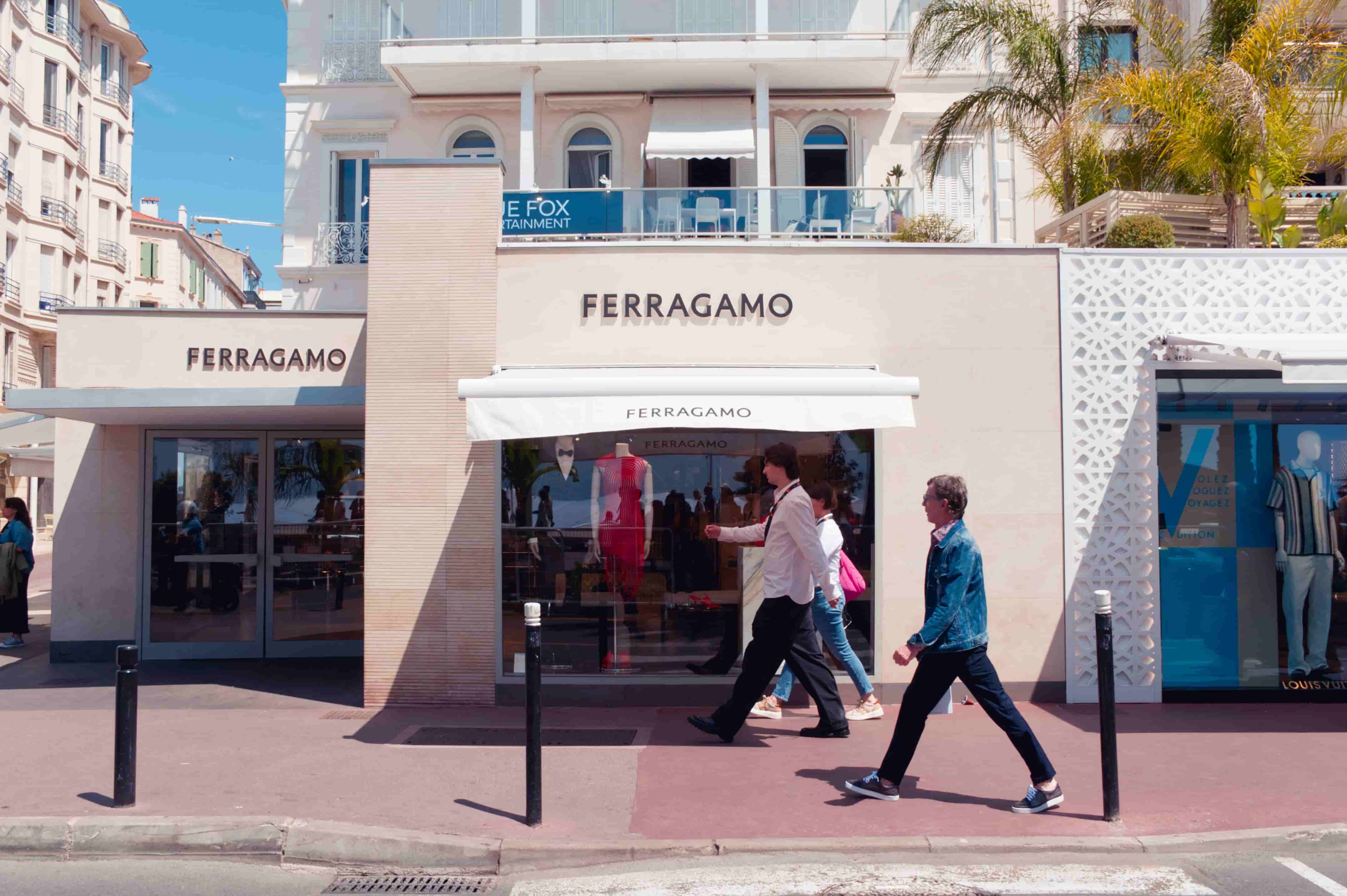
The Italian luxury house returned to profitability in the first half of 2026 after improving margins and cutting costs, though management warned trading softened in July as the business enters a more uncertain second half without a permanent Chief Executive.
Salvatore Ferragamo returned to profitability in the first half of 2026 as its strategic focus on direct-to-consumer sales and operational efficiency delivered improved margins despite a challenging global luxury market.
The Italian luxury group reported net profit of US$1.7 million (€1.5 million) for the six months to June, compared with an adjusted net loss of US$18.4 million (€16 million) a year earlier. Adjusted operating profit reached US$24 million (€20.9 million), while EBITDA increased to US$103 million (€90 million) from US$84 million (€73 million) in the prior-year period.
Revenue totalled US$538 million (€468 million), down 1.3% on a reported basis but up 1.9% at constant exchange rates. The improvement was driven by the direct-to-consumer channel, with second-quarter sales through directly operated stores rising 6.6% at constant exchange rates, supported by stronger full-price selling, higher conversion rates, larger average transaction values and double-digit growth in e-commerce. Wholesale performance remained broadly stable during the quarter as the group continued to refine its distribution network.
Gross margin improved to 69.2% from 67.7% a year earlier, reflecting a more favourable sales mix and disciplined pricing. Regionally, North America remained Ferragamo’s strongest-performing market, with first-half revenue increasing 12.3% at constant exchange rates, while Central and South America grew 6.5%. Asia Pacific declined 0.6%, although Japan returned to growth, rising 2.8%.
By category, footwear continued to outperform, with revenue increasing 5.1% at constant exchange rates. Apparel rose 5.6% and silk and other accessories increased 7.8%, while leather goods declined 3.1%, although the company said performance improved sequentially during the second quarter.
Ferragamo said it remains focused on strengthening brand desirability, improving the quality of sales and executing its long-term strategic repositioning, while continuing to invest selectively in retail, digital capabilities and product innovation.