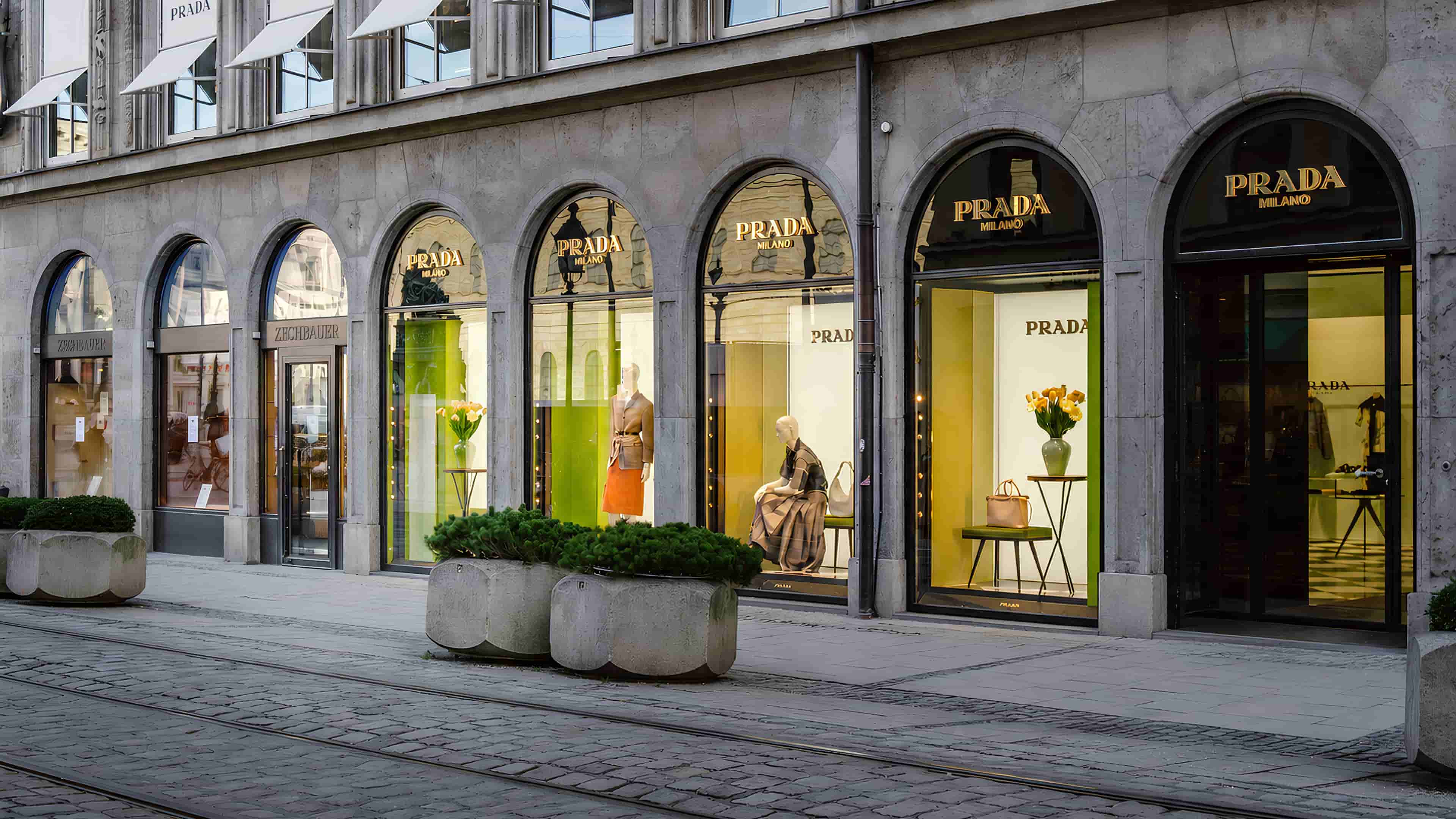
At a time when consumers have become more sceptical, more selective and considerably harder to impress, this month’s Beyond the Boardroom Breakfast Briefing turned to a deceptively simple question: what should a luxury brand actually do differently in the second half of 2026?
Ask an AI assistant to recommend a birthday gift under US$2,000 today, and it’ll answer with unnerving confidence, citing a review on a fashion website most shoppers have never heard of over anything the brand itself has ever published. That single exchange—repeated millions of times a day across the likes of ChatGPT, Gemini and Perplexity—tells you more about where luxury brand equity is actually being built in 2026 than most marketing decks produced this year.
For decades, luxury built its authority on being told, not shown. Heritage spoke for itself. Scarcity needed no explanation. A campaign, a runway show and a discreet nod from the right editor were sufficient to close the loop between desire and purchase. That assumption is now costing brands in ways that are entirely measurable.
At BTB‘s July Breakfast Briefing to unpack the ‘Mid-Year Luxury Brand Forecast’, senior brand leaders, consumer executives and journalists convened to work through what tariffs, AI disruption and a fragmented media landscape actually mean for how a brand should behave, not just what it should say. What emerged was less a list of predictions than a shared diagnosis: consumers have not switched off, they have become considerably more discerning about where they place their attention, trust and money.
The morning opened with a finding that should reframe how most brands think about their marketing spend. According to the 2026 Edelman Trust Barometer, trust has become as important to a purchase decision as price and quality for the majority of consumers, even as nearly half say generative AI has made the overall quality of content worse. The two findings sit uncomfortably together: audiences are more reliant than ever on trust signals, at precisely the moment those signals are hardest to verify.
The first shift the room worked through was the movement from storytelling to “storyliving.” Consumers no longer want to simply hear a brand’s story, they want to embody the world inside it. Louis Vuitton’s boat-shaped flagship, “The Louis,” in Shanghai and Ralph Lauren’s Wimbledon collaboration were cited as evidence of a broader pattern: retail, hospitality and culture increasingly working together as a single, continuous experience rather than a series of separate campaigns. Nielsen’s 2024 Annual Marketing Report found that consumers who participate in a branded experience are considerably more likely to purchase and to return, a data point the room kept coming back to.
“Every touchpoint has to become part of the same narrative now,” said a social lead for a leading agency. “Consumers want to interact with a brand, shape it, feel some ownership over it. That’s a very different job to producing a beautiful campaign and hoping people notice.”
The second shift concerned what luxury is actually selling. As resale, dupe culture and more accessible alternatives have democratised ownership, several leaders argued that products alone no longer signal aspiration the way they once did. Luxury, the room agreed, is increasingly being defined by how consumers live rather than what they own. Dior’s collaboration with Technogym and its wellness-oriented campaign work were raised as early examples of brands treating wellbeing as a core proposition rather than adjacent lifestyle content, a shift borne out by Business of Fashion and McKinsey’s State of Fashion 2026, which found consumer spending continuing to tilt toward health and longevity even as overall fashion growth remains muted. Separately, Bain and Altagamma’s spring 2026 luxury market study found consumer sentiment toward experiences growing roughly 1.5 times faster than sentiment toward goods, a gap wide enough that several attendees described sport and wellness partnerships as the next frontier for luxury, rather than a passing category.
“I don’t think luxury has fully reckoned with the fact that quality of life is now the aspiration, not the handbag,” shared Editorial Director for Beyond the Boardroom, Rahat Kapur. “The brands that help people live better, not just look better are the ones building real loyalty.”
That reckoning it turned out, was really the morning’s central thread, and the room spent the rest of the session tracing it through four more shifts that all, in one way or another, ask the same question: what actually earns a brand the right to be believed. Citing Deloitte’s 2026 Gen Z and Millennial Survey, which found only 6% of respondents naming a leadership position as their primary career goal, several leaders pointed out that younger consumers are no longer buying into status in its traditional form. Autonomy, flexibility and freedom from constant performance pressure are increasingly what success looks like, and a generation redefining ambition on its own terms was never going to keep buying the old version of aspiration either.
That mindset change in what younger consumers respect maps almost exactly onto a shift in who they trust. Influence, the room agreed, is migrating away from lifestyle creators and toward founders, operators and experts whose credibility rests on what they have actually built rather than simply what they publish. Steven Bartlett’s The Diary of a CEO came up repeatedly as the clearest example: a media property built entirely on the premise that the host’s business credibility is the content itself. The line between building a business and building an audience has effectively disappeared, which means the old influencer economics, paying largely for reach, no longer buy what they used to.
That same appetite for something demonstrably real, rather than simply well told, is forcing a broader reckoning with reputation itself. Luxury’s greatest challenge, the room agreed, is no longer desirability but credibility: heritage and exclusivity alone are no longer sufficient justification for price, particularly to a generation already sceptical of institutions and increasingly fluent in spotting a story that doesn’t hold up. Digital product passports, of the kind now appearing on pieces from the likes of Prada, and supply chain transparency tools were raised as early signals of a market moving from telling a story of quality toward proving it. Consumers can verify almost anything about a product now, if they choose to and the brands getting ahead of that scrutiny, rather than waiting to be asked, are the ones building trust that is actually theirs rather than borrowed from the house name on the door. Proving it, several noted, is not something a brand does once. It has to be built the way a publisher builds a reputation, consistently, in public, over time.
Chanel, Dior and Armani’s continued investment in print and editorial-style content, from Dior’s Dior Untold podcast to Chanel’s Coco magazine, was cited as evidence that recurring, collectible intellectual property does something a single campaign simply cannot. Research from Stacker and Scrunch published in December 2025 found that syndicating content through third-party outlets, rather than relying solely on owned channels, meaningfully lifts the rate by as much as 325% at which AI systems cite a brand, a detail that visibly reframed the conversation for several attendees who had treated earned media as a reputational nicety rather than a technical requirement. “Think like a publisher, not an advertiser,” Kapur put it bluntly. “Attention is scarce and most brand content still isn’t good enough to earn it.”
That technical requirement turned out to be the morning’s final and most urgent shift. Search, several leaders pointed out, is no longer the primary front door to a brand. Gartner has forecast that traditional search volume will decline by 25% by 2026 as AI assistants absorb a growing share of queries, and McKinsey‘s most recent luxury consumer research found that the large majority (80%+) of luxury shoppers now use AI assistants at some stage of the shopping journey, with high reported satisfaction. Crucially, most of what those systems say about a brand is drawn from third-party sources rather than the brand’s own website, which is where every thread the room had pulled that morning, storyliving, wellbeing, credible voices, verifiable proof, publishing discipline, converges on a single asset: an AI knowledge footprint that a brand is either shaping deliberately or leaving entirely to chance.
By the end of the discussion, the seven shifts had stopped feeling like a checklist and started feeling like a single argument. Trust, participation, credibility and proof are not separate initiatives to be assigned to different departments, they are increasingly the same asset, viewed from different angles. The brands that understood this fastest, the room agreed, will spend the second half of 2026 building reputational capital deliberately, rather than assuming heritage will continue to do the work for them.
Seven takeaway questions for your brand:
- Where can people experience the world of our brand, not just consume our products and marketing?
- How does our brand meaningfully improve the quality of our customers’ lives?
- How does our brand create more freedom, flexibility or growth for our consumers?
- Whose expertise gives our brand credibility?
- What evidence backs up the trust our brand is asking for, beyond legacy and heritage alone?
- What does our brand consistently publish or broadcast that people would actively choose to return to?
- What reputational inputs exist online for AI to confidently recommend us?
The BTB Breakfast Briefing is a six-weekly gathering of senior business and brand leaders convened by Beyond the Boardroom to unpack key topics at the intersection of business, culture and luxury. Register your interest to attend the next session here.