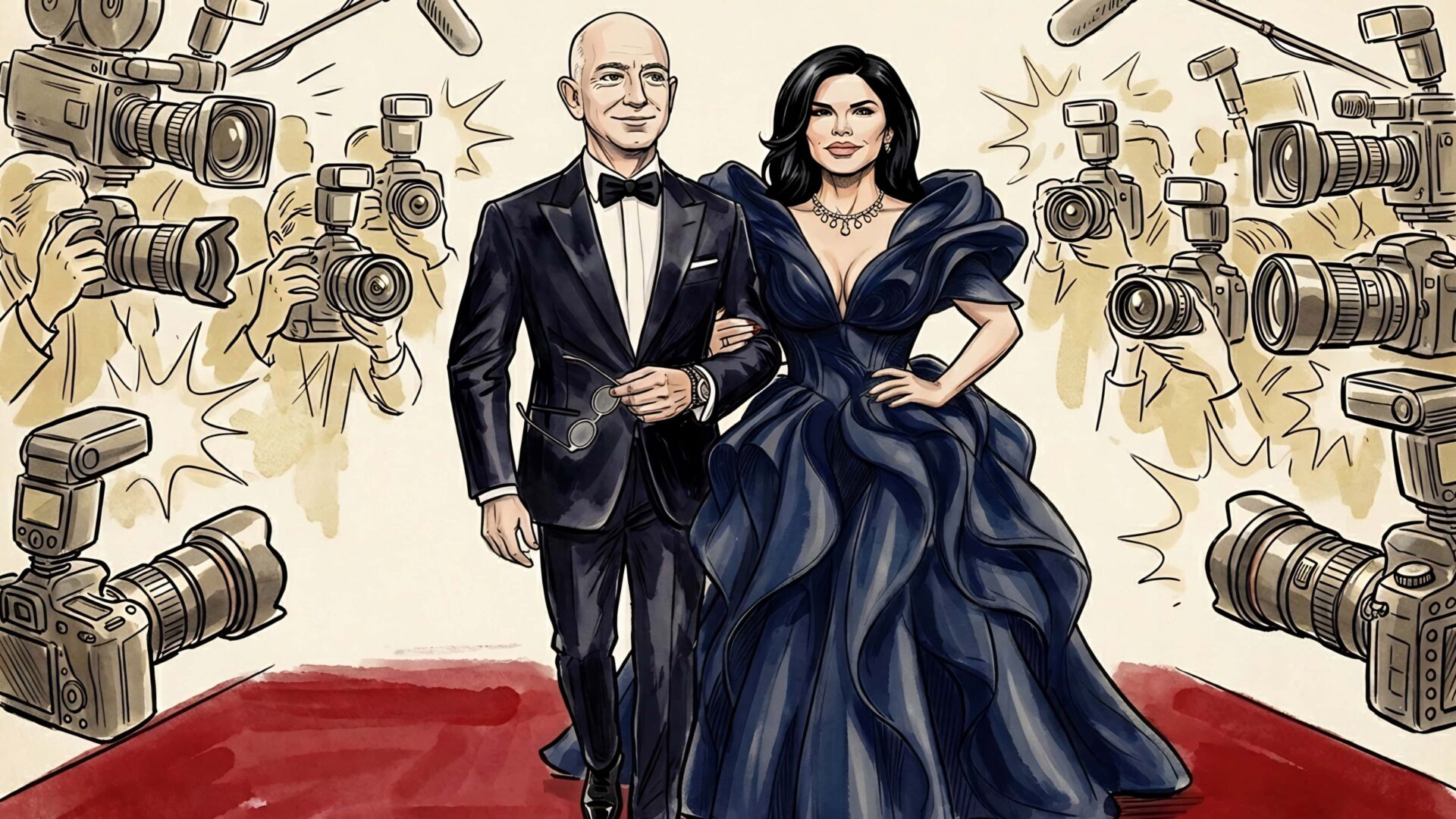
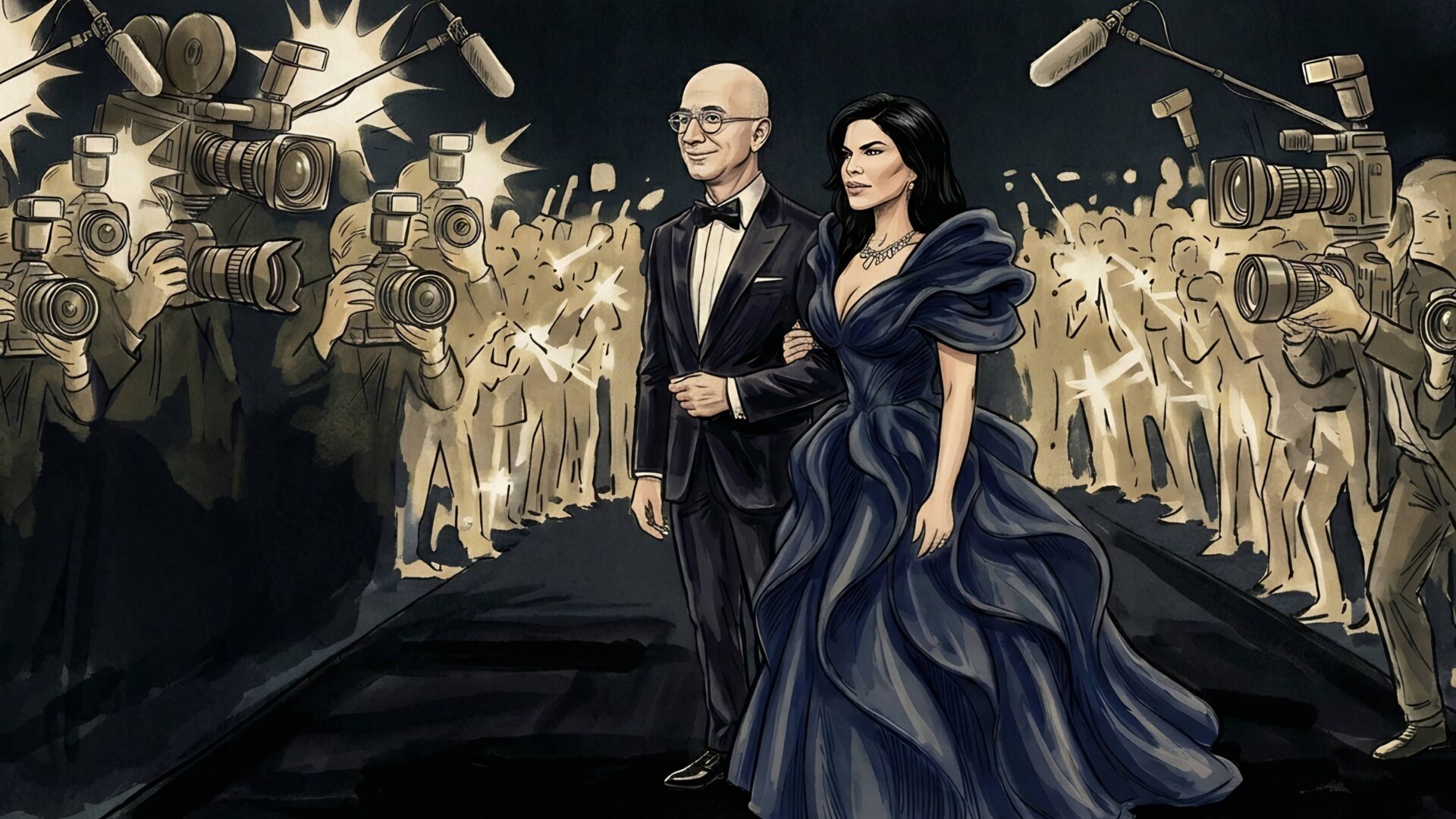
At US$100,000 a ticket, the Met Gala remains one of the most powerful fundraising engines in the world. But with Jeff Bezos and Lauren Sánchez Bezos among this year’s most prominent backers, the line between patronage and acquisition has never been blurrier. In a world where tech billionaires are writing the cheques on culture, what exactly are we willing to trade away to keep art alive?
There’s a version of this story that begins in 1948 at the Waldorf Astoria with Eleanor Lambert, the formidable American publicist who helped transform fashion from industry into institution. Founder of the original Press Week that would later become New York Fashion Week, creator of the International Best Dressed List, and founder of the Council of Fashion Designers of America in 1962, Lambert understood instinctively that beautiful things do not survive on merit alone. They survive because someone organises, advocates, legitimises, and funds them. The midnight dinner she hosted that December evening was entirely consistent with everything else she built: a practical act of cultural stewardship disguised as a party.
Back then, tickets were a mere US$50 and the room was filled with New York society and the fashion trade, people with real skin in the game of dress. It was patronage in its truest form, those who understood what was being preserved were the ones paying to sustain it.
This story is still technically true. What surrounds it has become something rather more complicated.
The Met Gala at its core, has always been an exchange, and its genius for a very long time was that this exchange felt like something else entirely. When Diana Vreeland arrived at the Costume Institute in 1972, having been unceremoniously removed from the Editor-in-Chief’s chair at American Vogue after a decade of magnificent, maximalist reign, she did what she had always done, she made things mean something. The themes she introduced were serious and particular—a retrospective of Balenciaga’s architectural genius, the grandeur of Russian and Indian dress, and the unapologetic theatricality of Hollywood glamour. And the room she filled to celebrate them was serious too, in its own irreverent way.
@metmuseum Part I: In 1973, Diana Vreeland became the Special Consultant to The Costume Institute and infused her signature flair into our exhibitions and The Met Gala ✨Join us as we time travel back to the 70s and 80s. #MetGala #HistoricalCostume #ALineofBeauty ♬ original sound – The Met
Andy Warhol attended. Diana Ross came. Cher arrived, in Bob Mackie, pioneering what we now call the “naked dress” and what the 1974 guest list presumably called a “situation.” Jacqueline Kennedy Onassis co-chaired in 1976. These were not people who had been placed at tables by their publicists. They were participants in the culture the Costume Institute was trying to document, and their presence in the room was itself a form of argument.
It was Anna Wintour who transformed this argument into institution. Taking the chairmanship in 1995, the now Global Chief Content Officer for Condé Nast and Global Editorial Director of Vogue, understood that fashion could not sustain itself as a closed system. That the Gala needed to grow or it would stagnate, and that growth meant opening the doors, strategically and on her terms, to the wider world of celebrity, entertainment, and global media. She moved the date to the first Monday in May. She curated the guest list with the same exacting editorial eye she brought to every Vogue cover. She approved the outfits. She built the machine, tightened every bolt, and in doing so kept the Costume Institute—the only curatorial department at the Met required to raise its own operating funds—solvent and globally visible for three decades. By 2023, the Gala was generating nearly double the media impact value of the Super Bowl. Last year, it raised a record $31 million in a single evening.
Wintour’s achievement is real, and it matters; the survival of the Costume Institute is in no small part, her doing. But here’s the thing about machines, once you build them large enough, they begin to develop a logic of their own. The question many are now asking of the Met Gala in 2026 is whether that logic has less to do with fashion history, and far more to do with who can afford to be in the room.
When the Cheque Becomes the Credential
At US$100,000 a ticket, the Met Gala has never been more financially formidable nor, perhaps, further from the spirit Lambert intended. There’s always been money in the room; that was the point. What has changed is who’s bringing it and to what end. Not quite stewardship, but something more transactional—namely the purchase of proximity to beauty, and the cultural credibility it confers.
Amazon Founder Jeff Bezos and his wife Lauren Sánchez Bezos are this year’s lead sponsors and honorary co-chairs, reported to have contributed at least $10 million to the occasion. Bezos, who has built one of the most powerful logistics empires in history and amassed a fortune estimated at over $250 billion in doing so, has shaped his scale of wealth in the shrouds of controversy, enduring longstanding scrutiny over labour practices, market dominance, and the broader human cost of efficiency at scale. Sánchez, a former broadcast-journalist-turned-media personality and aviation entrepreneur, has become a highly visible figure in that orbit, their relationship itself the subject of relentless public fascination and tabloid spectacle.
Neither is a fashion person, nor a student of costume history, nor knowingly the first choice to discourse on the structural boning of a House of Worth gown or the subversive politics of the McQueen bumster. But then again, if history has taught us anything, it’s that an intimate relationship with art has never been a prerequisite for funding it. The Medicis were bankers. Charles Saatchi made his fortune in advertising. Peggy Guggenheim inherited hers from a mining empire. Patronage has always been—at least in part—a negotiation between accumulated wealth and borrowed meaning. The culture we now celebrate—the Baroque ceiling, the Impressionist collection, the couture archive—exists precisely because people with no formal artistic training decided it was worth preserving. On those terms alone, Bezos writing a cheque for the Costume Institute is not a scandal, it’s simply history, doing what history does.
So why does it feel so different this time?
The backlash that preceded this year’s Gala was not merely loud but organised, pointed, and unusually specific in its grievances. “Boycott the Bezos Met Gala” posters papered New York City for weeks. A rival fashion show, mounted downtown by a coalition including the Service Employees International Union and the Amazon Labor Union, dressed warehouse workers and delivery drivers in pieces by ethically-minded designers and invited the city to draw its own conclusions. “If there is money to sponsor a gala like this, there should also be money to pay workers fairly,” said Cindy Castro, a New York-based designer and Ecuadorian immigrant whose pieces appeared at the alternative showcase staged in protest of Monday’s event.
It’s a simple point, almost disarmingly so. Its simplicity is precisely what makes it so difficult to dismiss.
Because unlike the Medicis, whose workers are not available for comment, Bezos arrives at the Met’s steps trailing a very live and very legible controversy. A 2024 US Senate investigation accused Amazon of manufacturing a uniquely dangerous environment for its warehouse workforce, manipulating injury data, and declining safety improvements that might compromise productivity. Three years after Amazon pledged to cut its workplace injury rate in half by 2025, an independent analysis of the company’s own OSHA data found that the figure had declined by less than 2%. The protest imagery referencing drivers allegedly forced, under intense delivery quotas and time pressures, to relieve themselves in plastic bottles was not conjured for effect. It was drawn from documented worker testimony.
We have built a culture that claims to cherish beauty, and yet has made its survival contingent on the generosity of those least shaped by it, making a $10 million sponsorship of a museum gala a reasonable line item for a man whose primary business is the movement of parcels.
One raises it not to be coarse, but because the contrast at the heart of this story is not incidental, it’s the argument itself. The Guggenheims’ mines are closed. Amazon’s warehouses remain open and operational. Wealth purchasing proximity to art is as old as art itself. Wealth purchasing proximity to art while its workforce pickets outside the gates is something rather more particular, and considerably harder to aestheticise away.
It also signals a broader and more modern phenomenon of extreme wealth seeking proximity to culture as a form of legitimacy it cannot otherwise acquire. One can buy visibility, but not instinct. Access sure, but not taste. Virality, but not meaning. In the same vein, Bezos purchased the Washington Post in 2013 for $250 million framing it as a commitment to journalism, though the paper’s subsequent editorial turbulence and staff departures raised rather more questions than that framing anticipated. Last year, speculation circulated (never confirmed but never quite dispelled) that he had explored acquiring Condé Nast, ostensibly to hand his wife a cultural kingdom to match his commercial one. Then there’s Elon Musk, who purchased Twitter and reframed a social platform as a civilisational project. When Kim Kardashian arrived at the 2022 Met Gala in Marilyn Monroe’s original Jean Louis gown, having crash-dieted to fit into a dress that was never hers to inhabit, the backlash was never really about conservation. It was about custodianship, and who’s permitted to occupy certain symbols, and whether a cheque constitutes sufficient qualification.
That is the central irony at the heart of this conversation. You can sponsor the exhibition and be unable to name the curator. You can own the newspaper and not understand what makes it worth owning. Culture has always been one of the last remaining forms of genuine scarcity, not because it’s deliberately withheld, but because it cannot be simply purchased. Which is precisely why the very wealthy keep trying, and why the attempt (however well-funded) tends to reveal more than it conceals.
The Guests Who Cannot Name the Exhibition
The trouble though, is not only outside the building. It’s inside it too.
Somewhere between Vreeland’s Warhol-filled salons and the lavish red carpet, the guest list too, has undergone a quiet but consequential transformation. The room that once contained people who could not only wear the theme but argue about it has been steadily replaced by something more photogenic and considerably less interested. Influencers who came of age on TikTok and can dress for a theme without being able to name the curator who conceived it. Celebrities in attendance because their publicist negotiated the placement and their designer paid for the table. The invitation has become its own form of currency, one that trades not in cultural fluency or genuine knowledge of the collection, but in follower counts, brand alignments, and the calculus of who will generate the most content before midnight.
This year’s exhibition, Costume Art, is an invitation to consider the dressed body across centuries of art history, and to reflect on what humans choose to put on themselves as an act of meaning-making across time, culture, and politics. A serious curatorial proposition. How widely that proposition is engaged with on the carpet is perhaps, not the question the evening is designed to answer, and nor is this a failure of strategy. The Gala is above all a funding mechanism and spectacle is what sustains it. To lament that too heavily is to misunderstand the conditions under which culture now operates: shaped by visibility, circulation, and the relentless demands of the algorithm. But if the algorithm rewards attention, discernment is what gives that attention meaning. It’s the one thing money cannot automatically purchase, and scale cannot easily manufacture.
It is in this discernment that the real objection lies—not to the existence of spectacle, but to the erosion of judgement around it. The worry is not simply that culture must now perform for the algorithm. it’s that in doing so, we may lose the ability to distinguish between presence and participation, visibility and value, patronage and purchase.
Which is perhaps why the dissent this year arrived from within the industry itself. Bella Hadid, a fixture of the Gala’s red carpet and one of its most reliably photographed presences, declined to attend in protest. Zendaya, Meryl Streep, and Taraji P. Henson refused their invitations too. New York’s newly elected Mayor Zohran Mamdani declined his traditional invitation and did something rather more pointed than simply staying home. While the world’s eyes were trained on the Met’s steps, his office quietly released a portrait series titled Work of Art: Turning the Lens on the Workers Who Power Fashion, spotlighting six New York fashion industry workers: a union organiser, a Macy’s employee, a trio of tailors, and two former Amazon delivery drivers turned labour activists. “The fashion industry is made possible by the thousands of workers behind the scenes,” he said. “Seamstresses, tailors, retail workers, delivery drivers, whose immense talent and dedication deserve to be celebrated.” Such dissent is not new, but how broadly it’s now shared and how difficult it has become to dismiss as mere contrarianism is glaring.
On fashion’s big night out, we turned the lens onto the garment, retail, warehouse, and delivery workers who make the fashion industry possible.
— Mayor Zohran Kwame Mamdani (@NYCMayor) May 5, 2026
Read the full piece: https://t.co/XewKoacIIi pic.twitter.com/XRzPHUYSOA
The Gilded Cultural Cage
With all of that said, dismissing the Gala outright would amount to perhaps the least intellectually serious conclusion one could draw. Fashion is art. Costume is history made textile, it’s the Elizabethan ruff, the Dior New Look, the bias-cut silk of Madeleine Vionnet, each a document of how bodies moved through their particular moment in time. These things deserve not only celebration but active, funded preservation, and they will not survive on sentiment alone. The problem has never been that the evening exists, it’s the conditions under which it now operates, and what they quietly reveal about the state of cultural life more broadly.
We are living through a period of acute contradiction—geopolitical instability, an affordability crisis rendering basic necessities precarious for millions, and the rapid acceleration of technologies reshaping not merely industries but the texture of ordinary existence. Against that backdrop, a $100,000 ticket to celebrate the dressed body across art history does not simply coexist with the world outside the museum’s doors. It comments upon it, whether it intends to or not.
The artisans, curators, and practitioners whose labour actually sustains these disciplines remain peripheral to the evening’s narrative, while those with the means to fund it command its centre. Disparity is not new. What is new is the velocity at which cultural proximity can now be acquired, at precisely the moment when public investment in the arts has been so thoroughly eroded that institutions have been left with vanishingly few alternatives. We have spent decades defunding the very disciplines we claim to revere, and then expressing surprise when they reappear on the arm of a tech billionaire. We have built a culture that claims to cherish beauty, and yet has made its survival contingent on the generosity of those least shaped by it, making a $10 million sponsorship of a museum gala a reasonable line item for a man whose primary business is the movement of parcels.
Which returns us to patronage, and to the terms on which we sustain it. Art endures because someone pays. The harder question is what is paid in return and whether in keeping the soul of beautiful things alive, we are slowly trading away our own.