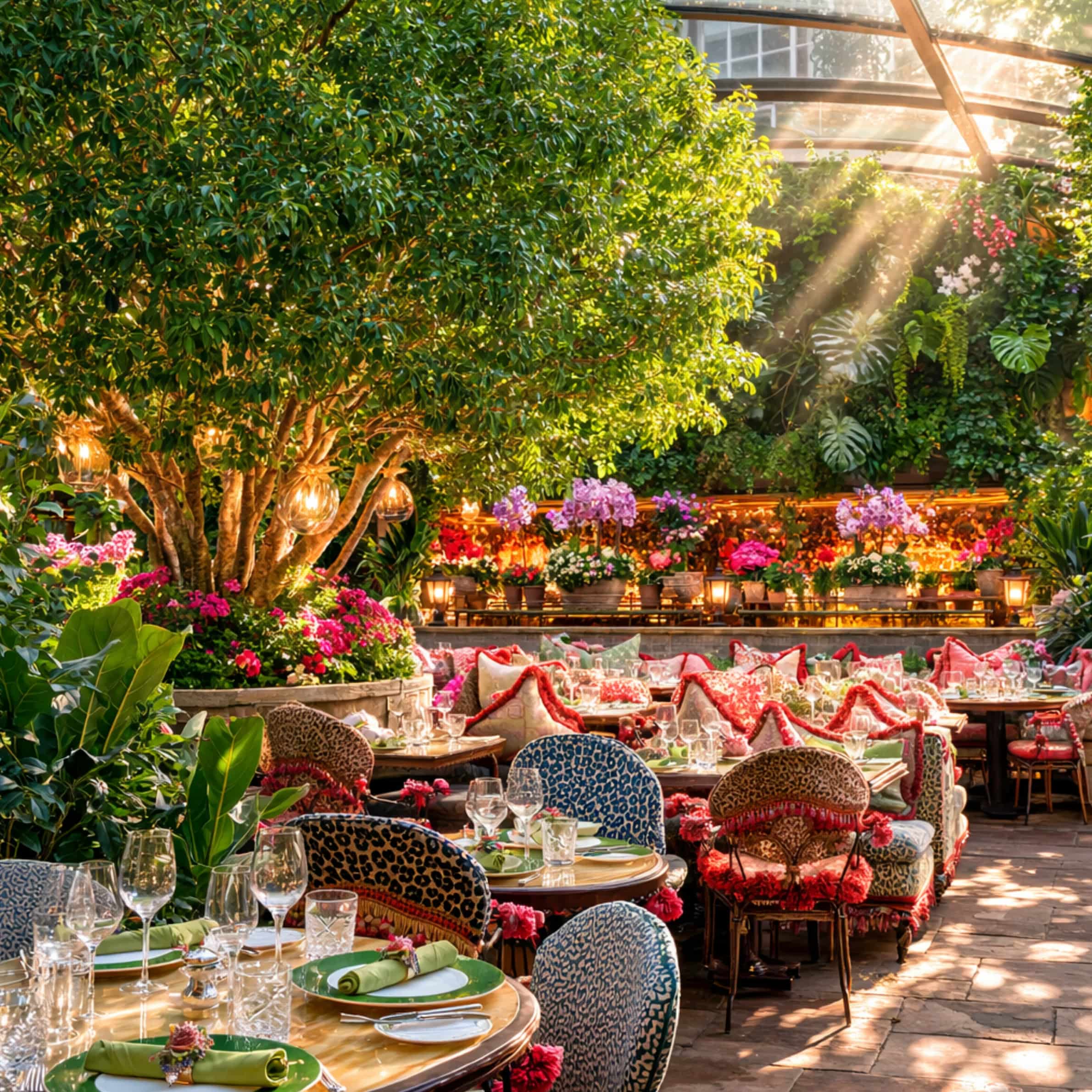
The sale of Richard Caring’s hospitality empire spanning Annabel’s, The Ivy and Caprice Holdings is the latest expression of a long-term strategy through which Middle Eastern capital is embedding itself within the architecture of Western icons, reshaping ownership, influence and the future of globally recognised institutions.
The most valuable things in luxury are often the ones that resist valuation. A members’ club where Queen Elizabeth II once danced. A Mayfair restaurant where the waiting list is measured not in weeks but in relationships. These are not hospitality assets in any conventional sense, but they are repositories of cultural memory, and their worth compounds in ways that no balance sheet can and will ever fully capture. Which is why it comes as little surprise that the world’s fastest-growing luxury region is seeking a stake in that cultural ownership.
The deal was finalised in mid-April, when DIAFA completed its acquisition of Richard Caring’s hospitality portfolio, a ten-figure transaction valued at approximately $1.89 billion (£1.4 billion) and one of the largest in the history of the British restaurant sector. To frame it purely as a hospitality transaction, however, is to miss its wider significance. The portfolio in question spans three distinct but complementary categories of London’s premium hospitality landscape. The Ivy Collection, which operates more than 40 brasseries across the UK and Ireland; Caprice Holdings, home to Scott’s, Sexy Fish, J Sheekey and Noema; and the Birley Clubs—Annabel’s, George, Harry’s Bar and Mark’s Club— assets whose worth lies as much in accumulated social capital as on any bottom line.
Annabel’s alone is a case study in what that social capital looks like over time. Lady Gaga has played the house piano. Frank Sinatra, Aristotle Onassis and Gregory Peck were regulars. Princess Diana once arrived dressed as a police officer; Mick Jagger agreed to wear a tie to get in. It is said to be the only nightclub ever visited by Queen Elizabeth II. These are not only anecdotes, but the architecture of a brand whose value cannot be reverse-engineered.
The Buyer
The buyer DIAFA is affiliated with International Holding Company (IHC), chaired by Sheikh Tahnoon bin Zayed Al Nahyan, deputy ruler of Abu Dhabi and brother of UAE president Sheikh Mohamed bin Zayed. Founded in 1999 to diversify the UAE’s non-oil economy, IHC now carries a market capitalisation of over $238 billion (AED 876 billion), the largest on the Abu Dhabi Stock Exchange, with more than 1,300 subsidiaries spanning energy, healthcare, property and agriculture.
Its move into luxury hospitality is deliberate rather than opportunistic. In the year before closing the Mayfair deal, DIAFA partnered with Azumi, the group behind Zuma, ROKA and Oblix. Its portfolio also includes The h.wood Group, the Los Angeles-based operator of Delilah and The Nice Guy. The appointment of Ravi Thakran, former Group Chairman of LVMH Asia and founder of L Capital Asia, with over $4 billion in investments across three decades, as Group CEO signals a strategy built for scale and longevity, not asset-flipping.
“This transaction marks the beginning of a new chapter in global luxury hospitality,” Thakran said via release. “We are curating a portfolio of the world’s most iconic and culturally defining brands, with the ambition to shape how the next generation experiences dining, social connection, and lifestyle.” Richard Caring will remain Executive Chairman, ensuring continuity of vision across the portfolio. Together, DIAFA and Caring will lead the next phase of international expansion, including the long-anticipated opening of Annabel’s in New York.
A Pattern, Not an Outlier
The Caring acquisition is not a one-off, but the latest move in a long and accelerating series of transactions through which Gulf capital has been embedding itself in the architecture of Western premium markets and the logic behind it has only sharpened as the region’s geopolitical position has grown more volatile.
GCC sovereign wealth funds collectively hold more than $5 trillion in assets. The pattern they have assembled in luxury is extensive and deliberate. Qatar Investment Authority has owned Harrods since 2010, acquired for approximately $1.9 billion (£1.5 billion). Qatari-linked structures also control French department store Printemps. Saudi Arabia’s Public Investment Fund holds a 40% stake in Selfridges, partnering alongside Thailand’s Central Group. Qatar’s Mayhoola for Investments, managed by the Qatari royal family, owns Balmain and holds a majority stake in Valentino, in addition to Pal Zileri and Turkish department store Beymen. Saudi PIF has also backed Rocco Forte Hotels, whose portfolio includes The Balmoral and Brown’s Hotel. Qatari investors support the Maybourne Hotel Group, operator of Claridge’s, The Connaught and The Berkeley.
It would be a simplification to attribute this deal flow purely to oil revenue diversification, though that motive is present. The deeper logic is more interesting, and in the current moment, more urgent.
On the same day that news of the UAE’s OPEC exit broke—a decision effective 1 May 2026, ending nearly six decades of membership in the cohort—it became harder to view the Gulf’s Western acquisitions as merely financial diversification. What they increasingly resemble is the construction of a parallel identity: one anchored not in oil, regional alliances or multilateral frameworks, but in the ownership of institutions that the Western world considers culturally irreplaceable.
Owning Harrods, Valentino or Annabel’s is not merely a financial position. It’s a point of entry into the Western cultural conversation, a form of influence that compounds quietly and is difficult to unwind. At the same time, Gulf states are building luxury ecosystems at home, and Western acquisitions provide both international credibility and operational blueprints for domestic development. The capital is patient. The ambition is structural.
For the luxury industry, Gulf capital brings reassurance: iconic addresses are well-capitalised, insulated from the short-termism of listed-company ownership, and backed by investors with genuine appetite for prestige. The quieter question is what these institutions become as they are taken global.
Annabel’s is not an interior. It’s a history of who has passed through its doors, and what it meant to be admitted. That may be the real test of the Gulf luxury playbook: not whether these investors can acquire the world’s most recognisable names, but whether they can extend them internationally without losing the very thing that made them valuable, the sense that belonging to them is still, in some meaningful way, an earned distinction.