EARNINGS REPORT: The world’s largest luxury group posted its first half of organic growth in a year, but the divisional and regional detail shows a business stabilising unevenly rather than rebounding outright.
LVMH reported first-half 2026 revenue of $43.9 billion (€38.6 billion) on Monday, down 3% on a reported basis as adverse currency movements offset positive underlying trading. On an organic basis, however, revenue rose 2%, marking a significant improvement from the 3% organic decline recorded in the first half of 2025. Second-quarter revenue reached $22.2 billion (€19.5 billion), up 3% organically, or 4% excluding the estimated one-percentage-point impact of the conflict in the Middle East, accelerating from 1% organic growth in the first quarter.
Profit from recurring operations came to $9.9 billion (€8.7 billion), down 4% year-on-year, with the operating margin holding broadly stable at 22.5%, against 22.6% a year earlier. Net profit, Group share, was $6.5 billion (€5.7 billion), flat year-on-year, a notable point of stability after several quarters of profit erosion. Free cash flow rose 2% to $4.7 billion (€4.1 billion), and net financial debt fell 19% to $9.4 billion (€8.2 billion). An interim dividend of €5.50 per share was declared.
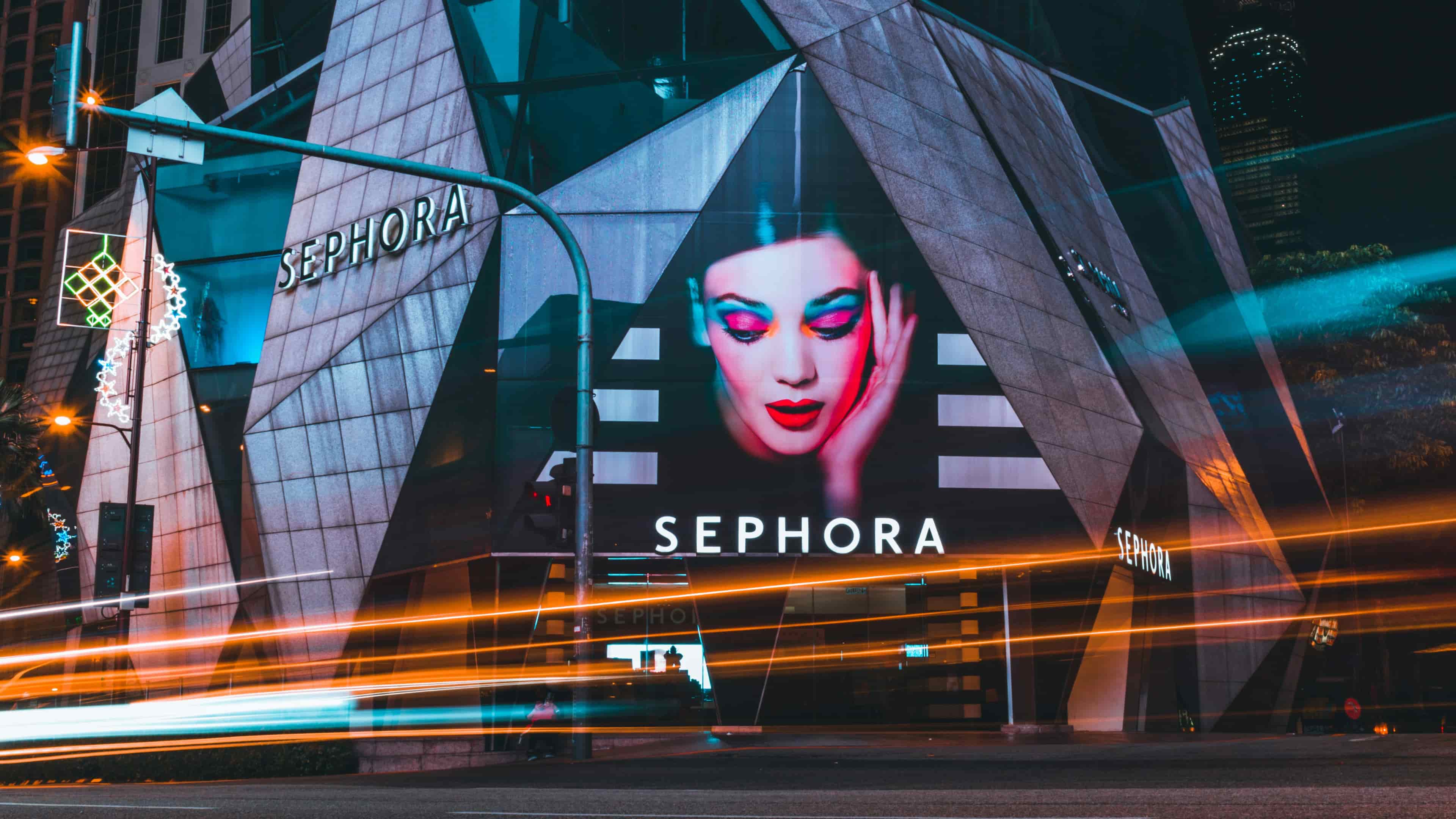
Set against the last two full years, the trajectory is one of gradual stabilisation rather than a return to boom conditions. FY2024 revenue was $96.6 billion (€84.7 billion) with net profit, Group share, of $14.3 billion (€12.6 billion); by FY2025, revenue had fallen to $92.2 billion (€80.8 billion), profit from recurring operations to $20.3 billion (€17.8 billion), and net profit, Group share, to $12.4 billion (€10.9 billion). Chairman Bernard Arnault said LVMH had “demonstrated its solidity and effective strategy,” pointing to Jonathan Anderson’s debut collection for Dior, Louis Vuitton’s flagship openings in Beijing and Seoul, strong performances from Tiffany, Bulgari and Sephora, and an improving champagne and cognac business as highlights of the half.
Hard Luxury Pulls Ahead, Fashion Still Catching Up
The clearest story in the results is the widening gap between categories. Watches & Jewellery was comfortably LVMH’s fastest-growing division, up 9% organically across the half and, unusually, up 3% even on a reported basis despite currency headwinds, the only division to post reported growth at all. Growth accelerated from 7% in the first quarter to 11% in the second, with Tiffany & Co. and Bulgari’s Eclettica high-jewellery line, both singled out for strong performance. Selective Retailing grew 5% organically over the half, accelerating from 4% in the first quarter to 6% in the second on sustained Sephora momentum, and Wines & Spirits also grew 5%, with early signs of recovery in champagne and cognac.
Fashion & Leather Goods, still the group’s largest and most profitable division by some distance, was the laggard: down 1% organically across the half, though it turned positive in the second quarter (+1%) after a 2% decline in the first. Reuters noted this was the division’s first quarterly increase in roughly two years, a framing LVMH’s own release does not make explicit. The release does say growth accelerated rapidly in the United States, and that the division was affected by the conflict in the Middle East, though it does not specify how much of the group’s one-point Middle East drag fell on this division specifically. Perfumes & Cosmetics was flat organically over the half but dipped 1% in the second quarter alone. Two portfolio moves underscored the group’s ongoing pruning: LVMH agreed to sell Marc Jacobs to WHP Global, and DFS, having already sold its Greater China business to China Tourism Group Duty Free, agreed to sell its Los Angeles and San Francisco airport concessions to Duty Free Americas and DFS Okinawa to Avolta.
LVMH does not disclose regional growth rates, only qualitative commentary. On that account, the United States saw growth accelerate through a good first half, Asia excluding Japan delivered strong growth that confirmed the improvement first seen in the second half of 2025, Japan posted growth for the half-year period, and Europe showed good resilience.
The Middle East remains the clearest regional headwind: the conflict there cut group organic growth by roughly one percentage point in the second quarter. LVMH said Fashion & Leather Goods was affected by the conflict, though it did not attribute the group-wide drag specifically to that division. By contrast, the Selective Retailing commentary focused on Sephora’s continued market-share gains, without referencing the Middle East. Whether the two divisions experienced different levels of disruption is unclear, as LVMH did not provide a divisional breakdown of the regional impact.
What it sets up
Shares have fallen 28% since the start of the year, among Europe’s worst performers, and slipped again on Monday, suggesting investors want confirmation that this stabilisation holds before re-rating the stock. Arnault used a rare public comment on Sunday to dismiss reports of a succession dispute among his five children, insisting the family remains united.
LVMH is the first of the major groups to report this week; Kering follows tomorrow and Hermès on Wednesday.