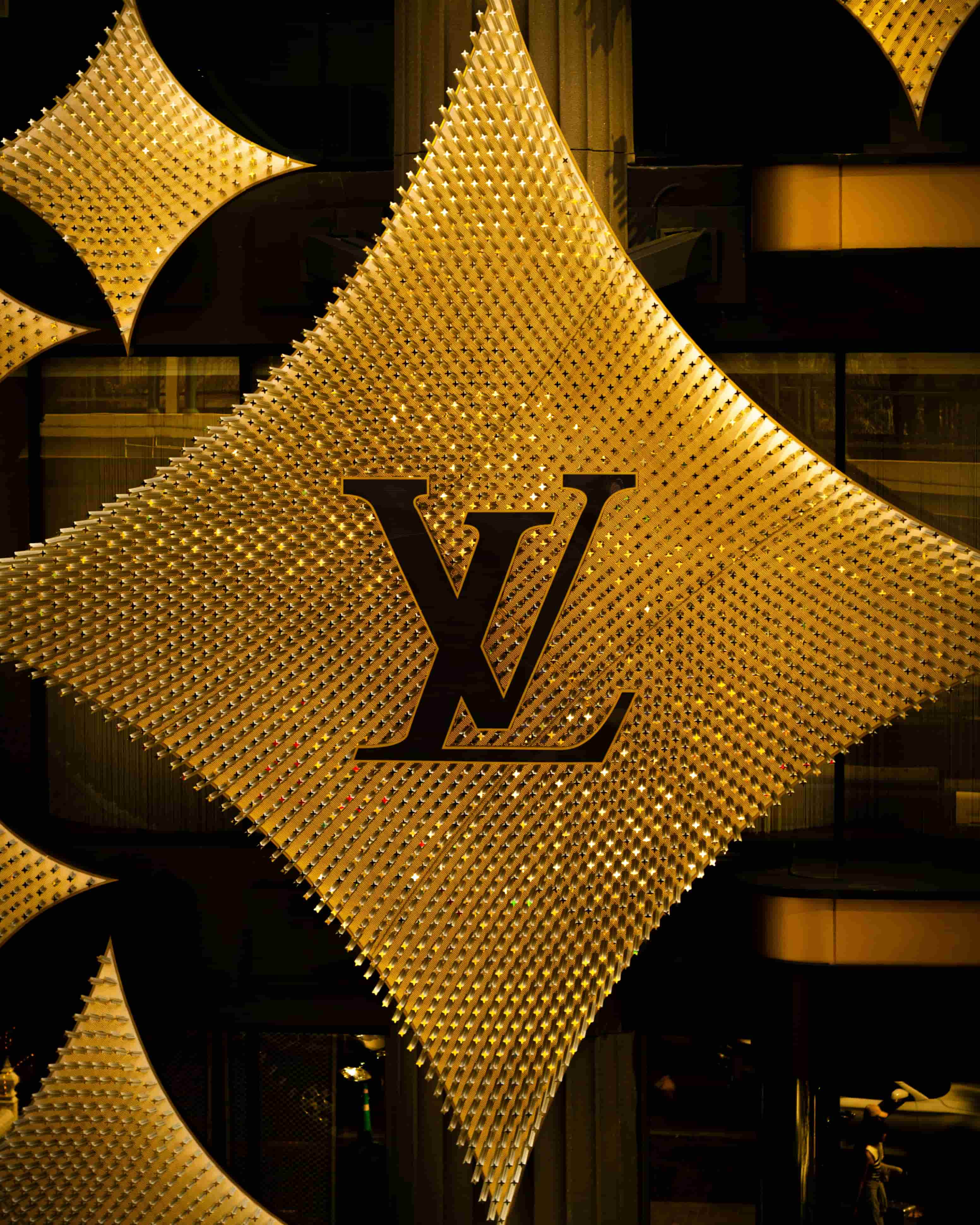
A Suzhou court has ordered Molly Tea to pay Louis Vuitton for monogram infringement, and in doing so, reopened a far thornier question: who actually owns a four-petal flower?
A Chinese court has ruled in Louis Vuitton’s favour in a trademark dispute with Molly Tea, a Suzhou-based bubble tea chain, ordering the company to pay the French house 10.3 million yuan (approximately US$1.5 million) over a logo the court found infringed on LV’s signature monogram. According to local media reports cited by the Associated Press, the ruling has since become one of the more heated intellectual property flashpoints in China this year, not because the verdict itself was unusual, but because of what it appears to have unlocked in public sentiment.
Molly Tea, founded in 2021, built its identity around jasmine and other floral-based teas, with a four-petal flower serving as its visual signature. As of this week, that same logo was still live on the company’s official website, and the brand has told local media it intends to appeal.
The louder story, though, is the one playing out on Chinese social media and in state press. The state-owned Beijing Daily questioned in a Weibo post why a Chinese enterprise ended up paying over 10 million yuan to a French company for a design resonant with centuries-old Chinese pattern traditions, while the Global Times ran a headline asserting that Chinese commentators had accused LV of trying to monopolise ancient motifs, framing it as evidence of frustration over a foreign brand claiming a design many consider part of the national cultural inheritance. One outlet illustrated the point with a side-by-side image: the floral carving on a Tang Dynasty rosewood pipa set against Louis Vuitton’s monogram.
Louis Vuitton has long described the pattern created in 1896 as a “universal symbol of creativity,” with LVMH’s own account tracing its origins to neo-gothic ornamentation and Japonism.
This is not the first such ruling. Earlier this year, a now-shuttered Nanjing restaurant was ordered to pay 60,000 yuan (approximately US$8,400) in damages and 20,000 yuan (approximately US$2,800) in legal fees after a court found its vintage floral decor had also infringed LV trademarks. Intellectual property disputes between Western and Chinese brands are not uncommon more broadly; international firms including the American sneaker maker New Balance have taken Chinese companies to local courts and prevailed in similar cases.