Welcome to the first edition of The Innovation Digest. Published fortnightly and designed for leaders navigating an era of rapid change, this series curates the most important developments across technology, innovation and culture, translating headlines into business intelligence.
This week, we examine what happens when innovation moves beyond experimentation and into implementation. From VivaTech in Paris and LVMH’s latest AI investments to Google’s fashion-first smart glasses, the debates dividing Cannes and Dubai’s new Museum of Digital Art, the signals point to a common theme: technology is no longer a parallel conversation to culture and business, it’s increasingly shaping both.
- VivaTech, The Fashion Week of Tech: Moon Colonising, Brain-Controlled Robots and AI
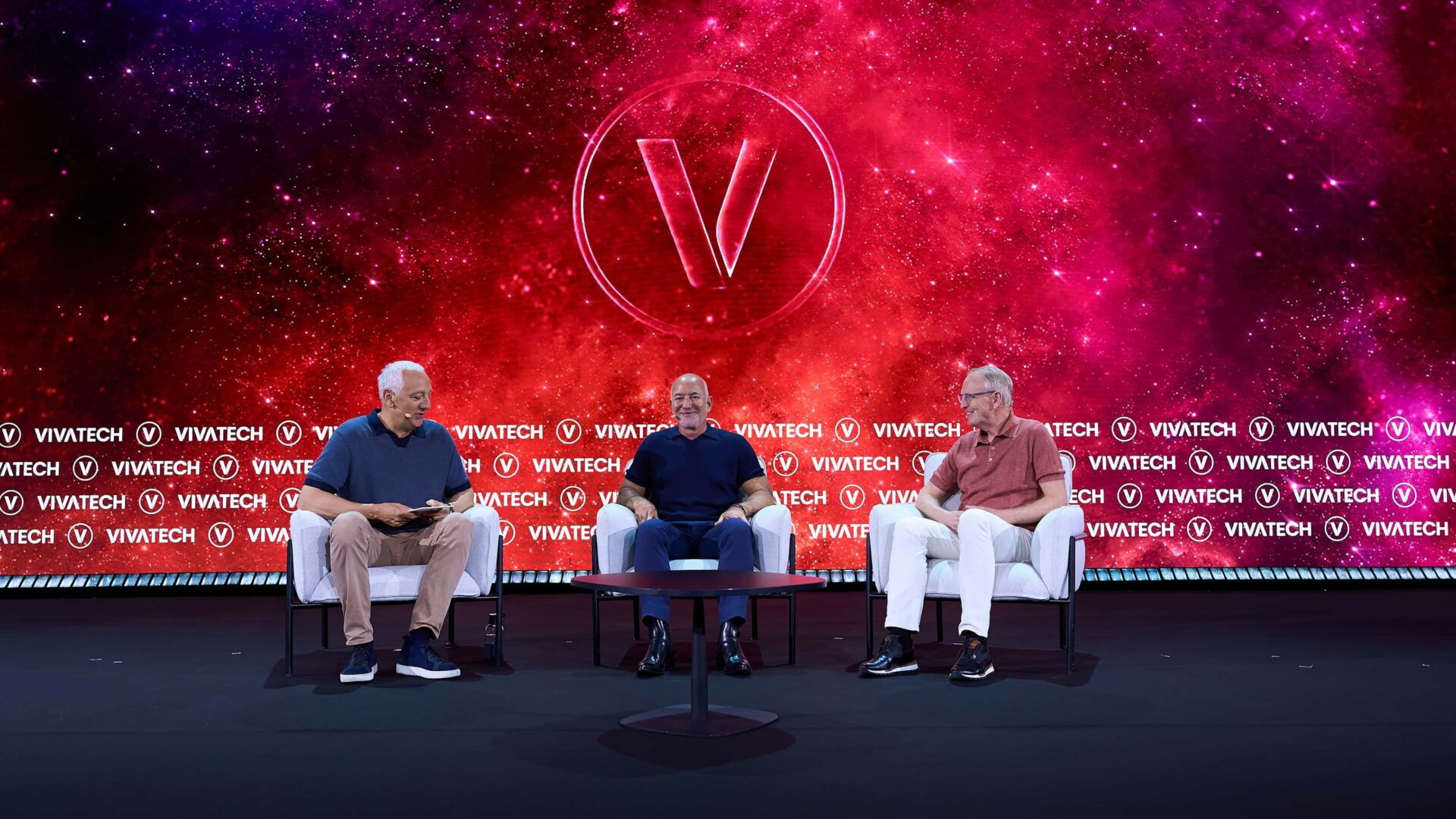
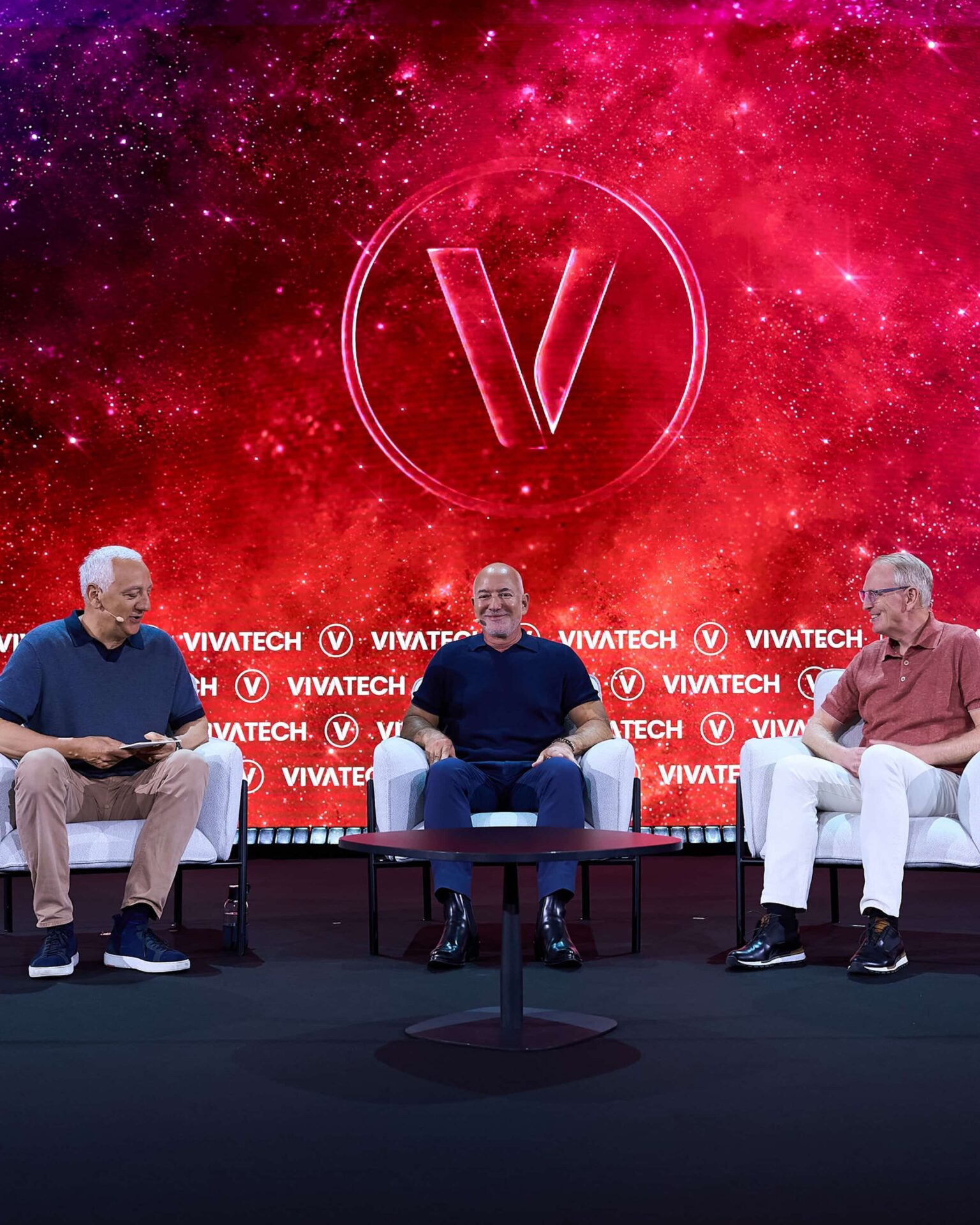
Paris spent last week hosting one of the most closely watched fixtures on the innovation calendar and “Fashion Week of Tech”: VivaTech’s 10th-anniversary edition. Now Europe’s biggest startup and tech event, it drew roughly 180,000 visitors, 15,000 startups and more than 450 speakers to Porte de Versailles, with global innovators, investors and Fortune 500 executives sharing the stage. Headliners included Jeff Bezos (founder of Amazon and Blue Origin, co-CEO of Prometheus), Blue Origin CEO Dave Limp, and former NASA astronaut Mike Massimino, who moderated the keynote on the space economy.
LVMH chairman and CEO Bernard Arnault opened the anniversary edition in conversation with VivaTech co-founder Maurice Lévy, framing AI as a tool for cutting through Europe’s regulatory drag. “Bureaucracy, it’s a word that is too much present in Europe,” he said, adding that “thanks to AI, we are able to kill part of the bureaucracy.” Despite running the world’s most valuable luxury conglomerate, Arnault maintained he still thinks of LVMH as “a conglomerate of start-ups.”
Jeff Bezos predicted at the conference that AI will lead to labor shortages, not the replacement of humans and shared his long-term vision for space: moving heavy industry off Earth and establishing permanent settlements on the Moon. He argued that lunar resources could help restore Earth while enabling future space manufacturing and computing. [Our] garden planet can be returned to its pre-industrial revolution state,” Bezos said. “This is the only way in which the world is worse today than it was 500 years ago. We can actually have both,” he continued, emphasising that the quality of life has improved for the entirety of humanity but that the planet suffered as a result.
AI moved from theory to “impact, not illusion.” That was the show’s official tagline this year, and it showed: rather than splashy generative demos, the floor leaned into measurable deployment, sovereignty, cybersecurity and enterprise-grade AI tooling, with Germany as Country of the Year and India as the official AI country partner.
Fashion-tech got specific. Beyond the keynote stages, practical fashion applications quietly stole the show. California-based PatternFast demonstrated AI-powered “fashion intelligence” that turns sketches or images into production-ready patterns, graded sizing and technical specs in seconds—a process that traditionally took weeks or months—with live proof-of-concept partners.
Robotics was one of the exhibition’s biggest crowd-pullers. Chinese robotics company Unitree showcased a humanoid robot developed in collaboration with French neuro-AI firm HABS. The demonstration highlighted brain-computer interaction technology, allowing participants to control the robot using brain activity rather than voice commands. Wearing an EEG-equipped headband that records electrical signals from the brain, users directed the robot through neural commands generated by the system.
2. LVMH’s 2026 Innovation Awards
The sharpest signal for luxury watchers came via LVMH’s own Innovation Award ceremony, staged at VivaTech. The three winners, selected from a pool of finalists say plenty about where LVMH is actually spending its AI budget:
Best Impact Award: Fairly Made. The supply-chain traceability platform, which LVMH has worked with for four years, is now deployed across 14 maisons including Louis Vuitton, Dior and Celine. “There was no debate. I think this one was clearly standing out,” said Gonzague de Pirey, LVMH’s chief omnichannel and data officer, of the jury’s decision.
Most Promising Award: Bluefish. A New York-based generative engine optimisation (GEO) startup founded in 2024, Bluefish helps brands understand how they’re represented across large language models like ChatGPT and Gemini.”What agentic AI is changing is this upstream part, which used to be basically on the website, basically on Google, and is now shifting massively and rapidly to ChatGPT and Gemini,” de Pirey said. Bluefish already counts LVMH among its enterprise clients alongside Adidas and American Express — making the award as much a validation of an existing relationship as a discovery.
Best Business Award: Synthesia. The AI video-generation platform is being used to rapidly produce multilingual training and educational content for employees across LVMH’s maisons, replacing costly traditional video production for every new product and collection launch. Crucially, LVMH drew a hard line on where the technology stops: “As soon as we are customer-facing, we prefer a human,” said group IT and technology director Franck Le Moal, generative video stays internal, not customer-facing.
3. Google Bets on Fashion to Win the Smart Glasses Market
Google has entered the smart eyewear race, and this time, it’s leading with fashion. Unveiled at Google I/O 2026, the company’s new “intelligent eyewear” was co-developed with Samsung and designed in partnership with Gentle Monster and Warby Parker, running on Google’s Android XR platform with Gemini built in. The move is a direct challenge to Meta’s Ray-Ban smart glasses, which have so far set the commercial benchmark in the category, and which, per IDC, still command the lion’s share of the AI-glasses market.
The first products are audio glasses, arriving this fall, compatible with both Android and iOS. They look like ordinary eyewear but function as a hands-free AI assistant, handling navigation, calls, music, notifications and real-time translation through audio rather than a screen. “Combining the best of Google’s AI and the Android ecosystem together with Samsung’s leadership in mobile hardware and Gentle Monster and Warby Parker’s premium design, we are helping users stay connected and fashionable in a more natural, hands-free way,” said Shahram Izadi, VP and GM of Android XR at Google. A display version was also previewed in conceptual terms, with no partner list or launch date yet confirmed.
The choice of Gentle Monster as a launch partner is telling. The Seoul-based brand has spent the past decade building one of the most culturally potent identities in global fashion, turning retail into experiential art and cultivating a loyal following among Gen Z and luxury consumers alike. Founder Hankook Kim framed the collaboration in terms that go beyond product design: “Intelligent eyewear should feel as emotionally expressive as it is technologically advanced, bringing Gentle Monster’s disruptive design identity into a new era of intelligent eyewear.” Pricing has not yet been disclosed.
4. Cannes 2026: AI on the Red Carpet
At this year’s Cannes Film Festival, artificial intelligence became one of the industry’s most divisive topics, sparking debates across panels, premieres and private events. Filmmakers including Darren Aronofsky argued that AI should be viewed as a creative production tool rather than a replacement for artists, comparing it to earlier technological shifts such as CGI and digital editing. Aronofsky’s studio, Primordial Soup, showcased projects developed with Google DeepMind, using AI for visual effects and ethical production solutions.
AI-friendly tech giant Meta signed on as an official partner to the festival in a multiyear deal, a move that underscored how deeply the tech industry has embedded itself into the cultural mainstream. The conversation intensified around new productions using generative AI, including Steven Soderbergh’s documentary John Lennon: The Last Interview, which incorporated AI-generated imagery.
Fighting AI “is a battle we will lose,” said Demi Moore, a Cannes jury member this year, at the festival’s opening press conference, suggesting the film industry needs to “find ways in which we can work with it.” Not everyone is ready to make peace with that. Guillermo del Toro earlier said he would “rather die” than use AI in his films. He returned to the Croisette with a 20th-anniversary restoration of Pan’s Labyrinth and declared that art cannot be made “with a f*****g app.” Despite the growing experimentation, Cannes has continued to resist fully AI-generated films in its main competition, reflecting the industry’s broader struggle to balance innovation with artistic authenticity.
5. Europe’s First Commercial Robotaxi Service
Croatia, rather than Germany, France or the UK, has become the first European country to put a commercial robotaxi service on the street. Verne, the autonomous-mobility venture spun out of Croatian hypercar maker Rimac, launched public bookings in Zagreb in partnership with Chinese autonomous-driving company Pony.ai and Uber, with an initial fleet operating across a roughly 90-square-kilometre service area covering the city centre and airport.
The vehicles run on Pony.ai’s seventh-generation autonomous driving system, with trained safety operators still onboard during this early phase of the rollout; full driverless operation is expected to follow pending regulatory approval. Rides are currently booked through Verne’s app, with Uber integration on the way. Beyond Zagreb, Verne has opened permitting discussions in other cities across the EU, UK and Middle East, while Pony.ai is targeting deployment in more than 20 cities worldwide by the end of 2026, part of a broader robotaxi land-grab that already spans San Francisco, Los Angeles, Beijing, Wuhan, Riyadh and Abu Dhabi.
6. Dubai Plans a New Museum for Digital Art
Dubai is accelerating its ambition to position itself as a global cultural and creative capital with the announcement of the Museum of Digital Art (MODA), the region’s first museum fully dedicated to digital art and emerging technologies. Launched by Latifa bint Mohammed bin Rashid Al Maktoum, the institution will be located within the DIFC Zabeel District expansion project and represents another step in the Gulf’s intensifying competition around technology-driven cultural infrastructure.
Designed by Adrian Smith + Gordon Gill Architecture, the studio behind landmarks including the Burj Khalifa, the museum will combine immersive exhibitions, interactive experiences, educational programmes and research platforms focused on digital creativity and interdisciplinary experimentation.
Dubai Culture described the museum as part of a broader long-term strategy to position culture as an engine for innovation, knowledge exchange and economic diversification. MODA will also develop a “digital twin” model intended to allow global audiences to access and interact with the institution remotely.