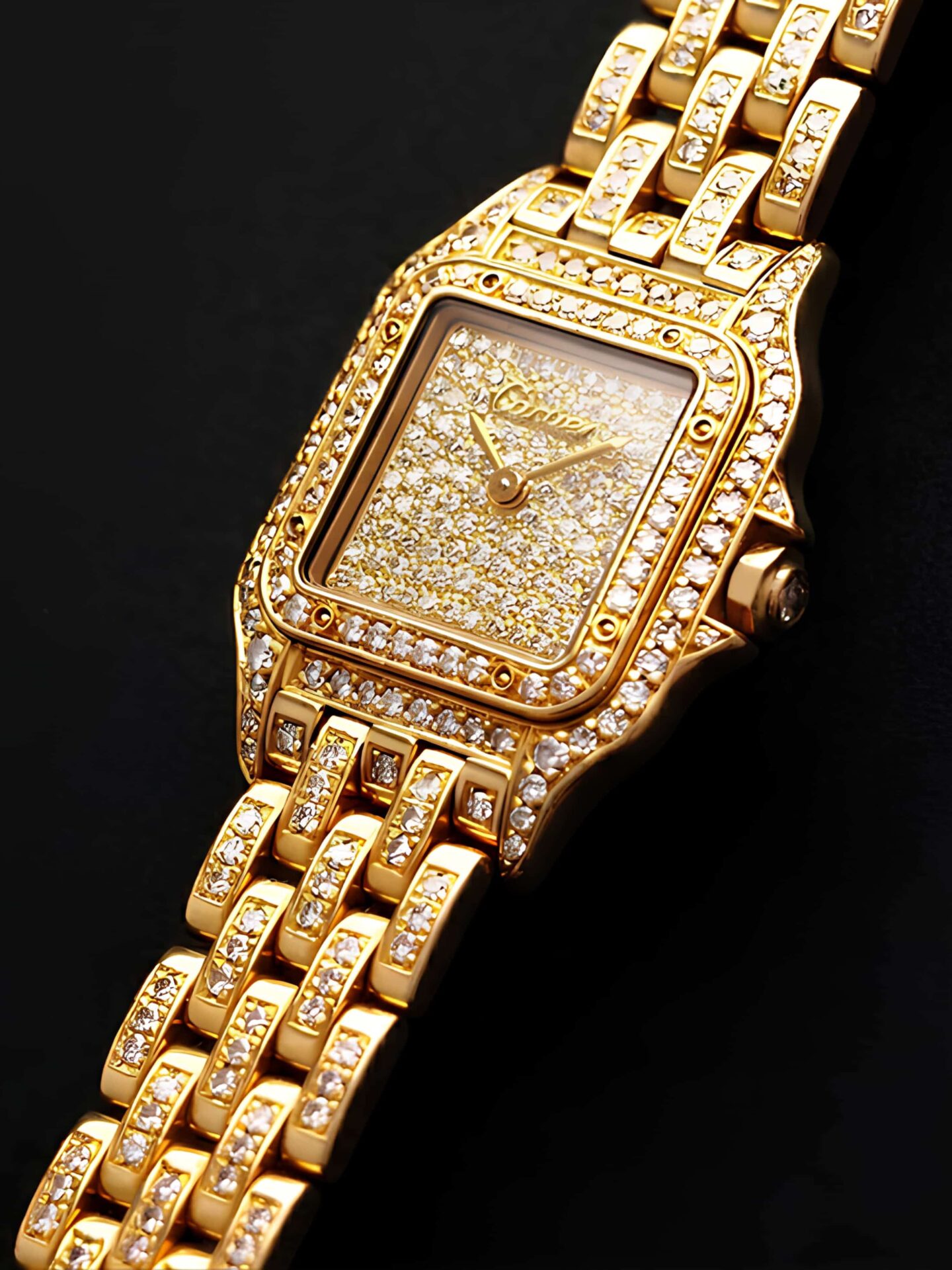
This quarter’s luxury results have triggered one of the industry’s more searching reckonings in years, with fine jewellery and watches quietly pulling away from the fashion houses that defined the previous decade. The question is no longer whether the divergence is cyclical, but what it reveals about how affluent consumers now value permanence, and whether soft luxury is facing a slowdown or a structural rewrite.
In December 1925, American banker Henry Graves Jr. approached Patek Philippe with a simple request: create the most complicated watch the world had ever seen. The commission was the final move in a long-running rivalry with industrialist James Ward Packard, where mechanical ingenuity had become a proxy for status, intellect and power. In Geneva, Patek’s watchmakers began handcrafting more than 900 individual components for what would become the “Graves Supercomplication”, a project so demanding it required three years of calculations before a single gear could be cut.
Then the world collapsed.
By October 1929, the watch was already four years into development when the New York Stock Exchange crashed, wiping out fortunes and plunging the global economy into chaos. Yet inside Patek’s workshops, work continued uninterrupted. While banks failed and industries buckled, watchmakers spent another four years painstakingly assembling the movement’s 24 complications with near-monastic precision. The Graves Supercomplication was finally delivered in January 1933, at the height of the Great Depression. Graves’ wider fortune did not escape the era untouched, but the watch did. Decades later, it sold at Sotheby’s for US$11 million in 1999, before changing hands again in 2014 for US$24 million (CHF 23.2 million), briefly becoming the most valuable watch ever sold at auction. The crash that defined a generation failed to diminish it. If anything, the years poured into its making only made it more valuable with time.
The anecdote may be intimate, but the principle behind it is industrial. When systems fail and currencies wobble, a particular kind of object survives. It crosses borders without paperwork, it outlasts regimes and it retains meaning to the next generation in a way that few other forms of wealth do. Stones outlast empires, and a great watch outlasts the bank that paid for it. That principle has not been visibly load-bearing in the luxury industry since the inter-war years. Until now.
It’s now May 2026, and the luxury industry finds itself suspended between two competing emotional realities. On one side sits fantasy: couture ballrooms, sky-high designer heels, cinematic campaigns and the enduring promise that beauty can momentarily lift people out of ordinary life. On the other sits a far harsher public mood, shaped by rising living costs, wealth anxiety and growing resentment toward systems perceived to reward excess while basic security feels increasingly fragile. Last week’s Met Gala became a visible flashpoint for that tension. The backlash surrounding the event was not simply about celebrity or wealth, but reflected a deeper cognitive dissonance at the centre of modern luxury itself.
Consumers still crave aspiration and emotional release, perhaps more than ever. Yet many are simultaneously being pulled back toward the base of Abraham Maslow’s hierarchy, where the ultimate marker of privilege increasingly feels less like spectacle and more like stability, health, time, safety and the ability to live without precarity. In that climate, the objects retaining emotional power are not necessarily the loudest ones, but the ones that feel enduring. Luxury is beginning to shift from performance toward preservation; from products designed to signal a moment, to objects designed to outlast one.
That helps explain why in the last 48 hours, news that Audemars Piguet will collaborate with Swatch has triggered a level of fascination that far exceeds the mechanics of the product itself. Audemars Piguet remains one of the most guarded names in Swiss horology. Swatch, meanwhile, was responsible for the MoonSwatch phenomenon—a plastic reinterpretation of the Omega Speedmaster that sent consumers queueing around city blocks and reignited mass obsession with watches as cultural objects. Since the latest announcement, watch forums and social feeds have filled with speculation, leaks and countdowns. Collectors who would ordinarily dismiss an accessible collaboration have found themselves emotionally invested in the possibility of one of horology’s most untouchable houses opening a small crack in the wall. The reaction is not really about the watch, it’s about proximity to something lasting in an era that increasingly feels temporary.
The cultural appetite the announcement has surfaced is being matched almost line for line by the balance sheet. By the first quarter of 2026, the divergence had become too consistent to dismiss as cyclical noise. LVMH reported revenue of US$20.6 billion (€19.1 billion), with organic growth slowing to 1%, below analyst expectations. Inside the same group, watches and jewellery emerged as the standout category, climbing 7% on an organic basis, driven by Tiffany & Co. and Bvlgari, while fashion and leather goods, long the industry’s profit engine, fell 2% organically.
The split is becoming even harder to ignore across the wider sector. Richemont, owner of Cartier and Van Cleef & Arpels, posted 11% sales growth in its latest reported quarter, with its jewellery maisons surging 14% despite already difficult comparatives. Meanwhile, Kering reported first-quarter revenue of US$3.8 billion (€3.57 billion), down 6%, as Gucci declined 14% on a reported basis to US$1.53 billion (€1.35 billion). Yet even there, jewellery became one of the few clear growth stories, with executives singling it out as a major contributor to stabilisation.
Last month, Bernard Arnault, Chairman and Chief Executive of LVMH told shareholders that 2026 would resolve in either recovery or catastrophe, with the unfolding Middle East conflict the variable he could not model. In the same address, he also reaffirmed an ambition that has been quietly reshaping LVMH for half a decade. He intends to make Tiffany & Co. the world’s pre-eminent jewellery house within five years, and to surpass Cartier in the process. Read against the divergence, the bet is unsentimental. Hard luxury holds when soft luxury bends, and the largest operator in the category is reweighting accordingly.
So, what are the forces quietly redrawing luxury’s centre of gravity from the wardrobe to the vault, and why do they pose such a profound challenge to the economics fashion has relied on for decades?
From Consumption to Custodianship
The first force is psychological, and it begins with a price war fashion won and then quietly lost. Between 2020 and 2024, soft luxury raised prices to a degree that left many of its core customers behind without delivering a parallel upgrade in materiality. A handbag that crested US$10,000 (£7,900) without a corresponding rise in craftsmanship made the value calculus harder to defend in the boutique, and impossible to defend in resale. Buyers who could afford the new price points began to ask a different question. If this object will not retain its value, why is the value priced into it at all?
The answer increasingly, has been to stop thinking about luxury as consumption. Bryce Quillin, Principal and Chief Economist at It’s A Working Title LLC, traces the shift to a single inversion. Quillin reaches the question from an unusually wide vantage point. After a Doctorate at the London School of Economics, he spent more than a decade at the World Bank and the International Monetary Fund, including as Lead Author of the Bank’s flagship East Asia monitor. He then went on to serve as Chief Corporate Economist at Pfizer and Chief Economist at a quantitative hedge fund.

“From consumption to custodianship,” he says. “Hard luxury is outperforming because it aligns with a mindset shift. Consumers increasingly see themselves as custodians of assets rather than owners of products.” The reframing sounds modest, but it changes everything downstream. The buyer who once walked into a boutique to participate in a season now walks in to take a position. The salesperson is no longer closing a sale, they’re curating an entry point. The receipt is no longer a record of consumption, it’s a cost basis. The vocabulary of the secondary market has quietly migrated into the primary one.
The categories themselves are unequally suited to receive that vocabulary. “Watches and jewellery inherently support this,” Quillin continues. “They hold, accrue, and transmit value across time in a way fashion typically cannot.” The distinction is not a matter of taste, it’s a matter of physics and finance. A handbag, however refined, is consumed by use. A piece of high jewellery, even idle in a drawer, is preserved. Bullion has a price. So does a 1968 Patek perpetual calendar. Last winter’s Bottega Cassette may not. Hard luxury’s products were engineered for the asset frame long before the buyer started thinking in it. They have weight, intrinsic material value, and a price-discovery mechanism in the form of auction houses, indices, and pre-owned platforms that publish data the moment a piece changes hands. The buyer can now look up what their piece is worth before they’ve finished their espresso at the boutique. That kind of transparency is what changed the conversation, and what fashion structurally cannot match.
What’s most useful about Quillin’s reading is that he locates the trigger inside fashion’s own decisions, not outside them. “The sharp price increases in soft luxury after the pandemic margined off many consumers into the hard luxury space, as well as into luxury wellness, beauty, and hospitality,” he adds. The implication is harder than it first sounds. Hard luxury didn’t poach the customer, fashion released them. By raising prices faster than perceived value, soft luxury widened the gap between cost and confidence, and the customer simply walked to the categories where the math held. Some of the spend went to wellness and travel. The most asset-conscious portion went to watches and jewellery, where the price tag and the conviction at least matched. The behaviour has now caught up with the framing. Jewellery is forecast to grow at roughly four times the rate of clothing within the luxury segment, according to research synthesised by Business of Fashion in its State of Fashion 2026 report. The choice is no longer between two desirable objects, it’s between a perceived depreciating signal and an appreciating one, and the affluent buyer has begun to mark their preference accordingly.
Long Lived Luxury
If the first force is a change in how the buyer sees themselves, the second is a change in what they expect the object to do, and that change reaches into the design of the businesses themselves. Soft luxury’s economics rest on a calendar of newness. Newness creates urgency, urgency compresses time-to-purchase, and time-to-purchase determines sell-through. The calendar is not incidental to fashion’s profitability, it’s the engine. The model works when consumers accept the premise that a garment becomes outdated by virtue of the next garment arriving. Increasingly, they do not.
Quillin frames the shift in language a strategist would recognise. “Longevity is becoming a primary purchase driver,” he explains. “In a climate of economic and cultural uncertainty, durability and permanence are no longer secondary attributes. They are central to perceived luxury. The idea of ‘buy once, hold for decades’ is quietly replacing seasonal turnover.” Strip out the politeness and the sentence is more confronting than it sounds. It’s not a stylistic adjustment. It’s the inversion of the principle on which fashion’s marketing engine has rested for the better part of 50 years. A house that sells objects designed to outlast their season has, by definition, also sold its last excuse for a new season.
In a climate of economic and cultural uncertainty, durability and permanence are no longer secondary attributes. They are central to perceived luxury. The idea of ‘buy once, hold for decades’ is quietly replacing seasonal turnover.
What is filling the gap is what the houses have begun calling the new heirloom. Tiffany’s HardWear and Lock collections, Cartier’s Trinity, and Van Cleef’s Alhambra are not seasonal. They are cumulative. Customers buy in once, then add to their position over years, in the manner of an asset allocation rather than a wardrobe rotation. The houses are not competing for next season’s purchase, they are competing for a place in the family. Fashion may borrow the language of permanence. But very often it’s limited (without dismantling its own economics) in being able to deliver the substance.
About Time
The third force follows naturally from the first two, but it cuts deeper than either. If the buyer is now a custodian, and the object is now a long-duration asset, then the way the brand talks to them has to change, and so does the infrastructure that catches the object once it leaves the boutique. Soft luxury once held cultural primacy because it told stories better, through runway shows, magazine covers, and celebrity dressing. That arena has fragmented. Streaming, social, and the attention economy have shrunk a season’s drop into a fortnight of relevance, and a fortnight is not a long enough horizon to justify a five-figure handbag. Hard luxury has moved in the opposite direction. It has annexed time itself as the storytelling territory, and it has built the financial plumbing that makes the story defensible at the boutique counter.
Quillin’s framing of the narrative shift is almost theological. “Time is the new storytelling territory,” he says. “The strongest brands in watches and jewellery are not just selling objects, but positioning themselves as markers of time: heritage, milestones, and legacy. This gives them a narrative depth that feels increasingly relevant as consumers move away from fast, visible luxury.” Patek Philippe’s decades-old line on stewardship and the next generation reads now less as an advertising flourish than as a category thesis hard luxury has been quietly aligned to for half a century. The houses winning the present are the ones that did not have to redesign their narrative for the moment. They simply turned up the volume on what they were already saying. Taste cycles, time does not. Brands that have been telling time-based stories for a hundred years have an unfair advantage in a market that has only recently started listening.
However, the narrative would not hold on its own. What gives it commercial weight is the infrastructure that has quietly been built around the object after it leaves the boutique. “Resale isn’t a byproduct,” Quillin further unpacks. “It’s part of the value proposition. The strength of secondary markets doesn’t just reflect demand, it actively reinforces primary market confidence. Liquidity, price transparency, and collectability create a feedback loop that fashion largely lacks.” Read carefully, that is one of the most consequential sentences in luxury today. The primary buyer is no longer making a sunk-cost purchase. They’re taking a position with optionality, in a market where they can see the price in real time. Auction houses, certified pre-owned programmes run by the houses themselves, and digital platforms that publish daily transaction data have collectively turned hard luxury into something close to an asset class with a transparent order book. Fashion has no real equivalent, outside a small handful of Birkin-class pieces, and even those depend on a supply discipline the rest of the category cannot replicate. When fashion items resell well, they do so as exceptions. When watches and jewellery resell well, they do so as a system.
Taken together, these mechanisms describe hard luxury behaving less like a retail category and more like a small asset class with full-stack infrastructure. In a decade defined by instability, the distinction is no longer cosmetic. The affluent buyer is no longer purchasing an object, they are purchasing duration. And duration, in the end, is just another word for time.
That perhaps, is the conclusion the numbers in 2026 have been pointing toward all along. The greatest luxury, beneath every other luxury we have ever invented, has always been time itself. The watches and the stones simply offer the most honest version of it. We are in our different ways, buying it back where we can.