
A McKinsey study of nearly 7,500 senior leaders found that managing upward and across an organisation is 50% more important to business performance than managing the team below. Yet the resources, structures, and support systems that would enable this remain almost entirely absent. When a recent gathering of Asia-Pacific’s most senior marketing and commercial leaders convened in Singapore by Maker Lab, that very gap was the thing they kept returning to.
AI. Budget constraints. Talent wars. Geopolitical volatility. Accelerating content demands. There is almost nothing senior leaders across Asia-Pacific are not being asked to carry right now. And yet, for all the external analysis of what is making leadership harder, one conversation remains conspicuously absent from conference rooms, leadership forums, and industry research alike. The greatest constraint on business performance is not any force acting from outside. It’s leadership itself. More specifically, the structural burden of leading within organisations that were never designed to make leading easy.
CEO confidence has hit a five-year low, according to KPMG’s 2024 global survey of more than 1,300 executives. Nearly three-quarters cite AI as their top investment priority, yet remain deeply divided on what capabilities are actually needed. The priorities multiply. The resources do not. It was precisely this tension that surfaced at a recent gathering co-hosted by Beyond the Boardroom and global in-housing consultancy Maker Lab, bringing together senior leaders from across Asia-Pacific’s hospitality, technology, sport and entertainment sectors for the second edition of the dinner-meets-discussion series, Third Thursdays. Despite vastly different mandates and markets, leaders returned repeatedly to the same unspoken truth: the hardest part of leading teams today is not managing talent or embedding technology. It’s leading leadership itself.
Talent is Not the Ceiling
Executives spoke with unusual frankness about their operating reality. Budgets are constrained while mandates expand. Business cases are scrutinised with unfamiliar intensity. Global and local agendas diverge in ways that rarely resolve cleanly at execution. Layered approvals slow strategy into action, and yet the expectation of accelerated output doesn’t diminish. It compounds.
What surfaced repeatedly was that a significant proportion of senior leadership energy is now directed not downwards into teams, but upwards and laterally. Influencing stakeholders above. Aligning peers across functions. Establishing the clarity from which teams can derive direction and momentum.
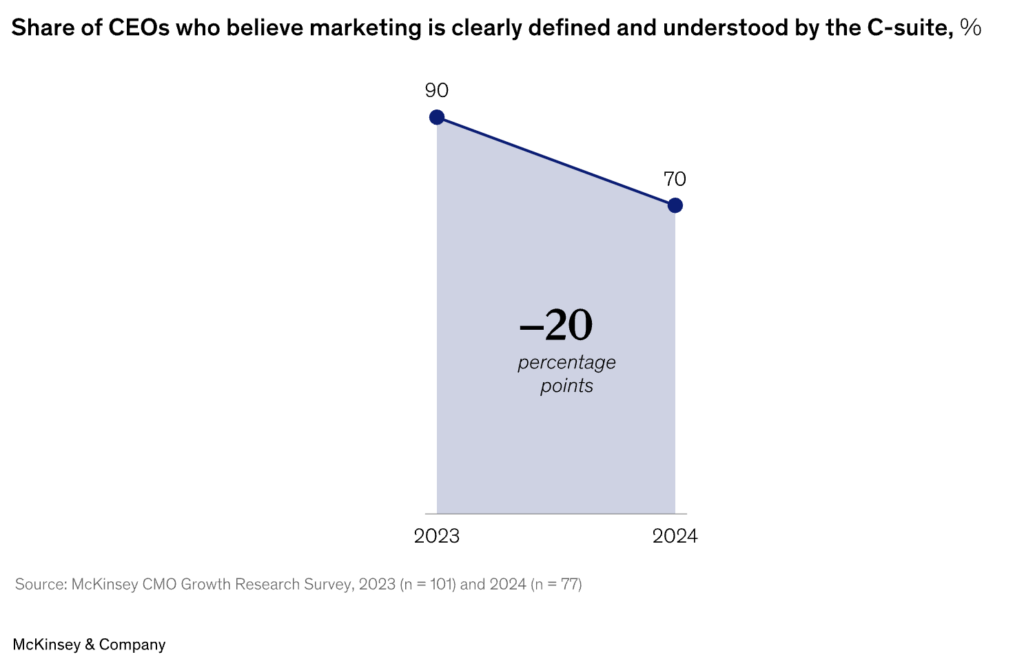
This is the invisible mandate of senior leadership. It generates no visible deliverable. It appears on no scorecard. It receives no dedicated support. Yet it determines, more than almost any other factor, whether the talent an organisation has worked hard to attract can actually perform, or whether it stagnates within a system too fragmented to support it.
“We can get more done with external partners at times than we ever could purely through internal process,” said one senior marketing executive from a leading regional hospitality group. “It’s not just about the resource, it’s about the freedom that comes with it. Less internal negotiation, less bureaucratic drag. The work moves at the pace the business actually needs. That changes everything.”
The leaders gathered were not dismissive of the talent imperative. Attraction remains achievable. What is considerably more complex is the gap between attracting capable people and creating the conditions for them to progress, develop, and stay. Structural constraints—traditional hiring models, outdated performance systems, and capped promotion pathways—continue to limit leaders’ ability to reward high performers in ways that bear any relationship to actual contribution.
As one head of brand from the entertainment sector put it, talent challenges almost without exception present as symptoms of broader organisational rigidity. No volume of recruitment investment resolves that at the root. “In sport, teaming is everything,” observed the regional marketing head of a global sporting league. “Every performance breakthrough comes back to the same thing. Not individual brilliance, but the quality of how people operate together, and the conditions that make that possible. That’s not just a sports lesson. It’s a leadership one.”
AI Accelerates Everything Except the Part That Matters Most
Artificial intelligence was an inevitable presence through the evening, though not in the register that dominates most industry discourse. The existential uncertainty of earlier years has largely dissipated. These were leaders who had deployed tools, restructured workflows, and confronted the realities of integration with sufficient rigour to have formed grounded views.
But something more uncomfortable has taken its place.
Leaders today are expected to hire, manage, influence, and build the case for growth, all at once. The opportunity isn’t to find better people, but to better support the ones already in place.
The anxiety has not gone away. It has shifted, from fear of the technology itself to fear of making the wrong call about it. Leaders are under pressure to move fast, invest big, and show returns on AI, while operating in environments that remain insufficiently aligned on what the output is actually meant to achieve, or why. The result is a peculiar kind of paralysis dressed up as action: more tools, more output, more speed, and less clarity about any of it.
“AI gave us speed,” said one head of marketing from a global technology company. “It didn’t give us direction. We’re producing more, faster. The question of whether any of it is the right thing still requires a person in a room exercising judgement.”
Several executives also observed that tool adoption without structural clarity has, in practice, shifted pressure rather than reduced it. It has compressed timelines and raised expectations in environments that were already strained. And beyond the professional dimension, leaders acknowledged something rarely said aloud: the ambient uncertainty of working in AI-disrupted organisations is beginning to affect people personally from their sense of professional identity, to their confidence in their own judgement, to their ability to switch off. The instability isn’t just organisational. It’s human. Human intelligence (relational, contextual, and strategic) remains the irreducible centre of performance. The leaders who have internalised that distinction are navigating the current landscape with considerably more clarity than those who have not.
What Leadership Demands Next
The message that crystallised across the evening was not a call for new frameworks or fresh technology investment. It was a more fundamental recognition: the senior leadership role has become a role of orchestration. And that dimension of the role is systematically under-acknowledged, under-supported, and under-resourced.
Matt Shoult, Founder and CEO of Maker Lab, has observed this dynamic with consistency across every market and sector the firm works in. “What we see consistently is that the role of the modern marketing leader has evolved faster than the way organisations are designed around it. Leaders today are expected to hire, manage, influence, and build the case for growth, all at once. The opportunity isn’t to find better people, but to better support the ones already in place.”
The executives gathered agreed that the debate has moved beyond the binary of in-house versus external. The question is now one of integration architecture, and how to design an operating model in which the capability assembled so carefully is connected, coherent, and able to perform at its potential. When structured with rigour, embedding specialist capability closer to leadership shortens feedback loops between strategy and execution, reduces fragmentation, and creates the proximity that allows institutional knowledge to accumulate and compound.
One senior marketing executive captured the closing provocation with precision. “We spend so much time on motivational frameworks, systems design, talent pipelines, the right tools, the right structure. And all of it matters. But if I’m honest, what has made the difference in every high-performing team I’ve ever been part of was never the framework. It was the quality of the leadership around it. The willingness to absorb ambiguity from above so your team doesn’t have to. To fight for clarity when everything is pulling toward confusion. To protect the conditions in which good work can actually happen.”
“That’s what nobody tells you. And in a world where AI is accelerating everything and nobody really knows where it ends, that human capacity to hold the room steady may be the only genuine competitive advantage left. We can never quite invest in it enough.”
More insights from Maker Lab’s Third Thursdays series, in partnership with Beyond the Boardroom, will follow. Read the first piece on AI and marketing leadership here.