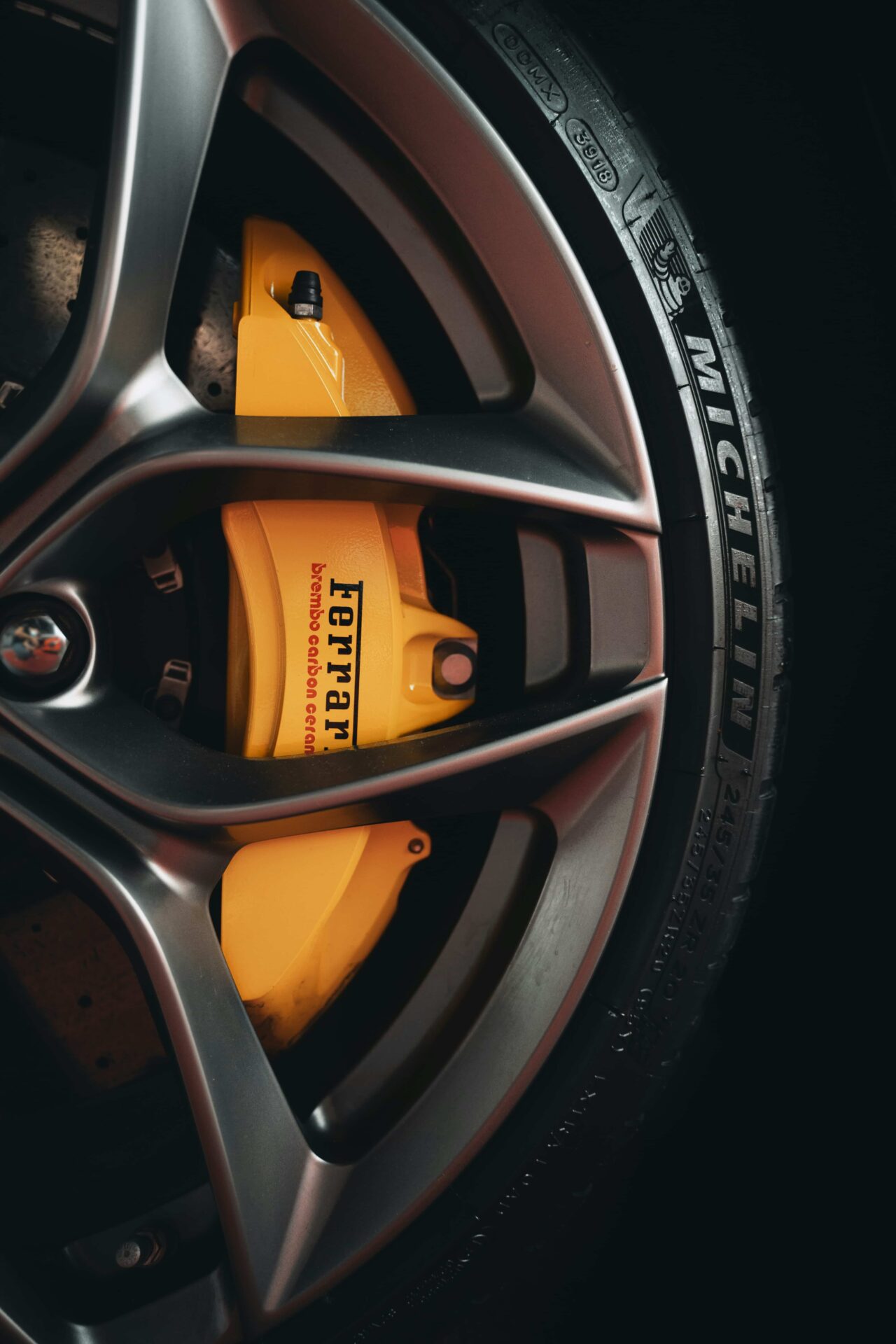
As regional conflict stalls shipping routes and grounds logistics networks across the Gulf, Ferrari, Bentley, and Maserati have suspended deliveries to one of luxury’s most profitable markets exposing just how fragile the invisible infrastructure of high-end commerce really is.
Luxury carmakers including Ferrari, Bentley and Maserati have suspended vehicle deliveries to the Middle East, as escalating regional tensions disrupt logistics networks and heighten security risks.
The move announced over the past week, reflects what Maserati described as a “very critical” transport environment. Shipping routes have become increasingly unreliable, while operations across key markets including the UAE, Saudi Arabia and Qatar, are coming under mounting strain.
For a market defined by immediacy and exclusivity, disruption is costly but not prohibitive. Ferrari has paused standard deliveries, though a limited number of vehicles continue to be flown into the region. Air freighting a single car to Dubai can cost between $15,000 and $40,000 or more, up to four times the price of regular sea shipping. For most industries, such premiums would be untenable; for the Gulf’s ultra-high-net-worth clientele, they remain an acceptable price for certainty.
Bentley has also halted deliveries to the region according to Bloomberg. Its Chief Executive Frank-Steffen Walliser added: “At the moment, we don’t see an impact from a production side. But for sure, people in the Middle East have other thoughts than looking for a new Bentley at the moment.” The pause comes amid broader cost pressures. The company recently announced plans to cut 275 jobs in the UK, around 6% of its workforce, citing a “challenging global market environment.”
Despite its relatively modest share of global volumes, the Middle East remains strategically important for luxury automakers. Bentley has previously described the region as a vital market, accounting for 7–10% of global retail sales with a strong focus on high-margin, bespoke, and personalised vehicles. For Ferrari, the region represented about 4.6% of global shipments in 2025, a small but highly profitable segment, underpinned by a concentrated base of ultra-wealthy clients.
Before the current disruption, fundamentals in the region pointed firmly to growth. Research from IMARC Group projected the Middle East luxury car market to expand steadily through 2034, supported by oil-driven economic strength, diversification policies, and sustained infrastructure investment. Expanding road networks, favourable tax regimes, and growing demand for personalisation were reinforcing momentum, while a buoyant tourism sector added incremental demand through rentals and chauffeur services. According to UN Tourism, the Middle East attracted around 100 million visitors in 2025, nearly 7% of global international arrivals. High utilisation rates across luxury fleets alongside rising expectations from corporate travellers, have further entrenched the role of premium mobility as a baseline service rather than a discretionary upgrade.
Industry leaders are watching developments closely. Volkswagen Group CEO Oliver Blume warned in mid-March that geopolitical volatility could weigh on demand for premium brands including Porsche and Audi. “We are simply seeing how volatile and fragile our world is, with new issues arising every month,” he said. Meanwhile Lamborghini CEO Stephan Winkelmann echoed the broader concern, noting that regional tensions are feeding into the global economic backdrop. Even so, he pointed to the brand’s resilience when speaking to Arabian Business. “What is happening in your region is, for sure, affecting the global economy, at least the gas and the oil prices,” he said. Demand for Lamborghini’s cars has nonetheless remained robust. “The brand is resilient. We never push peaks, so we always try to maintain a level of balance between the scarcity and the residual values,” he added.
Short-term forecasts for the regional luxury market however, are less optimistic. Bernstein estimates that luxury sales in the Middle East could halve in March, reflecting a sharp decline in foreign visitors, logistics disruption and consumer uncertainty. Even wealthy locals are delaying or cancelling discretionary purchases amid the geopolitical tension, a notable shift given that the region’s ultra-high-net-worth market has long been a pillar of global luxury resilience.
This piece is best read alongside BTB‘s earlier coverage of how escalating tensions are testing luxury, trade, and investor confidence across the Gulf more broadly.
For now, the region’s luxury auto market is less in decline than in suspension, a high-margin ecosystem temporarily stalled by forces beyond its control. How quickly it resumes will depend not on demand, which remains structurally intact, but on the restoration of something far more fragile.