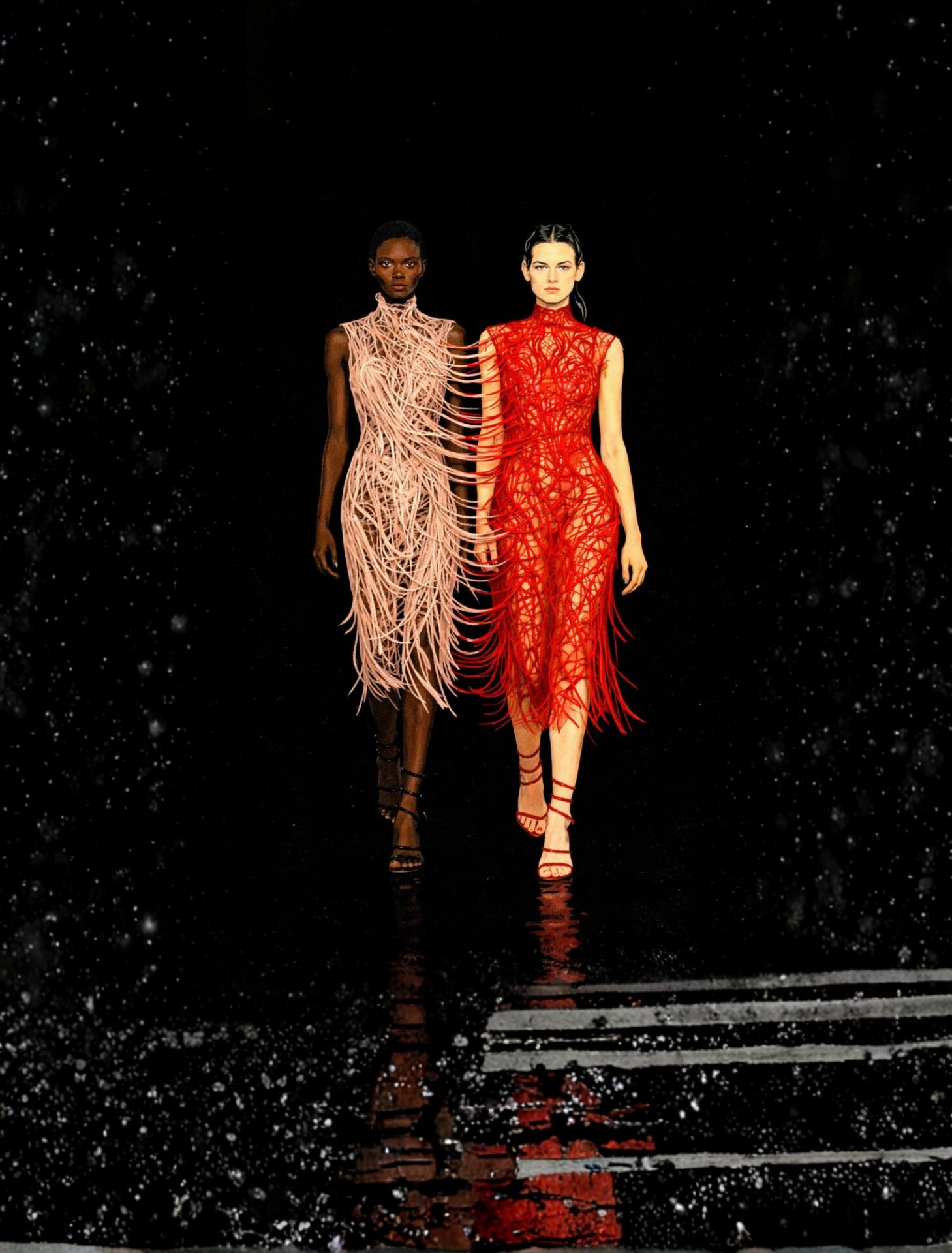
OFF THE RECORD: A single week in Singapore, three encounters. A Paris couturier who sculpts in fabric, a generation of Asian creatives unbothered by AI anxiety, and a Vietnamese delegation who simply bought plane tickets, and by Friday they had arranged themselves into a single argument about what it actually takes to lead when your industry is mid-reinvention. Conviction, it turns out, is not a soft variable.
Some weeks hand you a thesis without asking permission. Some weeks hand you three conversations, three different rooms, and no agenda in common, and then ask you to find the thread. By last Friday, I had both.
First, an afternoon of couture, conversation, and curation with GG, or Gaurav Gupta as the rest of the world knows him. The Indian-born, Paris-based couturier has become one of the most distinctive voices in global fashion, having trained at Central Saint Martins and now, a well-established fixture on the French Haute Couture calendar. His signatures are dramatic, body-conscious spirals and architectural draping that treats the human form as both material and subject from Beyoncé to Cardi B to Mindy Kaling and Deepika Padukone. Seeing him in Singapore again (he was here in 2023 for Next in Vogue Singapore, and now with Indian jewelry trailblazer Outhouse for an exclusive showing of his recent Paris collection with Melange) reminded me of what focused creative conviction actually looks like up close.

While the fashion industry holds its recurring existential symposium on relevance, excess, and its own future, he is in the atelier, making things. His twin dress (see our cover illustration above), a sculpture of fluidity and form that treats gender as a starting point rather than a constraint, does not come from a trend report. It comes from somewhere quieter and considerably more stubborn. In luxury, the temptation is always to track the signal, what is selling, what the room is ready for, what the analyst report suggests. The harder and more durable position is to generate the signal. Gupta operates in the second mode. The noise simply does not land on him. In the current climate, that is not just an artistic position, it’s a competitive one.
Next came Spikes Asia, the regional Cannes Lions, and the industry’s most serious annual reckoning with its own talent. I will confess a particular tenderness for this world, having come from BBDO, where the campaign was the gravitational centre of everything. That world is now in the middle of its own identity crisis, with AI able to produce in seconds what once required weeks of studio time and the entirely reasonable question of whether brands still need agencies at all. And then you watch the next generation of Asian creators present their work, and the anxiety becomes difficult to locate. The dedication is total. The craft is exceptional. They are using the tools without being used by them, which turns out to be the entire argument.
And finally, on what should have been a quieter afternoon, the Vietnamese entrepreneurs. A delegation of young creatives who flew to Singapore specifically for a two-hour meeting led by Betty Tran, a consultant and former designer who carries the authority of someone who has actually built things. Their aim: new connections, new markets, and new ways to make the work reach further than their immediate environment allows. There is something clarifying about people who have no margin for creative paralysis. They did not wait for the right moment, the right introduction, or the right conditions. They flew. That is the whole story.
To take a leaf out of Gaurav’s book on threading together moments, each person I met this week was operating in an industry under structural pressure, and none of them were managing that pressure through caution. The response in every case was to make something, connect with someone, and move. The thread between a Paris couturier, a generation of Asian creatives, and a delegation of entrepreneurs who simply got on a plane is not coincidence, it’s a methodology.
This is not a personality observation. Research on what psychologists call “creative self-efficacy” or the specific belief that your work has value and that you are capable of producing it, consistently shows it as a stronger predictor of creative output than either technical skill or organisational resource. A 2019 meta-analysis by Tierney and Farmer found this held across industries. Conviction precedes the work, not the other way around. Barbara Fredrickson’s broaden-and-build research adds the neurological mechanism that positive states measurably expand the range of options and connections a person can perceive. A 2023 Gallup workplace report puts a number on it: teams operating from engagement rather than anxiety show 23% higher profitability. Belief it turns out, is not a soft variable.
For leaders in luxury, this has a specific charge. Luxury has always sold the conviction that this object, this experience, or this brand is worth it. The moment a house begins managing perception rather than generating it, the customer senses the shift before they can name it. The same is true internally. Teams know when leadership is navigating rather than believing.
Asia is a useful place to watch this play out. The region’s creative industries have operated for decades with fewer institutional safety nets, smaller domestic markets, and more pressure to compete globally from an early stage. What this produces (at its best) is practitioners who treat constraints as design problems and have not yet acquired the specific inertia that comes with too much established process. The Vietnamese entrepreneurs did not fly because the system made it convenient. They flew because standing still was the only alternative they had declined.
The industries that navigate the next decade will not be the ones with the most sophisticated AI stack, though that will matter. They will be the ones that keep, somewhere near the centre, people who still believe the work is worth making. And leaders who still believe it themselves.
Nobody I met this week was talking about surviving the disruption. Busy hands, quiet minds…perhaps the secret to the future of creativity?
Until then, stay off the record.
Welcome to Off the Record, your new pass into the margins of luxury leadership. Each fortnight, Bettina von Schlippe, Co-founder of Beyond the Boardroom and Publisher-at-Large at Vogue Singapore, distills what’s shaping the region’s luxury landscape, from closed-door perspectives, to unfiltered insights, and the quiet shifts that haven’t made the headlines just yet.