
As marketers grapple with more data than ever before, a considerable lag remains between the intelligence at their disposal and their ability to deploy it at the pace of culture. In Asia, where consumer behaviours, commerce and technology are evolving at markedly different speeds across markets, that disconnect is becoming increasingly consequential. MSQ’s top leaders unpack the complexities of this challenge and how a rethink of established operating models could help bridge the gap.
What good is real-time intelligence if a business decision takes six months to make?
It’s a question that sits increasingly uneasily with Asia’s top Chief Marketing Officers (CMOs), who today, preside over some of the world’s most dynamic consumer markets. Across the region, social commerce, creator-led influence and AI-mediated discovery are rewriting the mechanics of consumer engagement, yet the machinery of marketing frequently moves at a markedly more stately pace.
The cost extends beyond missed cultural moments. For CMOs whose tenures can now be shorter than the brand-building cycles they are expected to oversee, the imperative to demonstrate immediate commercial returns can eclipse substantive transformation. Meanwhile, the disparities between Asia’s markets make the wholesale transplantation of global strategies increasingly difficult to defend. Marketing’s defining contradiction then is not a scarcity of data, technology or creative capability, but the growing inability of institutions to convert unprecedented intelligence into timely, commercially consequential decisions.
But what does moving at the pace of culture actually demand, beyond identifying the next emerging trend? And how can businesses respond with agility when the structures governing their decisions are often their greatest impediment?
For global marketing and technology group MSQ Partners, these questions are central to its efforts to redefine the relationship between intelligence, creative judgement and commercial execution. Founded in London in 2011 by Peter Reid, now its Executive Chairman, and backed by private equity firm One Equity Partners since 2023, the group has developed an international network of specialist creative, media, brand and technology agencies, including Elmwood, The Gate, Stein and Big Spaceship. With clients including Unilever, Diageo, Coca-Cola, Mars and Vodafone, MSQ has positioned itself as an alternative to traditional holding companies, integrating specialist expertise within a unified client relationship rather than operating through disconnected agency silos.
In Asia, that philosophy is taking on a distinctly regional character, with capabilities designed to help brands navigate the diversity and velocity of its markets while determining which emerging shifts warrant strategic intervention.
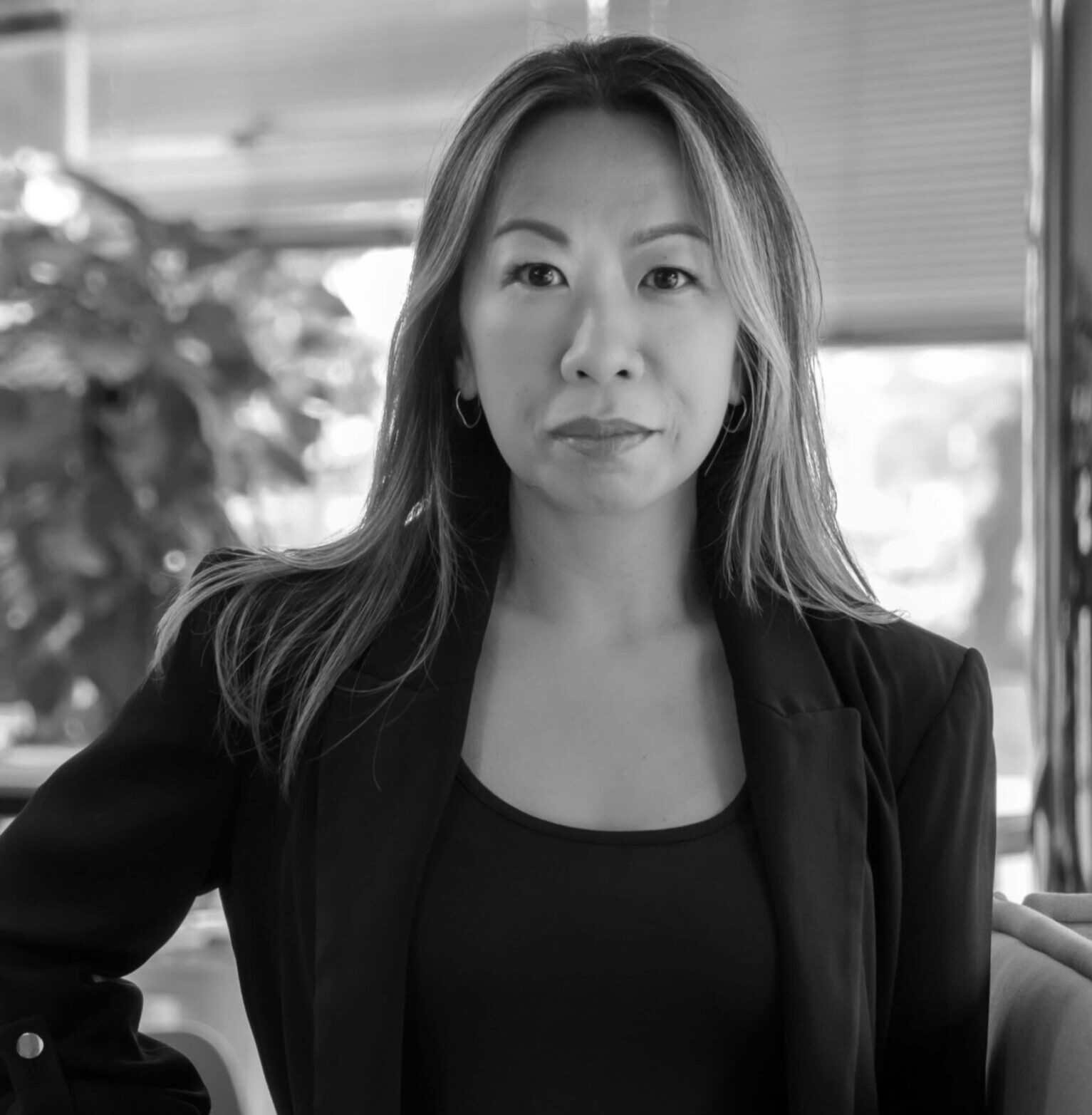
MSQ’s senior leadership, including Founder and Executive Chairman Peter Reid, gathered in Singapore on 19 November to unveil MSQ Signal at MSQ Forward Singapore, an AI-enabled intelligence and growth product developed specifically for Asia. At the forefront of the Group’s regional ambitions is Po Kay Lee, Managing Director of MSQ Asia and Elmwood Singapore, supported by global leaders including Joanna Lyall, Executive Director of Media (both pictured above), and Fergus Dyer-Smith, Chief Product and AI Officer.
The launch also convened a panel moderated by Beyond the Boardroom‘s Co-Founder and Editorial Director Rahat Kapur, featuring Lyall; Preeti Pilare, Head of Marketing, IBM Consulting, APAC; Brandon Chew, Deputy Director of International Branding at Singapore’s Ministry of Trade and Industry; and Rahul Kumbhat, Head of Digital Commerce at Diageo. Centred on the emergence of creative intelligence, the discussion explored how emotional intelligence, artificial intelligence and human creativity might converge into a new form of intelligence, combining technological capability with empathy, cultural intuition and creative judgement to reshape how businesses innovate and create value.

Yet realising that potential requires more than technological sophistication or creative ambition. It demands organisations capable of challenging established assumptions and acting on insights that may contradict existing strategies. For Lee, Managing Director of MSQ Asia and Elmwood Singapore, who joined the Group following senior leadership roles at Forsman & Bodenfors, Superunion and Brand Union, this is where the promise of creative intelligence encounters the institutional realities of marketing. “Clients can’t move at the speed of culture, and often it’s because they get stuck in this, well, can you prove it to me? Can you justify that? Can you verify that?” she observes.
The demand for substantiation is hardly unreasonable, particularly as marketing budgets face intensifying scrutiny. The difficulty lies in reconciling the rigour of corporate decision-making with the narrowing window in which emerging opportunities remain commercially relevant.
Decoding Asia’s Multi-Speed Markets
Speaking to Beyond the Boardroom following the event, Lee, Lyall and Dyer-Smith describe a regional landscape in which commercial realities rarely conform to a singular playbook. China, Indonesia, Vietnam and Singapore operate across distinct platform ecosystems, purchasing behaviours and cultural sensibilities. “All our clients are naturally pan-regional,” Lee explains. “You can’t just copy what’s happened in China. That’s not going to work in Indonesia, and it is not going to work in Singapore.”
This fragmentation is being compounded by a more fundamental disruption to how consumers discover and evaluate brands. As search increasingly incorporates AI-generated answers and recommendations, businesses face a new feedback loop in which visibility depends not only on what they communicate, but on what consumers, creators and third-party sources say about them, and how AI systems interpret that information. A brand might command favourable sentiment and considerable social engagement yet remain absent when a prospective customer asks an AI assistant what to buy.

MSQ Signal was developed around a simple framework: Brand Says, Social Says, AI Says. By comparing a brand’s intended positioning with public conversation and AI-generated recommendations, the product seeks to expose discrepancies between perception, behaviour and algorithmic visibility.
“Sentiment is how people feel about something, whereas in Signal we have the ability to understand what people are actually doing, which can be very different to what they’re saying,” explains Lyall, MSQ’s Executive Director of Media, whose career spans more than two decades, including appointments as UK Managing Director of Mindshare and Freeda Media. Having joined MSQ in 2025 to advance the integration of its creative, media and technology capabilities, Lyall sees the opportunity extending beyond individual brand diagnostics to understanding the forces reshaping entire categories.

“One of the really powerful things that Signal could help [marketing leaders] do is to help them talk about their category, not just their brand,” she adds. “If you can understand and articulate what’s moving that category, you’ve got a far better chance of working out what your strategic next move should be.”
The commercial implications are substantial. According to Statista estimates cited at the launch, Asia’s social commerce revenues are projected to reach approximately US$407 billion in 2026, nearly 70% of the global market. “Asia’s got the biggest concentration of social commerce, and it’s going the fastest,” Lyall observes. “And social commerce only works when you’ve got creators in the mix.” For MSQ, the opportunity lies in identifying the conversations and individuals shaping demand, and understanding how those relationships might generate sustained brand equity rather than isolated bursts of engagement.
But intelligence alone cannot overcome institutional inertia. Lee recalls a brand that spent two years developing a new positioning, only to confront the possibility that its underlying assumptions had become outdated before implementation. “You need someone in that process, when you’ve got these tools like Signal, to have the bravery to say to the client, I know we’ve worked on this for two years. What will it take for us to review this appropriately with the right people to say go or no go?” Intelligence can expose strategic misalignment; acting upon it remains a distinctly human responsibility.
Intelligence can expose strategic misalignment; acting upon it remains a distinctly human responsibility — Po Kay Lee, Managing Director, MSQ Asia and Elmwood Singapore
For Dyer-Smith, MSQ’s Chief Product and AI Officer, the opportunity is to bring intelligence directly into the decision-making process. A technology entrepreneur who founded Wooshii, a UK-based B2B video production agency, in 2009 before its acquisition by MSQ in 2025, he has taken on responsibility for the group’s product and AI capabilities. Rather than waiting for analysts to return with findings, he envisages teams interrogating data in real time. “We’re going to have a conversation, we’re going to look at the data, we’re going to make a decision.”
That immediacy is central to Signal’s application. Built on MSQ’s Growth Engine and supported by its agentic platform, MSQ Assist, the product draws on behavioural datasets, consumer research, market intelligence and social data from sources including GWI, YouGov and LinkedIn APIs. Lyall illustrates its practical application through a skincare brand absent from eight common consumer prompts to AI assistants. Rather than treating that invisibility as an abstract reputational concern, the brand could target appearing in two within three months and develop a corresponding communications strategy. “You should be creating KPIs out of it,” she argues. The principle also extends to B2B through Signal Expert, which examines industry discourse and specialist influence across more complex purchasing cycles.

Next in Agency
Another defining aspect of MSQ’s strategy concerns the operating model through which intelligence and creative expertise reach clients. The traditional agency proposition has long rested on specialist talent, proprietary capabilities and the monetisation of time. Artificial intelligence is recalibrating that equation, making sophisticated analytical and production capabilities increasingly accessible while challenging established definitions of value. “When you think of agency, you think of services, don’t you, and just people cost,” Lyall observes. “Actually, it’s now technology and people, and that’s the core of the proposition.”
It’s now technology and people, and that’s the core of the proposition — Joanna Lyall, Executive Director of Media, MSQ
Dyer-Smith reinforces the argument, questioning what will differentiate agencies as access to sophisticated data and AI becomes increasingly ubiquitous. “There’s huge value in owned data. But in marketing, there’s little owned data that has value over and above all the data that’s out there in the world,” he contends. The implication is not that first-party information has become redundant, particularly in specialised sectors, but that possession alone offers an increasingly tenuous advantage.
Differentiation lies in the ability to interpret disparate sources, exercise judgement and translate findings into commercial outcomes. “We really believe the value today is not in owning the data. It’s in what you do with it,” Lyall adds.
For the Group, this translates into a collaborative model in which clients can access the same AI-powered capabilities as their agency teams without having to develop or maintain the technology themselves. “We’ve built this capability. There’s no reason why you can’t come in and use that same capability,” Dyer-Smith explains. “We’ll look after it. We’ll make sure that it’s up to date.” The approach makes technology part of the client relationship, connecting intelligence, strategy, creative execution and optimisation through MSQ’s Signal, Sprint, Ship, Sense framework. Rather than simply delivering campaigns, the ambition is to establish an ongoing capability for identifying opportunities, acting upon them and evaluating their impact.
Yet democratising intelligence does not necessarily confer creative discernment. As AI makes analytical capabilities accessible across traditional agency functions, MSQ is confronting broader questions about the future of specialist expertise. Lyall anticipates a workforce in which professionals can move more fluidly between disciplines, drawing on capabilities previously confined to dedicated teams. “I think there’s a greying of the lines between one role and another,” she observes. “I think we’re going to be much more generalists.”
For Lee, however, greater versatility must not diminish creative mastery. “It cannot replace human creativity. It should not replace any of that, and it should not replace craft,” she insists. “In fact, the craft becomes craftier, and we suddenly value creativity more than we’ve ever valued it before.” As technology lowers the threshold for competent execution, exceptional creative judgement, cultural intuition and specialist expertise may become more valuable, not less.
The best approach makes technology part of the client relationship, connecting intelligence, strategy, creative execution and optimisation — Fergus Dyer-Smith, Chief Product and AI Officer, MSQ
That relationship between technology and human judgement is particularly consequential in Asia, where cultural fluency cannot be reduced to an algorithmic assessment of emerging trends. The imperative to move at the speed of culture risks becoming its own strategic fallacy if every spike in attention is mistaken for an opportunity. Not every conversation warrants participation, nor does every behavioural shift justify a change in direction. Sometimes the most consequential decision is knowing when not to act.
For the Group, this is ultimately the distinction between intelligence as a technological capability and intelligence as a commercial advantage. Signals may reveal what is changing, but determining what those changes mean, where a brand has the credibility to participate and how resources should be deployed remains fundamentally human. Its Asia-first proposition rests on combining AI’s scale and immediacy with the contextual understanding, specialist craft and strategic conviction required to navigate a region that seldom moves in unison.
As Lee puts it, the opportunity extends beyond anticipating change to helping clients navigate a future still taking shape. “This is a transformation of the industry. I think we’ve not only got the people, but we’ve actually got the tools that can do that now,” she says. “This is just the first step.”