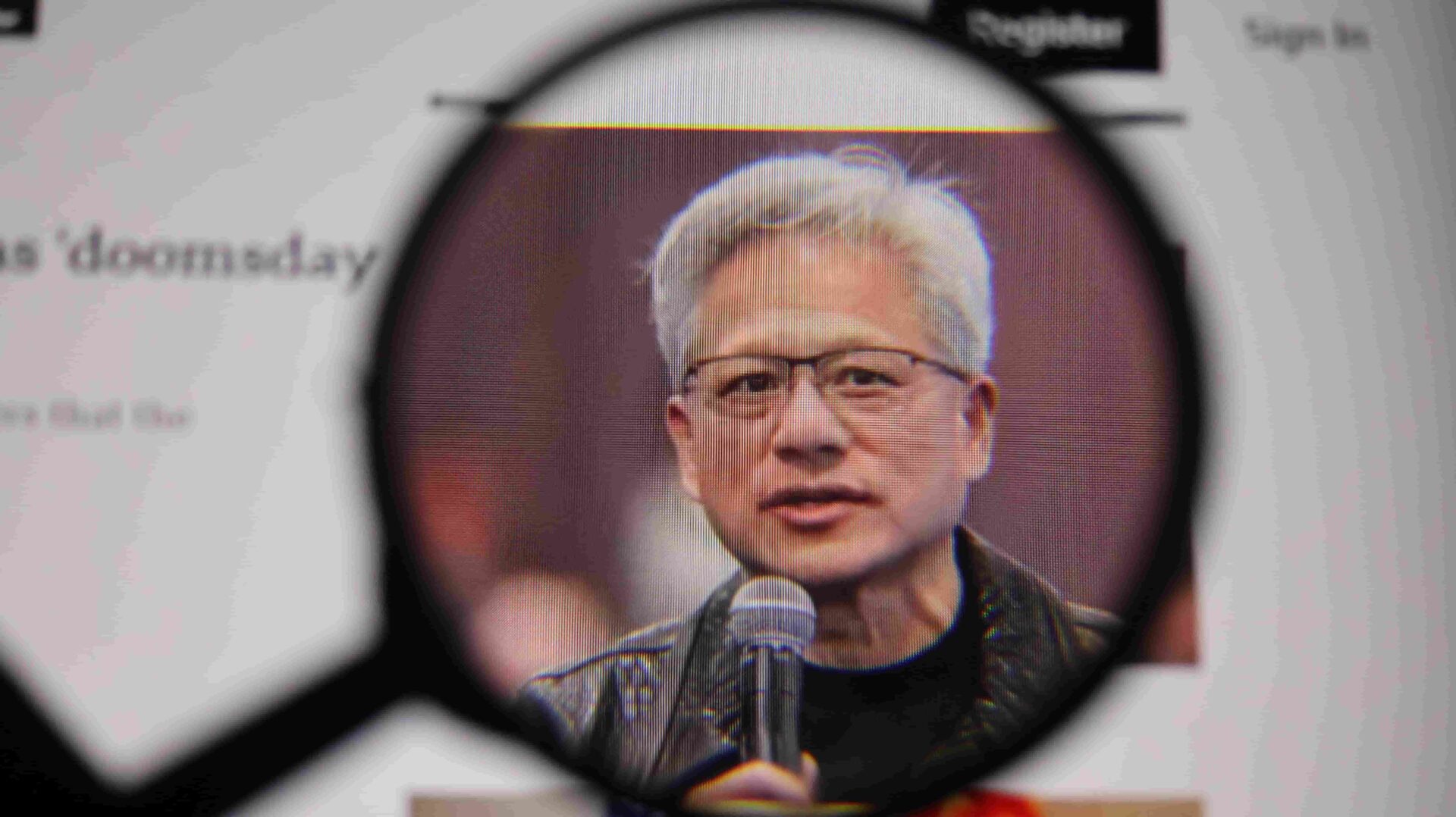
As billionaires, investors and political power brokers rally around Nvidia’s former CEO amid a scandal with potentially grave national security consequences, a more troubling truth emerges. From Washington to Wall Street and Silicon Valley, the boardroom brotherhood is closing ranks, exposing a culture in which valuations outweigh values, economic indispensability buys immunity, and accountability increasingly becomes a burden reserved for everyone else.
There’s a version of this story that begins in Moscow in the summer of 1958, when the wife of France’s Ambassador to the Soviet Union departed for an extended holiday. Maurice Dejean was a decorated veteran of de Gaulle’s Free French, a former Political Director at the Quai d’Orsay and a cultured diplomat with an appetite for Moscow’s artistic salons. It was precisely that appetite the KGB had spent years studying. Its elaborate operation reportedly involved some 100 operatives, from celebrated artists to actresses and paid companions.
The bait was an actress whose supposed husband appeared at the most inopportune moment. Seduction was merely the means; the objective was leverage, a powerful man’s private indiscretions weaponised against his public responsibilities. Yet Dejean remained Ambassador until 1964. When the scandal finally reached Charles de Gaulle, the President reportedly greeted his old comrade with a withering observation: Eh bien, Dejean, on couche. Well then, Dejean, one sleeps around. Dejean was recalled and retired, but faced no criminal prosecution.
The point is not that Dejean escaped consequence, but how long he remained insulated from it. A man entrusted with representing a nation could be exposed to foreign coercion, yet the reckoning came years after the vulnerability emerged. More than six decades later, history offers a familiar refrain.
This time, its leading man is Jensen Huang.

In late October 2026, reports emerged that Nvidia’s Co-Founder and CEO had been conducting an extramarital affair with Alice Huang (no relation), a former executive at Singapore-based Megaspeed International whom American intelligence officials suspect of connections to Chinese intelligence. Megaspeed, reportedly responsible for more than US$4.8 billion in Nvidia chip purchases since June 2024, was already under investigation for allegedly diverting restricted technology to China. This was no ordinary corporate indiscretion. Nvidia’s chips sit at the intersection of national security, economic competitiveness and the technological ambitions of two rival superpowers. The potential implications range from compromised strategic technology to America’s standing in the AI arms race and confidence across global markets.
On 8 November, Huang acknowledged his infidelity to employees. Reports of relationships with Nvidia staff followed, including a senior executive who reported directly to him. Reuters subsequently reported that Huang misled company leaders, including General Counsel Tim Teter and Chief Marketing Officer Alison Wagonfeld, by presenting his interactions with Alice Huang as routine business dealings. On 12 November, Nvidia announced his resignation, with Chief Financial Officer Colette Kress stepping in as interim CEO.
Yet barely five days later, a petition demanding Huang’s reinstatement has attracted more than 180,000 signatures. Elon Musk and other technology figures have lent their support, investors lobbying for his return and allies reportedly assembling a war room to influence the board. The investigation remains unresolved, but his absence appears to alarm some of the industry’s most powerful figures more than the conduct that precipitated it.
To understand their urgency is to understand Nvidia’s reach. Founded in a Denny’s booth in 1993, the company now supplies the chips underpinning much of the AI economy. Its valuation has become a barometer for an industry in which Microsoft, Amazon, Alphabet, Meta and their peers are bound by immense, mutually reinforcing investments. Instability at one can reverberate across the market. President Donald Trump himself holds Nvidia stock, with investments estimated by The Washington Post at between US$13 million and US$62 million as of August 2026. Nvidia benefits from consequential government decisions on exports to China, while Huang enjoys exceptional political access. The interests of the state, market and executive are becoming difficult to separate. Perhaps the question is not why powerful people want Huang back, but why anyone would be surprised.
Deny, Deflect, Defend: The New Politics of Accountability
The controversy arrives in a political climate where deflection has become an instrument of authority. Donald Trump’s methodology owes much to Roy Cohn, the lawyer and fixer whose credo was to attack rather than defend, deny rather than concede, and counter-accuse rather than apologise. The objective was not necessarily to establish innocence, but to exhaust the allegation and discredit whoever raised it.
Decades later, the approach is recognisable in broken promises of economic relief, shifting trade policies and inflammatory falsehoods about minority communities. During the 2024 presidential campaign, Trump’s baseless claims concerning Haitian immigrants in Springfield, Ohio, persisted despite factual rebuttals. The administration has offered shifting explanations of its war with Iran, while this week’s nationwide aviation systems failure prompted arguments over inherited infrastructure and previous funding. Different crises, a familiar reflex: revise the promise, redirect responsibility, contest the account. The public is offered competing narratives of exoneration instead of clarity. The cumulative effect is cultural as much as political. The longer accountability can be turned into an argument about motives and loyalties, the less anyone is required to answer the question that started it.
The mythology of genius has become so powerful that we no longer recognise the institutional weakness it conceals.
The parallels with Nvidia are revealing. According to CNN and Axios, intelligence concerns involving Alice Huang circulated within the administration well before the scandal broke. Secretary of State Marco Rubio reportedly oversaw a classified memorandum alerting officials, including Commerce Secretary Howard Lutnick, and briefed Trump aboard Air Force One before Huang joined a presidential trip to China. Yet Trump later claimed to have learnt of the concerns only recently, while describing Huang as “honourable” and “a brilliant man.” The administration disputes aspects of the reporting. The unresolved question is what those in power knew, when they knew it and why responsibility appears so readily displaced by personal assurances.
The commercial entanglement makes the contradiction sharper. In December 2025, Trump authorised H200 chip sales to approved Chinese customers under an arrangement granting the US government a 25% share of revenue. Nvidia is simultaneously a strategic national asset, a beneficiary of government policy and a holding in the President’s investment portfolio. Those entrusted with safeguarding the public interest have an economic stake in the enterprise they are supposed to scrutinise. The danger is not simply an individual conflict, but the gradual erosion of any meaningful distinction between what serves the country and what preserves the market’s most powerful beneficiaries.
And boardrooms, it seems, have been paying attention.
The Cult of the Indispensable Man
The cult of personality, the dismissal of criticism as disloyalty, accountability as revenge and the elevation of individuals above institutions increasingly mirror the instincts of political survival. The proposition is dangerous but seductive. Sufficient economic value can purchase a different relationship with consequence.
Sequoia Capital Partner Shaun Maguire conceded Huang had done something “incredibly dumb” and “bad for America”, yet insisted: “Two mistakes don’t make a right, and I believe Jensen is irreplaceable for America’s AI leadership.” Musk responded: “I agree.” Billionaire investor Bill Ackman added: “Even incredible humans make mistakes.” Even OpenAI’s Sam Altman, while stopping short of endorsing reinstatement, called Huang “a hero of mine”, observing that “heroes have flaws” and that it’s “hard to imagine the AI revolution without Jensen.” And perhaps it is. But since when does the possibility of compromising national security become merely another forgivable flaw in an otherwise extraordinary career? The indiscretion is acknowledged, the potential consequences for America’s technological supremacy recognised, yet the prevailing argument remains unchanged: Huang is simply too valuable to lose.
His defenders also suggest private misconduct need not invalidate professional achievement. But is not knowingly engaging in an affair, much less one with a suspected foreign intelligence operative, in itself not a profound lapse of judgement? And is judgement not what we most revere in leaders, the ability to anticipate consequences, assess risk and safeguard the interests entrusted to them? It’s a peculiar contradiction to celebrate exceptional judgement while exempting its failures from scrutiny. Leadership cannot be reduced to an earnings report when the authority to make those earnings depends on the trust of boards, employees and governments.
The question becomes more pointed with the reported concealment. According to The New York Times, Nvidia was answering press inquiries about Huang’s relationship as early as September 2025, with his daughter and Chief of Staff, Madison Huang, reportedly urging a forceful communications response. Reuters later reported that he misrepresented the relationship to senior company leaders. A CEO allegedly misleads those responsible for oversight, yet his defenders argue that this bears no relevance to his ability to lead. Since when did honesty, transparency and integrity become optional attributes of corporate leadership?
Corporate mythology has become adept at manufacturing indispensable men. Founders become visionaries, visionaries become cultural icons, and the distinction between individual and institution disappears. Elon Musk exemplifies the resilience of this mythology; Sam Altman’s dismissal and rapid reinstatement at OpenAI in 2023 demonstrated how fragile a board’s authority becomes when employees and investors rally behind its celebrated leader. What happens when those formally entrusted with oversight discover that the practical power to remove someone rests elsewhere?
There’s an economic logic to keeping a founder whose departure threatens billions in value. But if indispensability mitigates accountability, who decides when someone becomes too valuable to challenge and requires amnesty from accountability? A billion dollars? A trillion? An entire technological ecosystem? And what does it say about an institution whose stability depends upon one supposedly irreplaceable person?
Nvidia’s succession also offers a particularly sharp irony. Colette Kress, its long-serving CFO, is entrusted with stabilising the company in what resembles a corporate glass cliff. Women have long been dismissed as too emotional or hormonal to lead, yet here is a woman expected to clean up what might pointedly be called the hormonal mess of a man. The impulses once weaponised against women’s leadership are now dismissed as inconsequential to his. Kress is apparently capable enough to steady the company, but not indispensable enough to end the search for someone else. One is considered capable. The other, irreplaceable.
And therein lies the ultimate danger of indispensability, it becomes self-fulfilling. Concentrate enough authority, influence and institutional identity around one man, and his eventual irreplaceability becomes less a testament to his genius than an indictment of the governance that enabled it. What’S celebrated as extraordinary leadership may, in fact, be an extraordinary concentration of power. And when even the institutions entrusted with holding that power accountable become afraid to exercise their authority, the question is no longer whether the leader is indispensable, but whether accountability itself has become dispensable.
When accountability becomes negotiable for those at the top, we are no longer rewarding excellence, we’re subsidising impunity.
The Boardroom Brotherhood
Finally, most consequential revelation of the Huang controversy is not the conduct of one executive, but the extraordinary machinery of protection assembled around him. This is the boardroom brotherhood.
Founders, financiers, political allies and investors so interconnected that defending one of their own becomes indistinguishable from defending themselves. The billionaire protects the founder, the investor protects the valuation, the politician protects the strategic enterprise. Each invokes the greater good, while the costs of weakened governance fall on everyone else.
The wider architecture is already visible. Oxfam’s 2026 report, Resisting the Rule of the Rich, estimates that billionaires are more than 4,000 times as likely to hold political office as ordinary citizens. Some of the world’s most influential media institutions and platforms are owned by the economic elite whose conduct they are meant to scrutinise. Wealth buys access; access consolidates influence; influence protects wealth.
For decades, corporations have championed independent governance, transparency, diversity and inclusive leadership as safeguards against unchecked power. Yet many such commitments are being dismantled or dismissed as obstacles to meritocracy and performance. Institutions preach ethical leadership while powerful stakeholders suggest its principles become negotiable when someone is valuable enough. What’s tolerated at the summit of global business sets the standard below it. That message travels particularly far in markets where founder control, family influence and deference to hierarchy already make independent oversight difficult.
The billionaire defends the founder, the investor defends the valuation, the politician defends the strategic enterprise, and each invokes the greater good to justify their allegiance.
The justification is familiar. Protecting extraordinary individuals protects our prosperity. It’s capitalism’s enduring promise that exceptional wealth creates value for everyone. Yet inequality persists, millions live in poverty and billionaire fortunes reach new heights. The gains are real, but they are hardly shared equally. The mythology asks us to treat the preservation of a billionaire’s position as a public good, even when the public carries risks that powerful investors can more readily absorb. Somewhere along the way, the commercial interests of the wealthiest have been mistaken for the interests of society.
The uncomfortable truth is that we are participants. Millions hold Nvidia indirectly through pensions, retirement accounts and index funds. Our financial security is bound to a handful of companies and the men who lead them. The same public that demands accountability has been given a reason to fear its consequences.
Intelligence agencies spend years cultivating the circumstances to compromise ambassadors. Our economic system has accomplished something more ambitious: binding millions of people’s prosperity to individuals whose authority we hesitate to challenge. We have not been seduced so much as invested. And once invested, looking away seems cheaper than speaking up. When accountability becomes negotiable for those at the top, we are no longer rewarding excellence; we are subsidising impunity.
Smart men may make dumb decisions. The real scandal is that we’ve built a world in which everyone else is expected to pay for them.