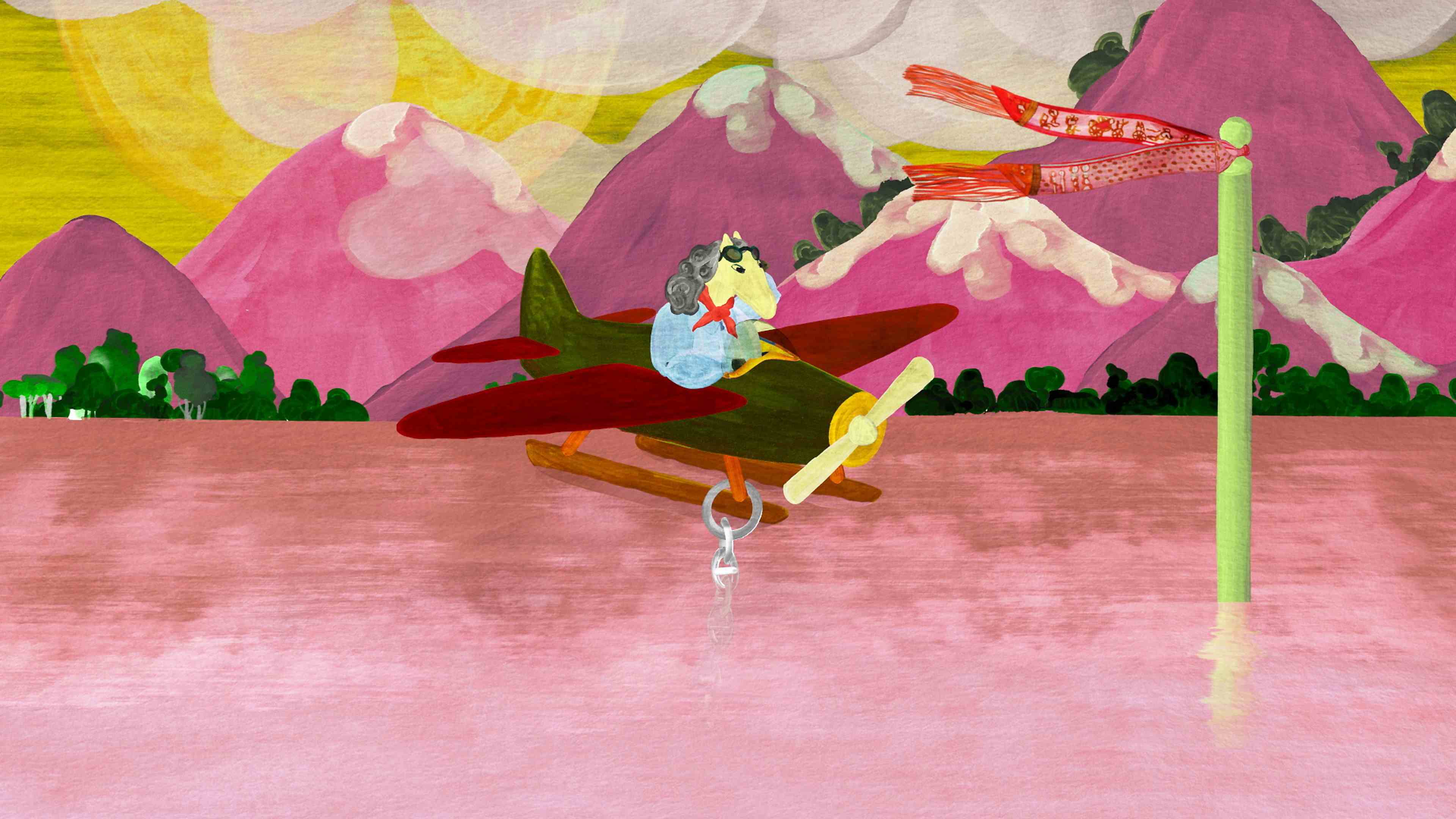
As generative AI makes polished imagery instantaneous and abundant, luxury brands are rediscovering something harder to replicate: the visible human hand. From Hermès and Chanel to LOEWE, illustration is returning not simply as an aesthetic choice, but as a signal of authorship, time and craft.
“Another thumb in the eye of AI.” “Exactly what the world needs right now.” “Handmade power.” That was the reaction when Hermès recently reimagined its website with illustrations by Sarah Martinon, animated by Armand Béraud. Less than a year earlier, Martinon had hand-painted illustrations for the house’s window displays in Lugano, Switzerland.
Illustrators are increasingly being commissioned for something their work can signal particularly well in an age of synthetic imagery: authorship, process and the visible evidence of time. It happens to be what luxury currently prizes above almost anything else. Emotional specificity and the kind of imperfection that suggests real craft.
By contrast, audiences have not always welcomed luxury’s experiments with AI. Earlier this year, Gucci faced a backlash after using AI-generated images to promote its Milan Fashion Week show. The images appeared on social media and sparked questions. How does replacing human models and photographers with AI square with the house’s stated commitment to creativity and Italian craftsmanship? Other brands have also experimented with generative AI for social content and advertising, often framing it as a creative exercise. Valentino’s AI-generated Instagram advertisement, meanwhile, drew criticism last year, with fans describing both the visuals and the use of AI itself as “sloppy”, “lazy”, “cheap” and “sad.”
When Perfection Became Cheap, Time Became Precious
For much of the digital era, luxury built its image-making around a lack of friction. It created an image economy around the promise of perfection, and for a long time, perfection was the entire pitch. Generative AI has made the look of luxury available to anyone with a prompt box. When polish becomes cheap, polish stops being scarce.
McKinsey warned in a recent report that the sector’s rapid expansion over the past five years has contributed to overexposure, weakening luxury’s promise of exclusivity, creativity and craftsmanship. The problem is not how to look expensive. It’s how to make expensive still feel meaningful. This is where collaborations with illustrators and artists can play a role. By putting a recognisable human hand back into the image-making process, brands can reintroduce authorship, creative individuality and a sense of cultural value into the luxury proposition.
Hermès is only one example. Chanel recently released an animated illustrated video teaser by South Korean artist Jisu Choi to promote the Seoul presentation of its Métiers d’Art 2026 collection. The film imagines Gabrielle “Coco” Chanel encountering the many faces of Seoul upon arriving in Korea.
Chanel has taken the commitment even further, putting it between covers. Chanel Illustrated, published by Lannoo, brings together 25 international fashion illustrators. Across more than 250 pages, they reimagine the house’s iconic codes, from the tweed jacket and perfume bottle to Karl Lagerfeld.
Then there’s LOEWE. For its 180th anniversary in 2026, the house released an animated film narrated by Antonio Banderas. The film traces its history from its origins as a Madrid leather workshop in 1846. It was created with illustrator Joanna Blémont and animation teams using more than 2,000 hand-painted watercolor frames.
But Not Every Artist Collaboration Is Luxury
The strategy is not foolproof. The history of luxury is full of artist collaborations that generated attention without generating lasting cultural value. The 2017 Louis Vuitton x Jeff Koons “Masters” collection plastered classical paintings by masters like Da Vinci, Van Gogh, and Rubens onto luxury handbags. It faced severe criticism for turning high art into expensive, “tacky” commercialism, with critics arguing it cheapened sacred masterpieces and resembled street-market knockoffs.
Once every house has an artist, an illustrator and a celebrity attached to a capsule, the collaboration itself becomes a cliché.
The danger is art-washing: adding an artist’s name to a product in order to manufacture scarcity or cultural prestige. Consumers can tell the difference between a genuine creative relationship and a licensing exercise.
The strongest partnerships work differently. This is where Hermès is particularly instructive. The house has a long history of working with artists, maintains an archive and gives creators significant freedom. According to Hermès, creators from around the world produce around 200 drawings for the house every year. These are passed to Hermès Studio Dessins, which develops them into designs for Hermès objects. The studio also manages an archive of around 8,000 designs collected since 1937, preserving and restoring them for future use and inspiration.
That changes the nature of the collaboration. The artist is not simply being borrowed for a campaign. The drawing enters a system of memory. Perhaps that is the real distinction between a successful artist collaboration and a fashionable one. The question is whether the work has a life beyond the launch date.