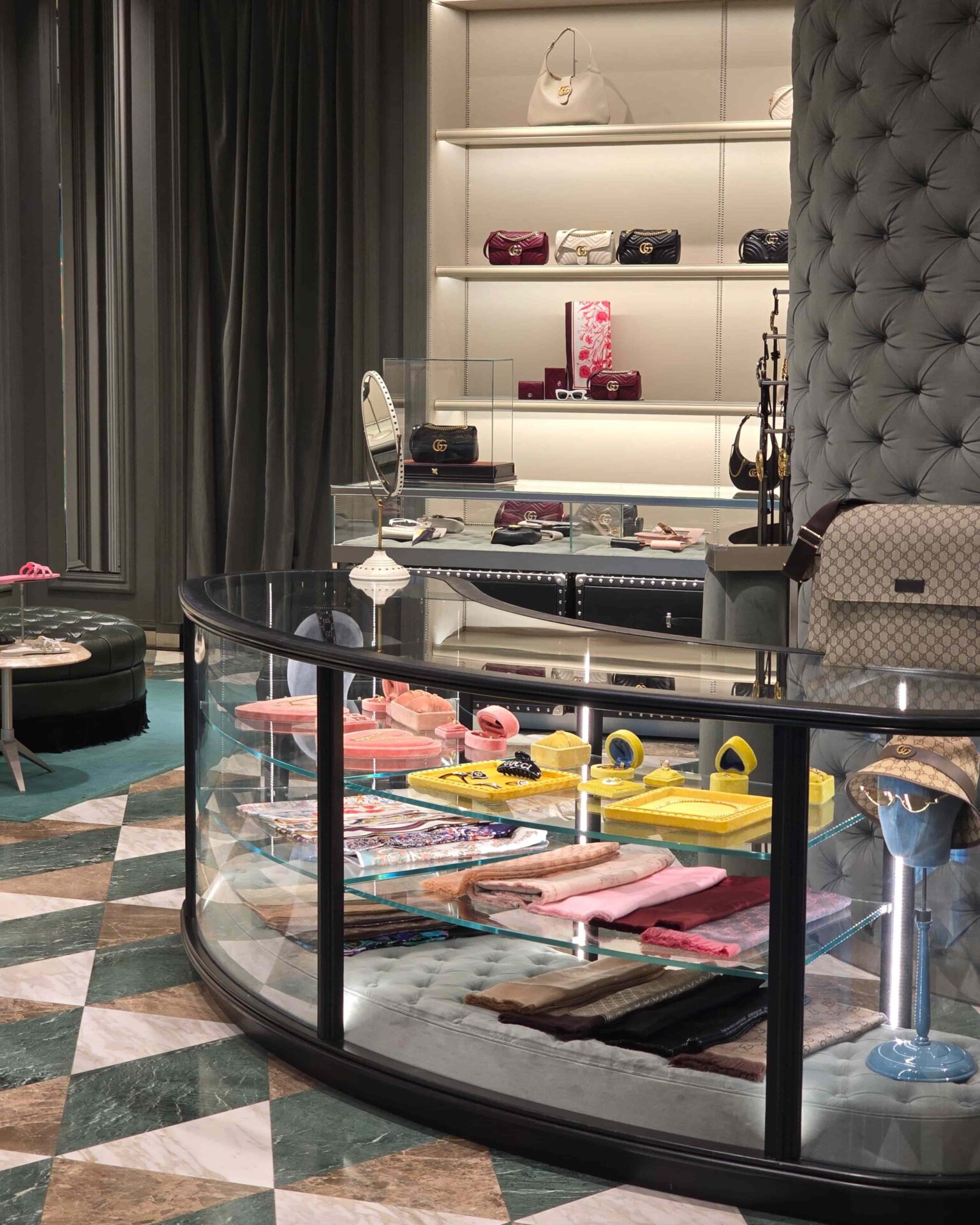
As Chinese luxury clients increasingly prize immersive, story-driven shopping over pure ownership, a new BoF-McKinsey report finds the physical store remains their single strongest source of brand inspiration, even as the same experience becomes a liability in the US.
Luxury clients in the US and China are shifting spend away from products and toward experiences that build long-term emotional connection to a brand, according to a new report from BoF Insights and McKinsey & Company. The report is based on a survey of more than 2,000 luxury clients across both markets.
Around 30% of clients surveyed in both countries said they would prioritise travel over any other purchase if given additional discretionary income. Jewellery was the closest product-based alternative, which the report attributes to its standing as an investment-like category rather than a purely fashion-driven one.
In China, the physical store remains clients’ leading source of shopping inspiration, a pattern that is strongest among newer and more occasional shoppers. The report cites Louis Vuitton’s Shanghai flagship, “The Louis,” which opened in June 2025 with a trunk exhibition and rooftop café built into a ship-shaped structure, as an example LVMH executives believe reflects growing demand among Chinese shoppers for more immersive retail formats.
In the US, clients draw inspiration from a wider range of sources, including online retail, AI tools and personal recommendations, in addition to stores. The report found American clients were more likely to cite the in-store experience itself as a deterrent, pointing to long queues and high-pressure sales tactics as reasons for shifting purchases online or to resale platforms.
The two markets also differ in what experiences clients want beyond the store. In the US, wellness and cultural programming ranked highest, with 50% of the highest-spending client tier expressing interest in cultural events. In China, after travel, clients showed the strongest interest in private shopping appointments and VIP access, with demand increasing significantly among higher-spending clients. Interest in brand-hosted social events rose with spending power in both markets, reaching 40% among established US clients and 36% among established Chinese clients.
The report points to existing examples of luxury groups building experience-led offerings. LVMH’s ten-year partnership with Formula 1 spans Louis Vuitton, Moët Hennessy and TAG Heuer, and Gucci is set to become Alpine’s Formula 1 title sponsor from 2027. Separately, the Orient Express Corinthian, described as the world’s largest sailing ship and co-owned by Accor and LVMH, offers 54 suites and Michelin-starred dining; a second vessel, the Orient Express Olympian, is planned for 2027.
The report recommends that brands in the US build recurring membership and community structures tied to significant personal milestones, rather than relying on one-off activations. For China, it recommends positioning the boutique as a space for storytelling and relationship-building, with success measured by client loyalty rather than same-day sales.