The inaugural fair in Doha introduced a radically different model, one where patience trumps speed, discretion beats spectacle, and the world’s most powerful galleries are learning to play by new rules.
When Art Basel Qatar closed last Friday after a seven-day run, the figures suggested an assured debut: more than 17,000 visitors, 87 galleries from 31 countries, and representatives from over 85 international museums. Yet the fair’s defining story was not one of scale, but of a deliberate departure from the commercial rituals that typically signal success at a major art opening.
There was no opening-day scramble, nor the rapid proliferation of “red dots.” Instead, as Sheikha Al-Mayassa bint Hamad bin Khalifa Al Thani, Chairperson of Qatar Museums, moved through the presentations at M7, galleries received discreet white slips, a signal of institutional interest. According to Artlyst, some dealers and observers suggested regional buyers deferred making offers until Sheikha Al-Mayassa had made her selections, whether out of protocol or cultural deference. The result was a slower, more measured market rhythm, markedly different from the high-velocity environments of Basel, Miami Beach, or Hong Kong.

A Different Model
Art Basel’s leadership appears to have anticipated, and embraced, this divergence. “The ambition was not to replicate an existing fair model, but to respond meaningfully to the context, the artists, the city, and the wider region,” said Vincenzo de Bellis, Chief Artistic Officer and Global Director of Art Basel Fairs. This intent was reflected in the fair’s structure. While Art Basel Miami Beach hosts more than 280 galleries in vast exhibition halls, Doha presented 87 galleries in an intimate, booth-less format spanning M7 and the Doha Design District. Booth fees reportedly ranged from $15,000 to $25,000—significantly lower than other Art Basel editions—with shipping and accommodation subsidised for participating galleries.
“Art Basel Qatar has presented a new way forward for the art market,” said Wael Shawky, the fair’s Artistic Director via press release. “By building on and complementing the strong cultural and artistic infrastructure already in place here, the fair enhances the ecosystem and offers artists real opportunities to grow their practices.”

Photo: Courtesy of Art Basel by Jinane Ennasri.
Curated Commerce
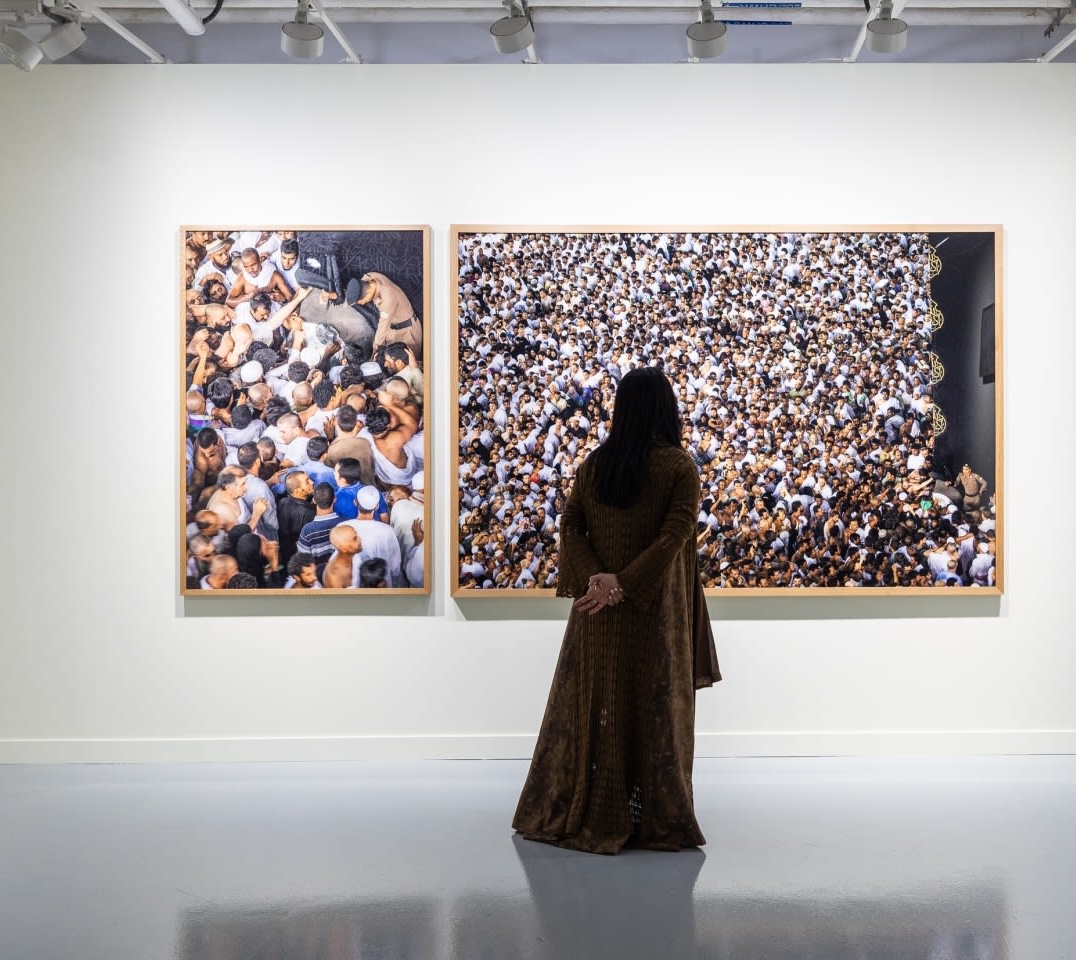
Each gallery presented a single artist, a format that observers described as closer to a curated exhibition than a conventional marketplace. Commercially, results were steady in favour of pursuing the spectacular. ATHR Gallery sold Ahmed Mater photographic works priced between $45,000 and $220,000, while Cairo’s Gypsum Gallery nearly sold out Mohamed Monaiseer textile works to buyers from Dubai, Saudi Arabia, and Abu Dhabi. Almine Rech placed Ali Cherri sculptures and works on paper priced from $35,000 to $153,000. Hauser & Wirth brought Philip Guston paintings priced between $9.5 million and $14 million, with at least one reportedly sold. As Gallerist Iwan Wirth put it: “This year is not important. Next year will be important.”
That long-term view appeared central to the fair’s strategy. Art Basel noted that galleries forged new relationships with collectors from Qatar, Saudi Arabia, the United Arab Emirates, and Europe, translating into “steady commercial momentum” across private and institutional sales. Institutional attendance was notably strong. Representatives from more than 85 museums and foundations were present, including Qatar’s Museum of Islamic Art, Mathaf, and the forthcoming Art Mill Museum, alongside international institutions such as Tate, the Whitney, and the Louvre Abu Dhabi. According to Artlyst, Qatar Museums used the white slips to signal purchase intentions for the Art Mill Museum, scheduled to open in 2030.

Photo: Courtesy of Art Basel.
The fair also illuminated the nuances of the region’s collector base. Industry observers, including Diane Abela, Middle East Director at Gurr Johns, have noted that many of the Gulf’s most significant collectors—particularly women—have quietly built museum-quality archives over several decades, often operating away from the public auction circuit.This regional depth mirrors a broader global shift identified in the Art Basel & UBS Survey of Global Collecting 2025, which found that female high-net-worth collectors outspent their male counterparts by 46% on average in 2024. In the Gulf, where women occupy pivotal roles as institutional chairs and cultural patrons, this trend carries particular weight, signaling a market driven as much by long-term stewardship as by commercial acquisition.
The Long Game
The fair was also closely integrated into Qatar’s broader cultural programme, extending well beyond the gallery booths. During the week, Fire Station: Artist in Residence unveiled three major solo exhibitions, while the Museum of Islamic Art (MIA) hosted the fair’s most visible public intervention: Jenny Holzer’s SONG. The nightly projection featured the poetry of Mahmoud Darwish and Nujoom Alghanem, illuminated across the museum’s facade in a display that combined Arabic and English text with a choreographed performance of 700 drones.
The event’s strategic importance was underscored by high-level state attendance, with visits from His Highness The Amir Sheikh Tamim bin Hamad Al-Thani and Her Highness Sheikha Moza bint Nasser. This presence, alongside the success of the Conversations programme—which drew nearly 2,500 attendees and set a record for the highest average attendance per session in Art Basel’s history—signalled a deep sovereign commitment to the country’s burgeoning cultural infrastructure.

Beyond the show floor, Doha is cementing its role as a permanent node in the art market. Gulf Warehousing Company (GWC), the fair’s official logistics partner, is currently developing the region’s largest museum-grade fine art logistics hub in the Ras Bufontas Free Zone. Meanwhile, the announcement of Rubaiya Qatar—a new international visual arts quadrennial launching in November 2026—aims to position the city as a curatorial powerhouse alongside its commercial interests. Strategic partners, including Qatar Sports Investments (QSI) and QC+, view Art Basel Qatar as the anchor of a wider cultural-tourism ecosystem designed to capture growing global luxury spend. Positioned in the global calendar between Miami Beach in December and Hong Kong in the spring, the Doha edition occupies a unique, relationship-driven niche.
The open question remains one of long-term sustainability: whether this discreet, institutional model can flourish independently of state and royal patronage. For its inaugural outing, however, Doha has made a compelling case for a market that privileges patience over spectacle and enduring relationships over the immediacy of the “art sell.”