Vogue Singapore’s landmark conference returned this October, convening over 1,600 attendees to unpack a new blueprint for how culture, business and creativity will operate in 2026. Here are the ten shifts that matter most.
There’s no denying that 2025 has been a transitional year, economically uncertain, culturally restless, creatively overstretched and technologically accelerated. Longstanding assumptions about work, identity, consumption and community fractured in real time. AI shifted from novelty to behaviour. Retail cycles tightened. Audiences fragmented, and brands were forced to confront the fact that relevance is now earned through cultural credibility rather than messaging alone.
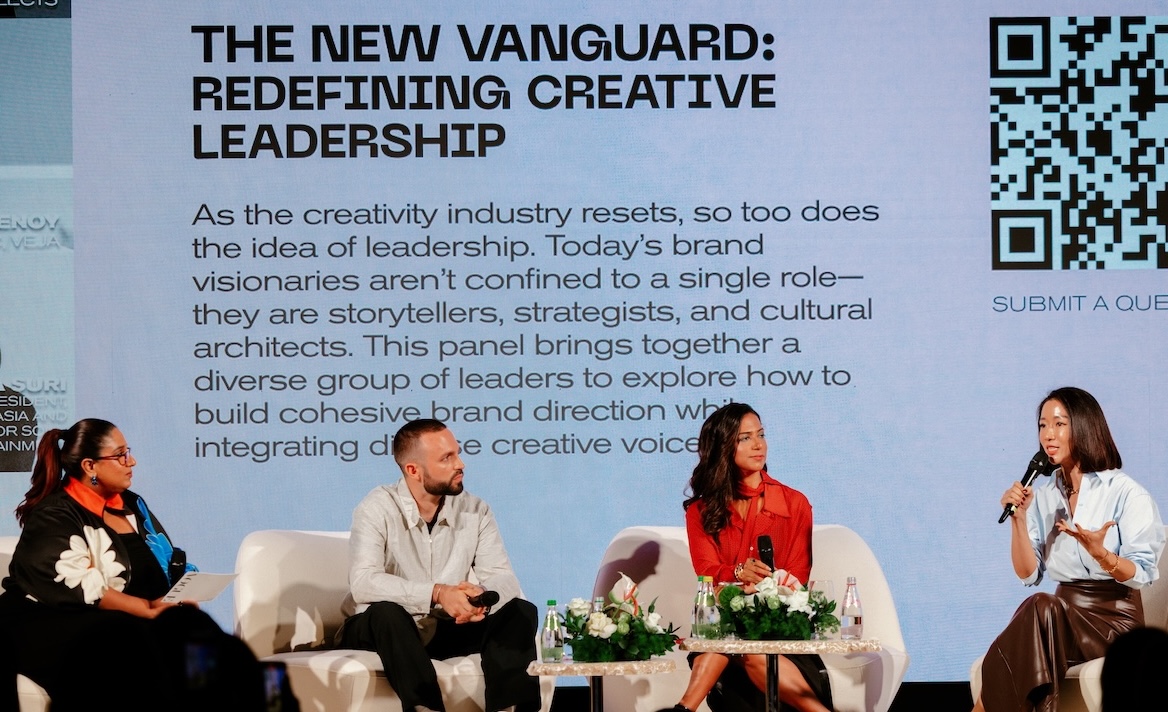
It was against this backdrop that Next in Vogue 2025 unfolded in Singapore as part of Vogue Singapore‘s fifth-anniversary programme. Held at the newly opened Event Hall at WEAVE, Resorts World Sentosa, from 16–17 October, and themed “The Year of the Reset,” the two-day conference—designed as an open, public-facing platform rather than a closed industry gathering—brought together over 1,600 attendees. The programme comprised 16 panel conversations featuring 41 speakers, including editors, founders, futurists, designers, cultural strategists and emerging creators. According to Vogue Singapore, the intent was to “challenge how we talk about fashion in relation to culture today” and explore the forces reshaping Southeast Asia’s creative economy.
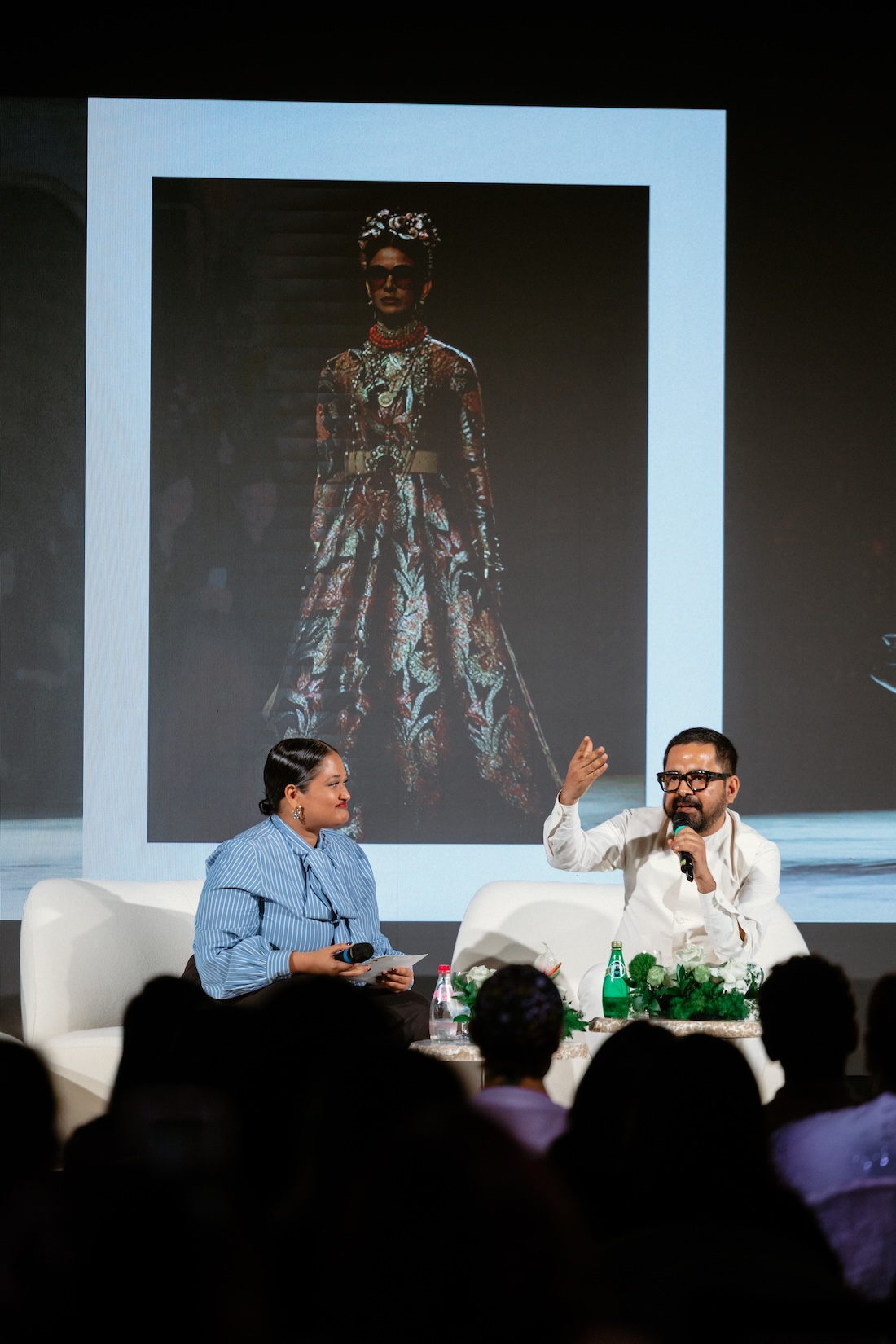
Headlined by global designers Prabal Gurung and Sabyasachi Mukherjee, Next in Vogue 2025 also featured pivotal voices shaping the region’s cultural and business landscape. These included Rochelle Pinto, Head of Editorial Content at Vogue India; Marie-Claire Daveu, Chief Sustainability and Institutional Affairs Officer at Kering; and Cathy Hackl, The “Godmother of the Metaverse” and Founder and Chief Futurist at Journey amongst a slew of many other worldwide talents—each bringing a distinct perspective on culture, fashion, design, art, community, sustainability and technology to the two-day programme.
For those working at the intersection of culture and commerce, the event offered a blueprint for 2026. Below are the ten cultural lessons that emerged most forcefully.
1. Culture has Become the Central Organising Principle of Business
A defining shift emerging from 2025 is that culture no longer sits around the edges of brand-building—it shapes the architecture of how businesses operate. Companies are being judged not by the stories they tell but by their degree of cultural participation and fluency. This came through sharply in the future of fashion dialogue, where Rochelle Pinto (Head of Editorial Content, Vogue India) described contemporary storytelling as “participating in culture, not presenting it,” and Desmond Lim (Editor-in-Chief, Vogue Singapore) noted that audiences are now “far too visually literate, far too exposed” for superficial gestures. The lesson for 2026 is that cultural intelligence has become a strategic competency, not a creative embellishment.

2. Sustainability is a Condition of Doing Business
Sustainability has shifted from a reputational exercise into a baseline expectation embedded in operations, risk, governance and long-term strategy. Companies can no longer rely on messaging alone; they must demonstrate proof. This was articulated clearly when Marie-Claire Daveu (Chief Sustainability and Institutional Affairs Officer, Kering) remarked to Bettina von Schlippe (Publisher-at-Large, Vogue Singapore & Vice President, Business Development & Innovation, Media Publishares and Co-founder of Beyond the Boardroom) that “no one wants to hear about sustainability anymore —but we can’t speak about business without speaking about sustainability,” highlighting that the mandate now lies in structural integration rather than external communication. Entering 2026, sustainability functions as a business system, not a brand story.

3. Southeast Asia is a Source, Not a Receiver, of Cultural Direction
One of the strongest takeaways from the event was the growing acknowledgement that Southeast Asia is shaping global cultural and creative trajectories rather than adopting them. With designers such as Prabal Gurung and Sabyasachi Mukherjee anchoring the programme, it was clear that the region now operates as a generator of aesthetic and social imagination. Natasha Damodaran (Publisher, Vogue Singapore) underscored this shift by noting that cultural movements “erupt here first,” a sentiment reflected in the speed and originality with which Southeast Asian creators and audiences reinterpret global trends. For 2026, the region becomes a strategic forecasting lens.
4. Identity is Now Dynamic, Hybrid and Value-Led
Identity in 2025 broke away from demographic labels and moved into the realm of lived context, digital influence, values and micro-communities. The idea of a monolithic “Asian consumer” has collapsed completely. This was reinforced through Maya Menon’s (Deputy Associate Editor, Vogue Singapore) discussion on how readers navigate fluid identities shaped by multiple cultural references, and by the observation that identity today “is built through communities, not categories.” The lesson for 2026 is that brands must design for layered, shifting identity formations rather than reductive segments.
5. Community is an Economic Strategy, Not a Sentiment
Community emerged across the event as a stabilising economic force—something that drives advocacy, retention and long-term brand resilience. Rather than functioning as an engagement tactic, community now underpins value creation itself. This was captured with clarity when Rachel Lim (Co-founder, Love, Bonito) remarked that “scale without connection is fragile,” during a discussion moderated by Rahat Kapur (Editorial Director, Beyond the Boardroom). For 2026, community is not about reach but about relational depth and trust, which increasingly determine which brands survive saturated markets.

6. AI Is Reshaping Emotional and Behavioural Reality
AI’s influence has moved beyond productivity and into the realm of emotional and psychological life. People are forming new habits, attachments and modes of self-expression through AI-mediated interaction. Cathy Hackl (Chief Futurist, Journey) captured this shift by noting that AI is becoming “a co-pilot or co-creator, and for many people, part of their emotional life,” describing how these interactions act as rehearsals for new emotional behaviours. The lesson for 2026 is that AI design must account for interior states, not just output and efficiency.

7. Influence is Now Built Through Systems, Not Surfaces
Influence in 2025 shifted decisively from visual presence to structural credibility. What matters is not what a brand shows but the systems behind it—governance, ethics, transparency and operational depth. This was highlighted when Artaud Frenoy (Head of APAC, VEJA) remarked that “the new influence isn’t what you show, it’s what you build,” a point strengthened by Prerna Suri’s (Vice President, Communications, Asia & Middle East, Sony Music Entertainment) emphasis on trust infrastructure within organisations. Entering 2026, influence is earned through integrity, consistency and the architecture of how a company operates.

8. Heritage Must Evolve to Maintain Cultural Authority
Heritage no longer guarantees relevance; it must be activated, reinterpreted and held accountable to contemporary values. Legacy brands risk losing cultural authority when heritage remains static or ornamental. This was underscored when Daveu and von Schlippe spoke about how heritage retains power only when it evolves in dialogue with the present. The lesson for 2026 is that heritage must behave dynamically—drawing from its past while remaining radically committed to the future it hopes to lead.

9. Creativity Now Depends on Protection and Resilience
The creative landscape revealed a deeper emotional truth: the constraint is not inspiration but the conditions required to sustain it. Burnout, volatility and public scrutiny have placed pressure on creative workers at all levels. One consistent sentiment across discussions was that “inspiration isn’t the problem. protection is.” For 2026, resilience becomes a creative asset, made possible by systems, support, pacing and emotional safety that allow ideas to endure rather than collapse under pressure.
10. Culture Will be the Framework Through Which Business Makes Decisions
Across all conversations—from leadership to sustainability to AI—culture consistently emerged as the foundation on which business decisions are now made. Rochelle Pinto articulated this most clearly when she stated, “You can’t separate culture from business anymore, culture is the way business functions.” The lesson for 2026 is the most fundamental: culture is not a trend or a category within strategy; it is the strategy, shaping how organisations build products, influence audiences, define values and articulate their place in the world.