While Western luxury markets reset after the festive season, the Gulf enters its most commercially and culturally significant period. For brands operating in the region, Ramadan has evolved from a seasonal activation into a strategic test of cultural fluency, operational precision and long-term brand credibility.
At the start of the year as Western luxury markets exhale and consumers tighten budgets, brands recalibrate strategies and spring collections wait quietly in the wings, the Middle East prepares for its most consequential retail moment. This year, Ramadan arrived just weeks after the Western festive peak, nearly coinciding with Valentine’s Day and Lunar New Year, creating an unusually compressed and high-intensity commercial window, one that rewards preparation and penalises complacency in equal measure.
The scale of opportunity is significant, and the data makes the case plainly. NielsenIQ estimates that Ramadan drives nearly 19% of annual Fast-Moving Consumer Goods (FMCG) sales across the Middle East—a figure that, on its own, would justify serious strategic attention. But it is the luxury dimension that commands particular focus. In the United Arab Emirates (UAE), a joint study by Google and Visa found Ramadan retail search volumes second only to Black Friday, with interest in high-end apparel rising by 21% during the final weeks of the month. Saudi Arabia records a 45% surge, figures that confirm Ramadan is not merely a moment of cultural significance but one of genuine commercial gravity for premium brands.
Planning the Moment, Reading the Rhythm
Ramadan has evolved into the first major revenue milestone of the year, reshaping retail calendars and demanding meticulous preparation. Planning begins months in advance, with merchandise, capsule collections, campaigns and experiential activations aligned to the rhythms of Ramadan spending. From iftar (fast-breaking) and suhoor (pre-dawn meal) gatherings to immersive majlis (sitting place or place of gathering) environments and extended mall hours that stretch past midnight, the entire ecosystem shifts toward a nocturnal cadence. Success depends on seamless coordination across merchandising, marketing, inventory and logistics, a complex choreography designed to capture both emotional resonance and commercial momentum.
Fashion, in particular, feels the surge most acutely. “We have observed a robust pattern in consumer behaviour, with searches for modest wear increasing by 62% during Ramadan,” observes Erwan Jacob, Vice President of Growth Marketing at FARFETCH, noting how modest fashion has become deeply intertwined with the communal and family spirit of the season. Yet even subtle nuances can determine success, and this is where many brands miscalculate. While Ramadan spans roughly four weeks, consumer mood and purchasing behaviour evolve throughout—the holy month is not a single sustained peak but a shifting emotional arc. The final fortnight leading up to Eid al-Fitr typically emerges as the most commercially active period, the week before overall spending rising by 14% in the UAE and 29% in Saudi Arabia compared to non-peak moments. Fashion leads the surge with particular force: a 58% increase in spend in the UAE and a striking 136% rise in Saudi Arabia.
Cultural Fluency as Competitive Advantage
The commercial promise of Ramadan comes with a clear caveat: cultural sensitivity is non-negotiable. Engaging luxury consumers during the holy month requires more than themed product drops or seasonal visual cues; it demands a nuanced understanding of symbolism, tone and local values. What might feel routine at another time of year can quickly appear tone-deaf during Ramadan. Past campaigns across industries have sparked backlash for trivialising fasting or overlooking cultural nuance, cautionary reminders that without genuine insight, even well-intentioned initiatives risk appearing superficial, and that reputational missteps in this market are rarely forgotten quickly.
A recent report by Snap Inc., in partnership with The Business of Fashion, notes that today’s Gulf consumer is highly discerning and quick to recognise when brands rely on generic marketing rather than meaningful engagement. “If you’re not part of the conversation during Ramadan, you’re invisible,” shared Hussein Freijeh, Vice President and General Manager for the Middle East at Snap Inc. in the report. The shift is already visible across luxury. As Vogue Arabia recently observed, international maisons are beginning to move beyond predictable motifs toward more deliberate cultural storytelling, replacing reworked “Ramadan edits” with narratives shaped through collaboration and local context. The distinction is not merely aesthetic; it signals whether a brand sees the region as a market to sell into or a culture to genuinely engage with.
Increasingly, brands are embedding cultural partnership at the heart of their strategies rather than treating it as a final layer of approval, and the results speak for themselves. Louis Vuitton collaborated with Lebanese artist Nada Debs on a luxury bakhoor set (a traditional Arabic incense made from wood chips soaked in fragrant oils, mixed with resins, amber, or floral extracts) celebrating regional rituals.

Bvlgari continued its focus on regional talent through its “Icons of the Moon” campaign at the Bvlgari Resort Majlis.

Jimmy Choo featured Emirati racing driver Amna Al Qubaisi, and Loro Piana‘s Doha-shot capsule placed Saudi model Amira Al Zuhair and regional creatives at the centre of its narrative.
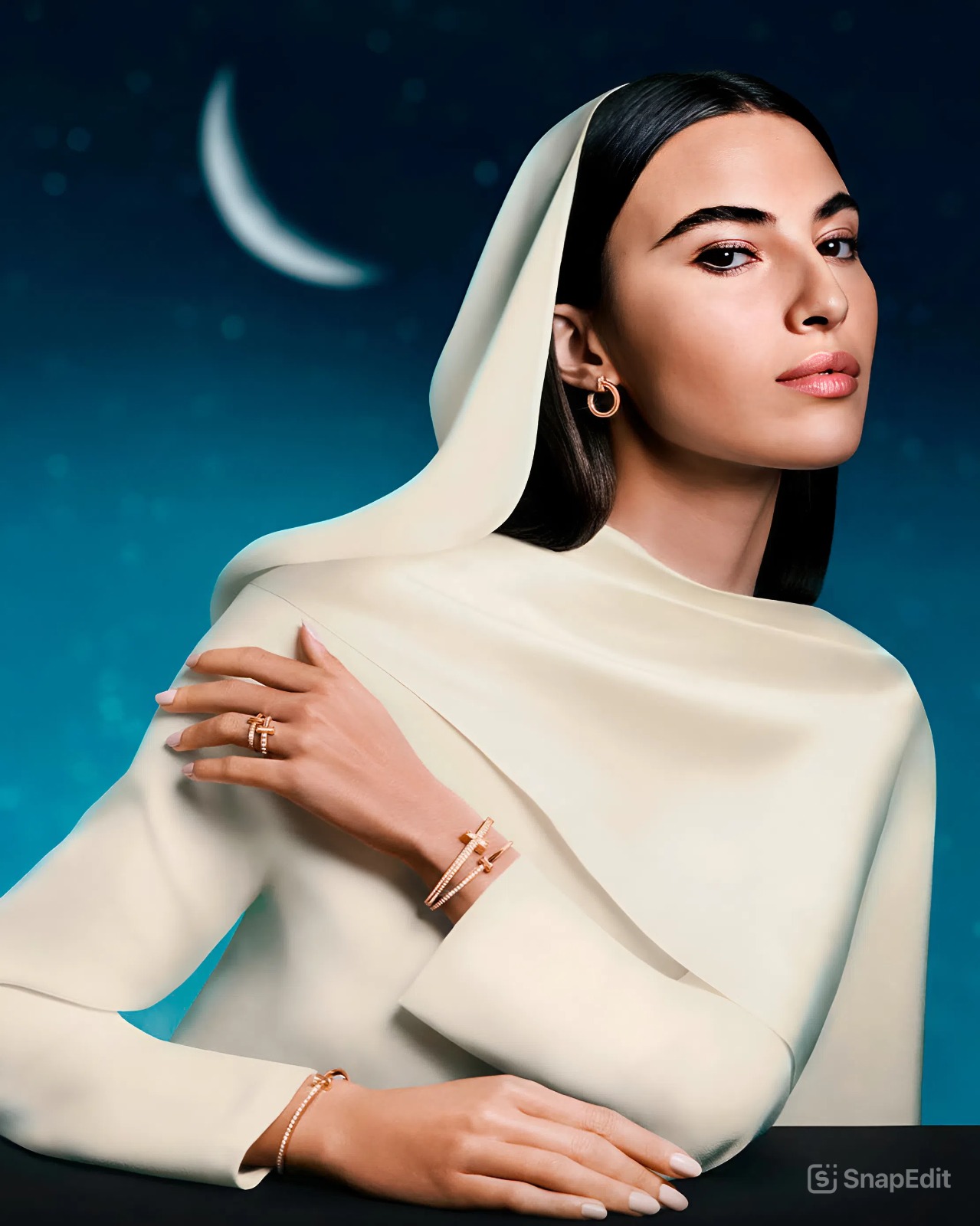
Miu Miu’s activation at Alserkal Avenue invited community participation, while Tiffany & Co. incorporated an original Arabic poem by Emirati artist Alia Al Shamsi into its campaign. Taken together, these activations signal something more than seasonal creativity, they reflect a broader and overdue shift toward culturally rooted storytelling, where local voices shape the narrative rather than simply validate it.
In the Gulf, Ramadan is more than a retail window, it’s a moment of collective reflection and social connection, and consumers hold brands to a standard that reflects that. Regional luxury spending continues to outpace global averages, and brands are increasingly measured not only on commercial performance but on cultural fluency. Those that invest in thoughtful planning, deep local insight and meaningful collaboration do more than drive seasonal revenue; they build trust and long-term relevance in one of the world’s most strategically important luxury markets. In that sense, Ramadan has become something of a litmus test, not just for a brand’s commercial ambition in the region, but for the depth of its commitment to it.