As customer experience accelerates into the age of AI, IBM is demonstrating that horsepower alone may not win the championship, and that the marriage of data-driven precision and human instinct, rather than technological prowess alone, may hold the key to winning the race for fan engagement and loyalty.
As technology transforms the way brands engage with their audiences, the challenge is no longer simply reaching customers, but creating meaningful connections that endure. Nowhere is this more evident than in the world of Formula 1, where passion extends far beyond the racetrack.
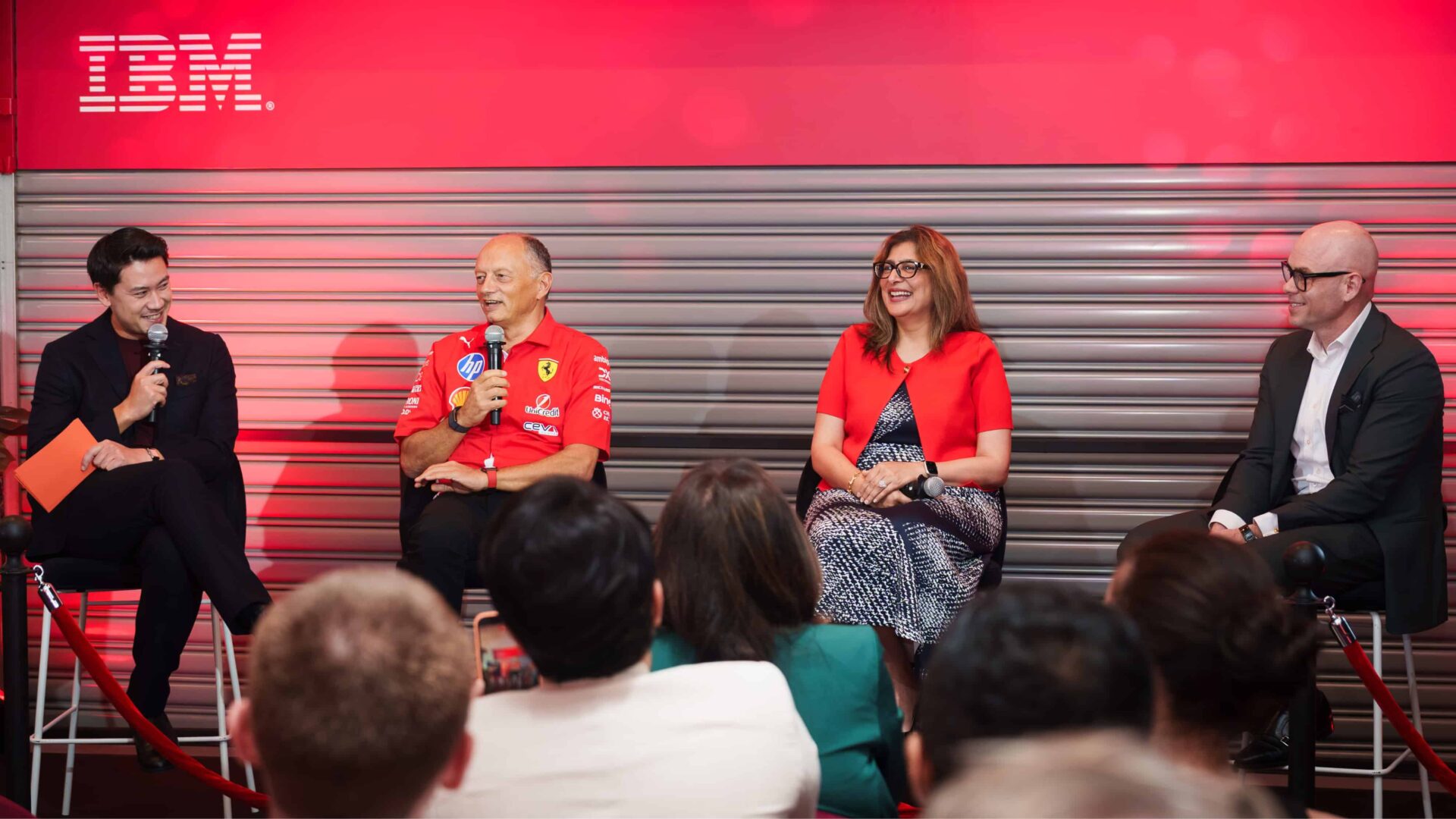
That very thought anchored Experience in Motion: Innovation Meets Instinct, an invitation-only evening presented by IBM, in partnership with Beyond the Boardroom and Robb Report Singapore. The audience was made up of C-suite executives, business leaders and tastemakers. Guest of honour Frederic Vasseur, Team Principal and General Manager of Scuderia Ferrari HP, joined senior leaders from IBM Asia Pacific, L’Oréal and Charles & Keith across two conversations. One idea emerged: technology can tell brands who their customers are, but understanding what makes them feel connected is what turns engagement into lasting loyalty.
Every brand longs to know its customer. Few have 396 million of them, and fewer still are loved the way Scuderia Ferrari HP is.
Its Tifosi, as the team’s famously devoted fans are known, are bound to the Scuderia by something closer to faith than fandom. Some inherited the passion from a parent. Others found it through a streaming series or a charismatic driver. Yet most will never stand trackside. Their love affair plays out on screens, often thousands of kilometres from the nearest circuit. That raises a question at the heart of modern brand-building: how do you make 396 million people feel known?
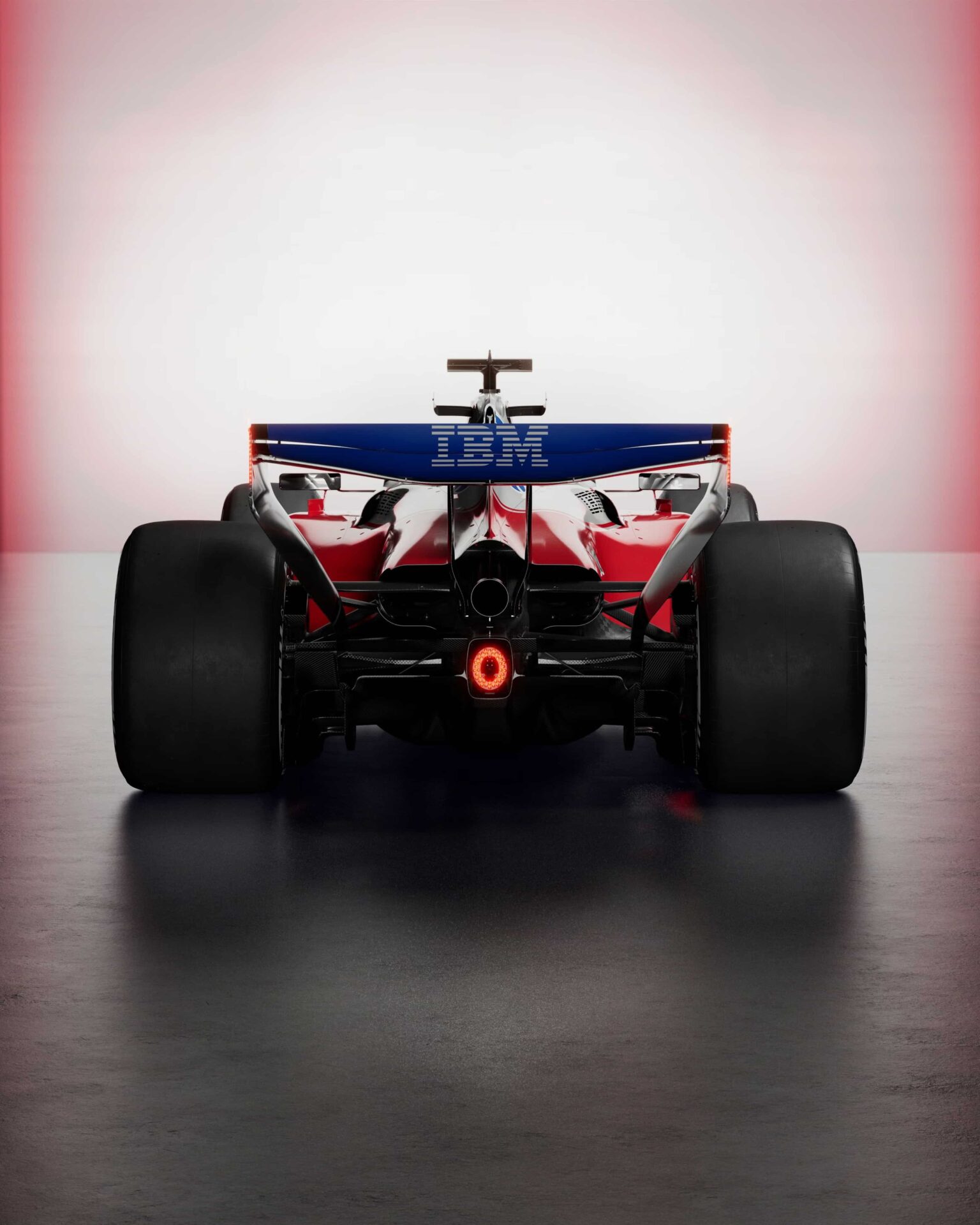
For Scuderia Ferrari HP, part of the answer already lives in fans’ pockets. IBM became the team’s Official Fan Engagement and Data Analytics Partner in 2025. Since then, it has reimagined the Scuderia Ferrari HP app using IBM watsonx, starting with the fan rather than the technology. Complex racing data now arrives as AI-generated race summaries, interactive predictions, quizzes and personalised content, while the 2026 season has brought an enhanced AI Companion into the mix. The results speak for themselves. Since the app’s May 2025 relaunch, average race active users have risen 56%, views 62% and engaged sessions 35%. Average monthly active users have grown 36%, a sign that engagement now extends beyond race weekends.

From Reach to Relationship
The opening conversation was moderated by Mediacorp Presenter and Sports Broadcaster Edward Russell. Vasseur was joined by Hans A.T. Dekkers, General Manager of IBM Asia Pacific, and Juhi McClelland, Managing Partner, IBM Consulting, IBM Asia Pacific, to explore how data is reshaping the bond between brands and the people who love them.
Vasseur began with the sport’s new audience. “Pre-COVID, or let’s say pre-Netflix, the typical fan was a man of 50 or 60, in love with motorsport,” he explained. “Netflix brought a completely new balance: much, much younger, much more female, and sometimes more focused on what Netflix shows than on pure racing.” With characteristic humour, he admitted that sponsors and fans now quiz him as much about the drivers’ personal lives as about the racing. “It’s a wider fan base with different expectations and motivations, and we have to deal with that.” For a team with nearly a century of heritage, the challenge is to draw closer to that audience without diluting the identity that made it desirable.

That insight shaped IBM’s approach from day one. “When we redesigned the app jointly with Ferrari, our north star was the fan, not the technology,” McClelland revealed. The team studied each segment of Ferrari’s audience to learn what mattered to them, from the cars and the racing to “the emotional connection.” The point bears repeating at a time when businesses are racing to deploy AI. Start with what the technology can do, and personalisation becomes one more notification fighting for attention. Start with what the customer wants, and it becomes something they welcome.
Dekkers added that making customer intelligence accessible is only half the task. Businesses must also be able to act on it responsibly. “The governance models we have around AI and all that data need to get better, so that we can trust the decisions being recommended to us,” he said.


Vasseur was equally clear that data has its limits. “It doesn’t matter how much data or how many people you have behind you. At one stage you have to push the button and take a decision, and quite often the information isn’t all aligned.” He may have been speaking of the pit wall, but the principle holds in the boardroom. Data reveals patterns and AI recommends a course of action, but deciding what matters remains a human call. As the tools become universal, that call may be what sets one brand apart from the next.
The governance models we have around AI and all that data need to get better, so that we can trust the decisions being recommended to us – Hans A.T. Dekkers, General Manager, IBM Asia Pacific
When Everyone Has AI
That was where the second panel picked up: if every competitor draws on the same models, where does advantage come from? Rahat Kapur, Editorial Director and Co-Founder of Beyond the Boardroom, moderated a discussion with Tuhina Pandey, Vice President of Marketing at IBM Asia Pacific; Aniko Andras, Global Marketing Director of Charles & Keith; and Lex Bradshaw-Zanger, Chief Business Capabilities and Innovation Officer at L’Oréal SAPMENA.
Pandey argued that the conversation has reached a turning point. “If we were speed-dating AI, running experiments and pilots to see what’s possible, that phase has now given way to a different question: it’s not about the output, it’s about the outcome. The room has gone from being busy with AI to doing business with AI.” With everyone using the same models, she warned, brands risk drifting into a “sea of sameness”. The way out is proprietary knowledge. “Those are hard yards, because your AI must be embedded and immersed in your own data, your voice, your brand, and what it means to consumers.”


Charles & Keith was founded in Singapore in 1996 and now operates 750 stores across 55 markets alongside its online business. That scale gives it richer customer insight than ever, yet data plays no part in deciding whether its signature designs exist. Andras reached for an analogy that suited the evening: “If I use an analogy from Formula One: data is the rearview mirror, and taste is the windscreen.” She went on: “I don’t think AI kills distinctiveness. I think it kills [the] average. If you have a solid but generic product, AI will just commoditise your brand. This is where a clear point of view, taste and the human touch come in, because then AI will amplify you.”
Bradshaw-Zanger offered a complementary view from beauty. “We can’t mix up what we’re trying to do, which is creativity and strategy, with how we do it. AI is about how. It’s not about what.” He pointed to the collaboration between L’Oréal’s laboratories and IBM as one way of putting its 117 years of research, product and consumer knowledge to work. “Sovereign data, owning your data, is probably the biggest moat going forward.”
We’ve moved from being busy with AI to doing business with AI. It’s no longer about the output, but the outcome — Tuhina Pandey, Vice President, Marketing, IBM Asia Pacific
The Real Return on Experience
For all the talk of AI, the evening was just as much about human connection. Guests created bespoke car fragrances with Maison 21G, had leather accessories personalised by Zikky Co and sat for live portrait sketches by Craft Room. Each was valuable precisely because it was personal rather than efficient. As McClelland put it: “It’s not about the number of interactions you have with a brand, but about making every interaction matter.”


The industries differ, but the challenge is the same. As AI makes it easier to know more, produce more and engage more often, businesses must become far more discerning about what actually creates value. In the race for customer loyalty, data may provide the horsepower. Emotion is what makes the experience worth remembering.