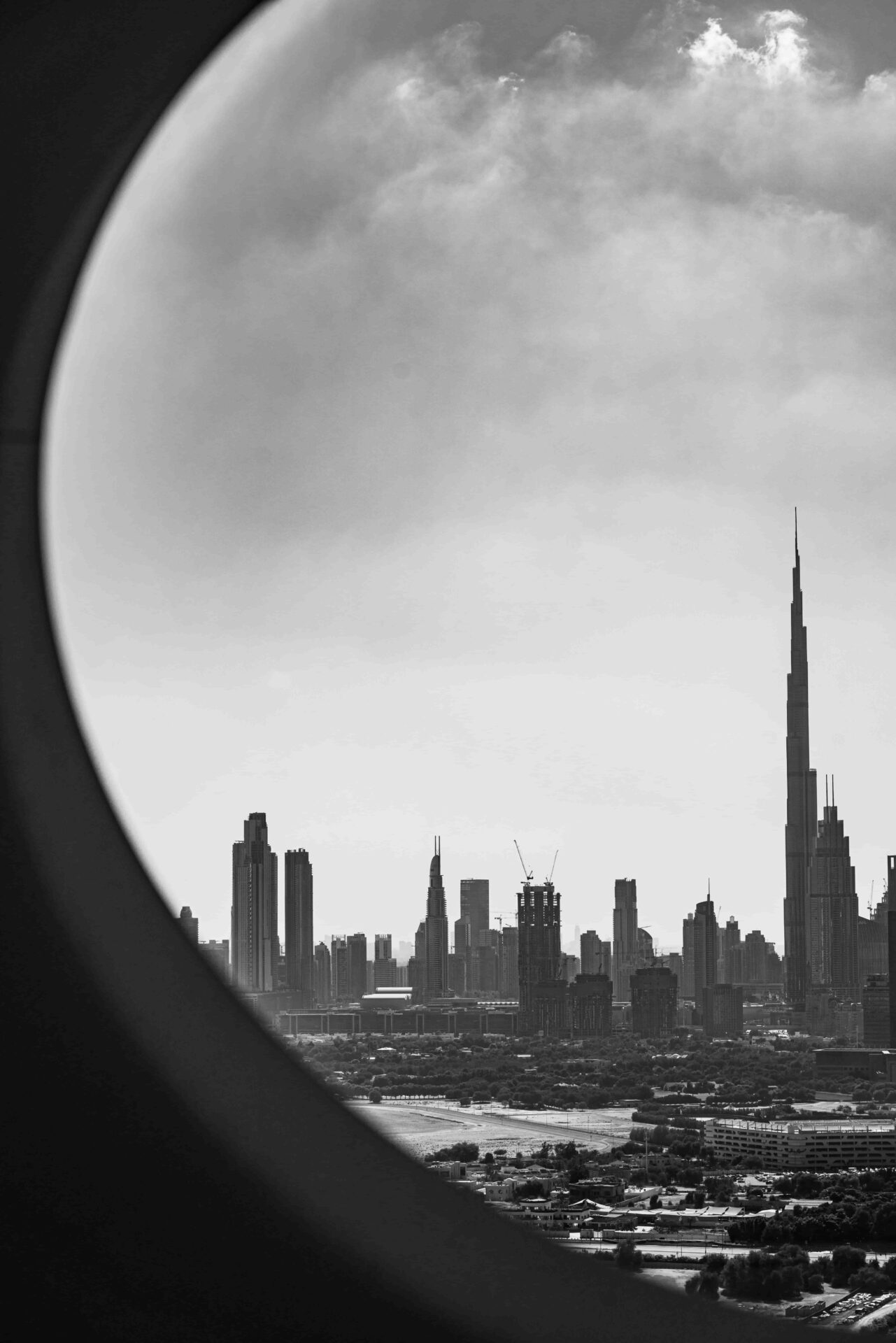
As regional conflict disrupts air travel, delays investment decisions and costs the Middle East’s tourism sector an estimated $600 million a day, governments and business leaders across the Gulf are mounting a coordinated effort to maintain economic confidence, and keep perception from outpacing reality.
Escalating regional tensions are beginning to register across the Middle East’s commercial landscape, with early signs of disruption appearing in sectors that depend most heavily on global mobility.
According to the World Travel & Tourism Council, the travel and tourism sector could be losing as much as US$600 million a day in international visitor spending, driven by disruptions to air travel, declining traveller confidence and interruptions to regional connectivity. Across the private sector, companies are postponing events, pausing marketing campaigns and holding client activity while assessing the situation. Last week, nearly 300 senior business leaders gathered at the Dubai Majlis, chaired by Hamdan bin Mohammed bin Rashid Al Maktoum, Crown Prince of Dubai and Deputy Prime Minister of the United Arab Emirates. The session brought together key figures from the private sector alongside senior government officials to discuss strategies for reinforcing economic resilience. The gathering sent a signal that required no elaboration: coordination between government and business remains intact. The Crown Prince stated that “Dubai continues to move forward with confidence,” adding that the government would take all necessary steps to safeguard growth and maintain the city’s competitiveness. In a post on X following the session, Sheikh Hamdan reaffirmed that commitment. “Dubai is strong, and the UAE is strong. As we have learned from His Highness Sheikh Mohamed bin Zayed Al Nahyan and His Highness Sheikh Mohammed bin Rashid Al Maktoum, challenges create opportunities, and we will emerge stronger.”
I met today at the Dubai Majlis with 300 leaders from the emirate’s business community to accelerate our development journey, strengthen our economic resilience, and enhance our ability to adapt to current circumstances. We are committed to ensuring business continuity at the… pic.twitter.com/xoSsEahCy1
— Hamdan bin Mohammed (@HamdanMohammed) March 10, 2026
UAE Minister of Economy Abdulla bin Touq Al Marri stressed that the UAE economy continues to demonstrate resilience, supported by diversification, openness and proactive policy frameworks, adding that the country has adopted flexible and forward-looking economic strategies that enhance its capacity to absorb geopolitical and economic pressures. He also underlined supply chain preparedness, noting the UAE maintains strategic reserves of essential goods sufficient to cover market needs for between four and six months.
For those working directly with the region’s most internationally mobile clients, that institutional confidence has a tangible dimension. Rohit Kapur, Managing Partner of The Jet Company, which advises high-net-worth individuals and corporate clients on private aviation transactions across the Middle East, India and Southeast Asia, says the response among his clients has been measured rather than reactive. “In our experience, established investors do not make decisions based on headlines. They look at track record, institutional strength and long-term fundamentals, and on all three counts, the UAE continues to make a compelling case,” Kapur shared with Beyond the Boardroom.
Marina Mathews, Founder of MM Communications, a reputation management and communications agency with operations across Singapore and Dubai, says the moment demands a particular kind of discipline from business leaders. “Business leaders must be very intentional right now. The uncertainty in the Middle East is palpable, affecting flight routes, headlines, and online communication, making it crucial to avoid vagueness or reactivity,” Mathews told BTB. For her, continuity starts with three things: acknowledging risks, communicating early and often with stakeholders, teams, customers and clients, and providing as much clarity as possible, even when all the answers are not available.

While governments project calm, the information environment has moved considerably faster. Residents and businesses have raised concerns about premature or exaggerated reporting, and social media has amplified anxieties that do not always reflect conditions on the ground. UAE authorities have reminded the public that spreading rumours or unverified information constitutes a criminal offence under UAE legislation. One example illustrates the speed at which such narratives can take hold. International media reports suggested that global banks were evacuating staff from the region, with Standard Chartered subsequently clarifying that those reports were inaccurate. Precautionary work-from-home arrangements had already been in place before the current escalation and were simply extended, the bank said, with operations and client services continuing as normal.
According to the British Chamber of Commerce Dubai, the response from the British business community has been calm and measured. Katy Keenan, CEO of the chamber, said the prevailing mood is not one of panic. “Businesses and residents are following developments carefully, but the general approach remains calm and focused on maintaining continuity where possible,” Keenan said via Gulf News. Confidence, she added, is shaped by experience, with many business leaders still remembering the decisive response during the pandemic, which reinforced the perception that authorities can manage complex situations while keeping the economy functioning.
Industry leaders have also warned against going silent. Daniel Shepherd, Chief Strategy Officer at Omnicom Media Group MENA, argued that disciplined communication matters more than ever. “For brands, the instinct to go silent can sometimes feel like the safest option. In reality, silence often creates more uncertainty for consumers,” Shepherd said to Communicate, a media and advertising platform based in the Middle East. Mathews echoes that view. “That means putting structured check-ins in place, scenario-planning instead of waiting for things to happen, and aligning your external messaging so you’re not simply adding to the noise,” she adds. “Cities like Dubai have shown how far clear communication, visible leadership and strong co-ordination can go in maintaining confidence, even when the backdrop is volatile.”
Tourism and aviation, two of the key engines of Dubai’s economic identity, are unsurprisingly where the pressure is most visible. Several international events have been postponed or relocated, airlines are fielding a surge of customer enquiries, and Etihad Airways has issued a public warning about scammers circulating fake refund forms online. The UAE’s General Civil Aviation Authority reported that more than 1.4 million passengers travelled through UAE airports between March 1 and March 12, a figure the sector points to as evidence that mobility, and the confidence underpinning it, has not collapsed. At the Dubai Majlis, Tim Clark, President of Emirates Airline, noted that the industry has repeatedly demonstrated its capacity to adapt in periods of uncertainty and is already adjusting operations while maintaining safety standards.
In the private aviation segment, the dynamic is more nuanced still. “Private aviation has always been about flexibility and optionality. What we’re seeing is not alarm, it’s clients ensuring their infrastructure is in order. Enquiry levels reflect engagement, not anxiety, and that distinction matters,” Kapur adds.
Mathews is optimistic, and says the responsibility now extends beyond governments to every leader operating in the region. “Business leaders should be showing up calmly and consistently, keeping people informed in plain language, and using their platforms responsibly to support the region’s long-term reputation as a place where people and businesses can still plan, invest, and operate with informed awareness.”
That sentiment found a broader echo in a remark from UAE President Mohamed bin Zayed Al Nahyan that circulated widely on social media in recent days. Speaking during a hospital visit, he offered a formulation that resonated well beyond the room in which it was delivered. “The UAE is attractive, the UAE is beautiful, the UAE is a model. But do not be misled by its appearance. The UAE has thick skin and bitter flesh, we are no easy prey. We will carry out our duty towards our country, our people and our residents, who are also part of our family. I promise everyone that we will emerge stronger than before, without doubt.”