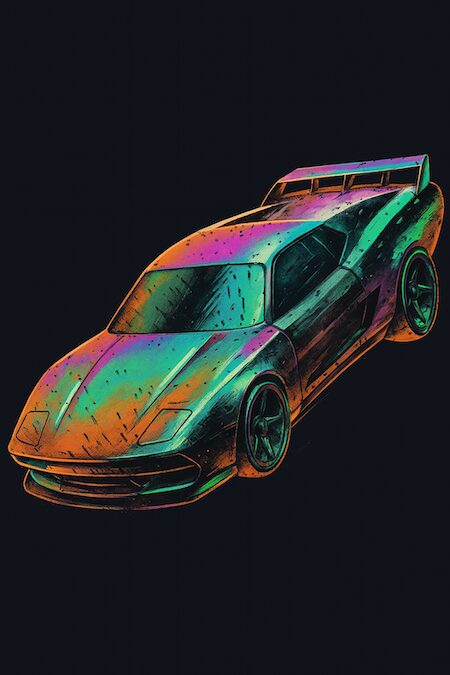
The rumble of engines is moving online. As blockchain technology intersects with automotive passion, car culture faces a pivotal question: can digital platforms preserve what made the community authentic, or will something essential be lost in translation?
A few months removed from Formula One’s Singapore Grand Prix, the event’s legacy continues to resonate in ways that extend far beyond the podium. Motorsport has reached unprecedented heights of spectacle and cultural relevance, yet beneath the roar of race engines, a deeper transformation is taking shape. A new generation of gearheads is redefining identity, creativity and community, not on the circuit, but in the digital realm.
Car culture has always been about more than machinery alone. It encompasses precision, belonging, and a shared pursuit of performance. Though its heart once beat behind garage doors and at weekend meets, today that pulse is migrating to the blockchain through virtual exhibitions, digital collectables, and global fan bases who have made their love of automotives all the more accessible. While some may dismiss this shift as nostalgia dressed in digital novelty, what we’re witnessing is the re-engineering of cultural infrastructure in a way that prizes trust, provenance and participation across borders.
Rerouting Automotive Culture from Off-Track to On-chain
Car culture’s home is changing lanes. We aren’t abandoning the hum of engines, sleek exteriors, or quality car parts, but using technology to extend and preserve the life form of that tangibility. Collectors have long valued authenticity and restoration; innovations like blockchain and AI simply expand that hallmark into a verifiable and tamper-proof record of ownership. Every photograph, model or story can be securely archived and rediscovered, protecting heritage for future generations to come.
There’s a paradox in how technology reshapes car culture. Many lament the loss of tactile experiences with nearly every modern vehicle design reduced to little more than fancy touchscreens and voice-activated AI assistants. Yet, at the same time, blockchain is already cutting costs for car companies, and the demand for its feature of traceability has never been greater. For gearheads, this means the lineage of their iconic dream vehicle can now live on as digital art, recorded on-chain and viewable from any corner of the globe with customised privacy features.
Still, the human connection remains the axle of it all. Physical spaces—showrooms, racetracks, and even Singapore’s carparks—will always ground culture. But digital platforms expand their reach, enabling inclusivity and creativity on a scale that traditional car meets never could. The truth is that the road to preservation is no longer limited by geography; it’s now mapped in code as much as chrome.
Paving the Digital Path: Digital Cars for a Digitally-Native Community
Photography can be considered car culture’s core art form, recognised as an avenue to immortalise speed and craftsmanship. Nifty Gateway Studio developed photographer Dave Krugman’s Drive project to reimagine that tradition for the digital age, where car photography becomes an interactive social game that allows participants to engage, trade, and co-create. Instead of having to maintain static galleries, it’s now all about sustaining a living cultural canvas. This signals a broader creative transformation. Once dismissed as speculative JPEGs after veering off its 2021 peak, NFTs are evolving into what many now call New Media 2.0. Here, ownership isn’t symbolic, but tied to royalties, community participation, and immersive storytelling. Cumulative NFT sales have surpassed US$50 billion since 2021, underscoring their staying power despite volatile market cycles.
And automotive brands are taking notice. This year alone, Lamborghini unveiled a partnership with metaverse platform Wilder World to debut its “Temerario” super sports car in artistic digital form. Platforms like KurumaNFT are building curated spaces for influential artists to connect with motor enthusiasts through blockchain-based memorabilia.
Where physical events face geographical and cost constraints, digital platforms enhance participation. Virtual “car meets” are attracting thousands: Reddit’s r/cars community counts over 7.4 million members, while niche Discord servers for virtual drifting or 3D model trading host thriving micro-ecosystems. Ultimately, based on the influx of digital activity, it’s apparent to me that the social infrastructure once found in car parks now thrives in shared digital spaces.
A Fast Track to the Future of Entertainment: Where Culture, Commerce, & Tech Converge
Now, what does this migration of car culture tell us about where entertainment and commerce are heading? For me, it signals the rise of owned, participatory culture, offering experiences that reject the binary between physical and digital. In fashion, music, design, and art alike, audiences increasingly want to shape the stories they consume, transitioning from passive viewers to active contributors.
But every technological frontier brings ethical bends in the road. Attribution, intellectual property, and creator rights must be built into the system. Blockchain’s transparent ledgers already enable verifiable provenance and audit tracking, ensuring creators retain recognition and royalties across markets. As creative communities lean towards decentralisation, they’re beginning to design economies where creators, collectors and audiences share both value and voice.
For today’s gearheads, the shift from tarmac to token moves beyond technological novelty to a redefinition of belonging. As car culture finds new life online, the engine that powers this next era no longer drives on horsepower, but by a creative community written in code.
Tara Harris leads product innovation and brand activations at Nifty Gateway Studio, where she’s worked since 2021 to bridge world-renowned artists, blockchain technology, and global brands. She serves on the selectors committee for the 2025 Lumen Prize and has held senior leadership roles at Gemini, Hawkfish, and Deloitte Digital, with expertise spanning Web3, digital strategy, and creative business development.
