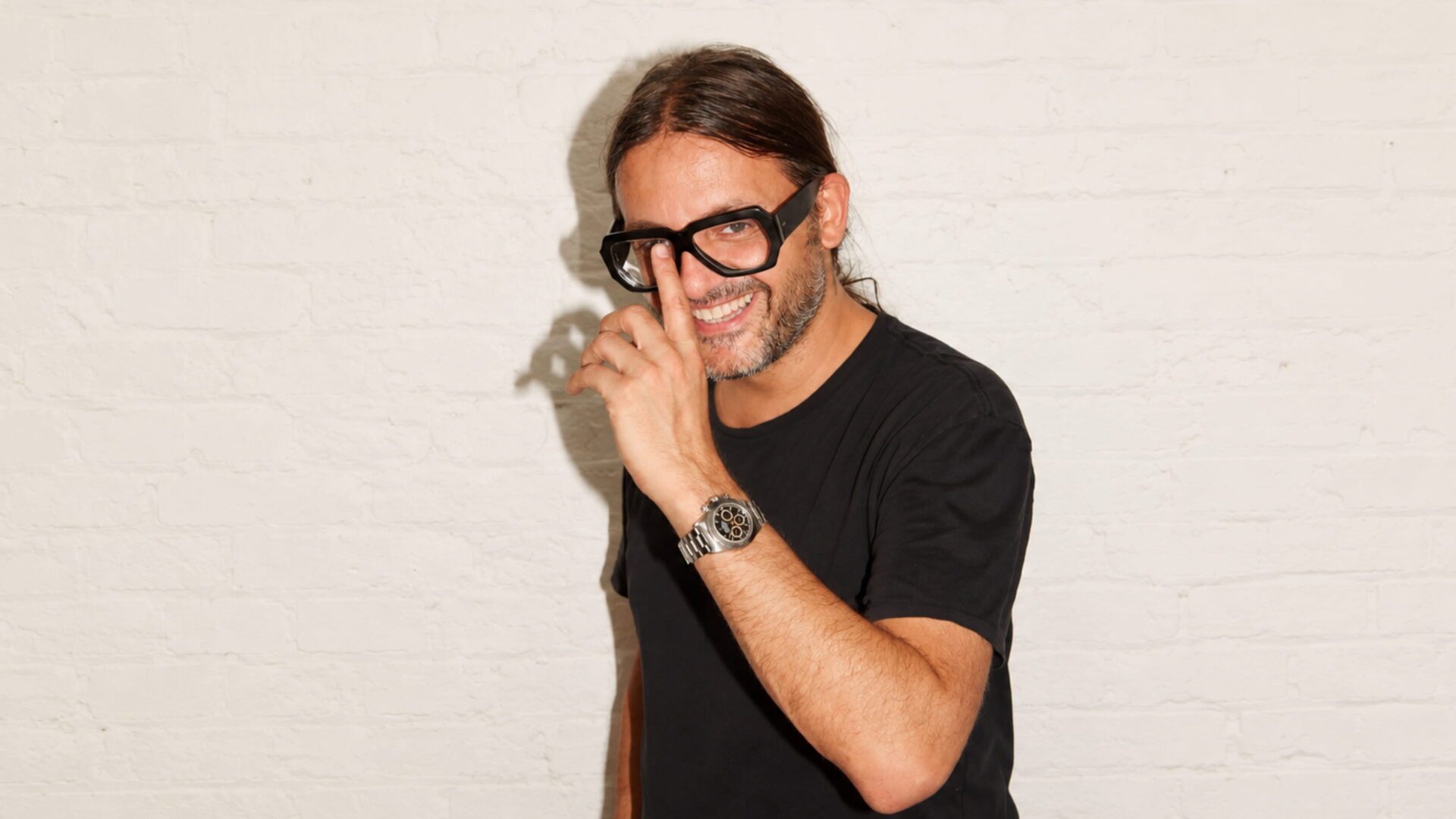
The Parley for the Oceans Founder has spent more than a decade using design to confront the planet’s biggest problems. Now, he argues business must move beyond sustainability as a sideshow, embracing complexity, rediscovering its appetite for risk and replacing fear with something rarely discussed in the boardroom: love.
In 2016, researchers at the University of Plymouth put synthetic clothes in a washing machine and counted what came out. A single six-kilogram load could release more than 700,000 microscopic fibres, many small enough to eventually reach the sea. Across the world’s wardrobes, the European Environment Agency estimates that between 200,000 and 500,000 tonnes of textile microplastics enter the marine environment every year.
Fashion has always been very good at telling us what happens before something reaches the body: the designer, the atelier, the craftsmanship, the runway. We talk considerably less about what happens after it leaves it. The ocean, unfortunately, knows.
Cyrill Gutsch has spent 14 years working in the space between the two. The German-born designer and brand strategist built his career in the commercial world, working with companies including BMW, Lufthansa and Adidas and developing Cross Intelligence, his methodology for bringing different disciplines together inside large organisations. His trajectory changed after meeting Captain Paul Watson in 2012 and confronting an idea he says he had never properly understood: that his generation could leave behind a dead sea.
Rather than abandon design, he gave it a new client.
That design heritage would become central to how Gutsch approached environmentalism. Through Parley for the Oceans, the collaboration network he co-founded with Lea Stepken, he brought conservation into conversation with culture and commerce, working with fashion and luxury names including Adidas and Dior and demonstrating that environmental innovation could live inside objects of desire, rather than outside the industries creating them. Parley has since brought designers, scientists, businesses and governments together across more than 30 countries. Its 2015 Adidas concept shoe turned reclaimed ocean waste and illegal deep-sea gillnets into something people actually wanted to wear.
But Gutsch is looking beyond recycling. Parley Future Material, launched in 2025, is focused upstream: replacing harmful materials through biology, design and green chemistry. And this is where an ocean story becomes a boardroom story. Changing a material means changing R&D, sourcing, margins and supply chains, and deciding who is willing to go first.
When Beyond the Boardroom sat down with Gutsch during AT ONE Impact Week 2026 in Singapore, the ocean was merely our way in. We moved through fashion and luxury, AI and complexity, entrepreneurship and risk and why the community may replace advertising.
Beneath it all sat a bigger question: how do you actually get people, and businesses, to change? Gutsch’s answer is unlikely to appear on many corporate transformation decks. Less fear. Less shame. Less hope. More creativity, more action and, unexpectedly, considerably more love.

You were a designer before you were an environmentalist. Has your definition of good design changed, or simply what you believe design is responsible for?
For me, design was always about first understanding what you’re doing and whether there’s a need for what you’re designing, but also diving deep into the components, and that means dealing with specialists.
I think a good designer is also a conductor who brings together experts who don’t speak the same language. That makes you a translator, and you have to find this universal language that allows everybody to collaborate. I think design, and also art, has the mandate to connect people who otherwise wouldn’t be connected. So adding a cause, adding the dimension of redesigning towards an economy that ends the destruction of our planet and questions the future of our own species, is just the next layer. It’s not something that totally changed my definition of design. My role changed, because it’s very hard for me now to run an organisation of this size and be a designer myself. And that is, of course, a little painful.
You’ve said people don’t fall in love with regulations; they fall in love with ideas and beauty. Does luxury understand that sustainability has to be desirable, not simply responsible?
I think the luxury industry has a glimpse of what it means today to be luxurious, and that is having purpose, but they don’t really follow through. We’re fighting for our own survival. We have mastered this planet to a level that we nearly broke it. But people don’t want dry rules or abstract measures. We want to understand the problem without feeling guilty or ashamed.
The most efficient way to open people up to change is empathy. You have to take guilt and accusation off the table. To open people emotionally, you need beauty, but also a good dose of horror. You need to confront reality, but with understanding. The environmental movement speaks an often accusatory language. I don’t think that’s working. What works is collaboration. And if you don’t fall in love with nature, what are you supposed to protect? Our relationship with nature comes from a time when we had to hunt to survive. Today, we’re eight billion people racing towards 10 billion. The rules of the game have to be different now.
There’s a tension there. You reject guilt as a mechanism for change, yet you work with Dior, Adidas and other businesses built on consumption. Can you change the system while continuing to participate in it?
You have to make a decision. Either you unplug from the world and live the perfect life, or you work within existing systems. That’s my path. A company is an ecosystem with its own teams, supply chains, clients and language. If you understand those codes, you can have an impact. If you push from outside, you won’t end up co-creating. I’m a collaborator. I’m not a protester. For me, the highest form of protest is innovation. If I don’t like something, I create something new. That’s my way of rebellion. I want our work to be the antidote to fear, showing how much good can come from changing the way things are done.
You need champions inside companies: the C-suite, shareholders and experts. How can you ask a company to jump off a cliff and abandon what it knows if you can’t show them where they might land? Transformation isn’t a light switch. It’s a journey built on mistakes and failures, and those need space to happen behind closed doors. Ultimately, it’s a cultural change process within organisations.
You talk about companies needing somewhere they can make mistakes in private. But has the boardroom itself stopped being a place where leaders can tell the truth?
The boardroom feels removed from what’s actually going on in a company. It doesn’t feel like the place where truth is spoken. Everybody is selling themselves or pushing an agenda. A boardroom should be a safe place where you can speak the truth, admit mistakes and forge a pathway into the future. If you have the board behind you, you can really change a company. Change is painful and risky, but change is also the guarantee that you exist tomorrow.
And it matters who’s sitting there. Are they driven by short-term interests, or securing the investment for the next 10, 20, 50 or 100 years? As an investor, I don’t want a company to fade away because the CEO met their KPIs. I want them to take care of the future of my wealth. What we’ve lost in most companies is the founder instinct. Founders are risk-takers. Most CEOs are clerks. Sorry to say it, but they’re clerks. They’re employees, and that is a problem. If you’re not an entrepreneur, why are you running an enterprise? People have to become entrepreneurs again.
Is that ultimately the problem with corporate sustainability, that businesses treat it as a separate agenda when it is really a question of whether the company can adapt fast enough to survive?
Companies react exactly the same way to what they call sustainability as they do to innovation. There’s no difference. Change management doesn’t necessarily mean we’re talking about sacrificing something. We’re talking about adjusting your company’s course, and that’s something you have to do literally all the time because the world changes.
Especially now, we’re in a time of multiple revolutions stacked on top of each other. We have AI. We have crazy changes in human behaviour. Technology has already radically changed us from the time when I grew up, and now AI changes it again. There are wars. There’s so much going on at the same time. Everything is in flux. And on top of that, we’re facing our own extinction because we’re in the sixth mass extinction event. We’re literally destroying ourselves. All of that together can easily lead not only to fatigue, but can paralyse people to the point where they’re literally destroying themselves. And that’s the death of a company. If you stall, you die.

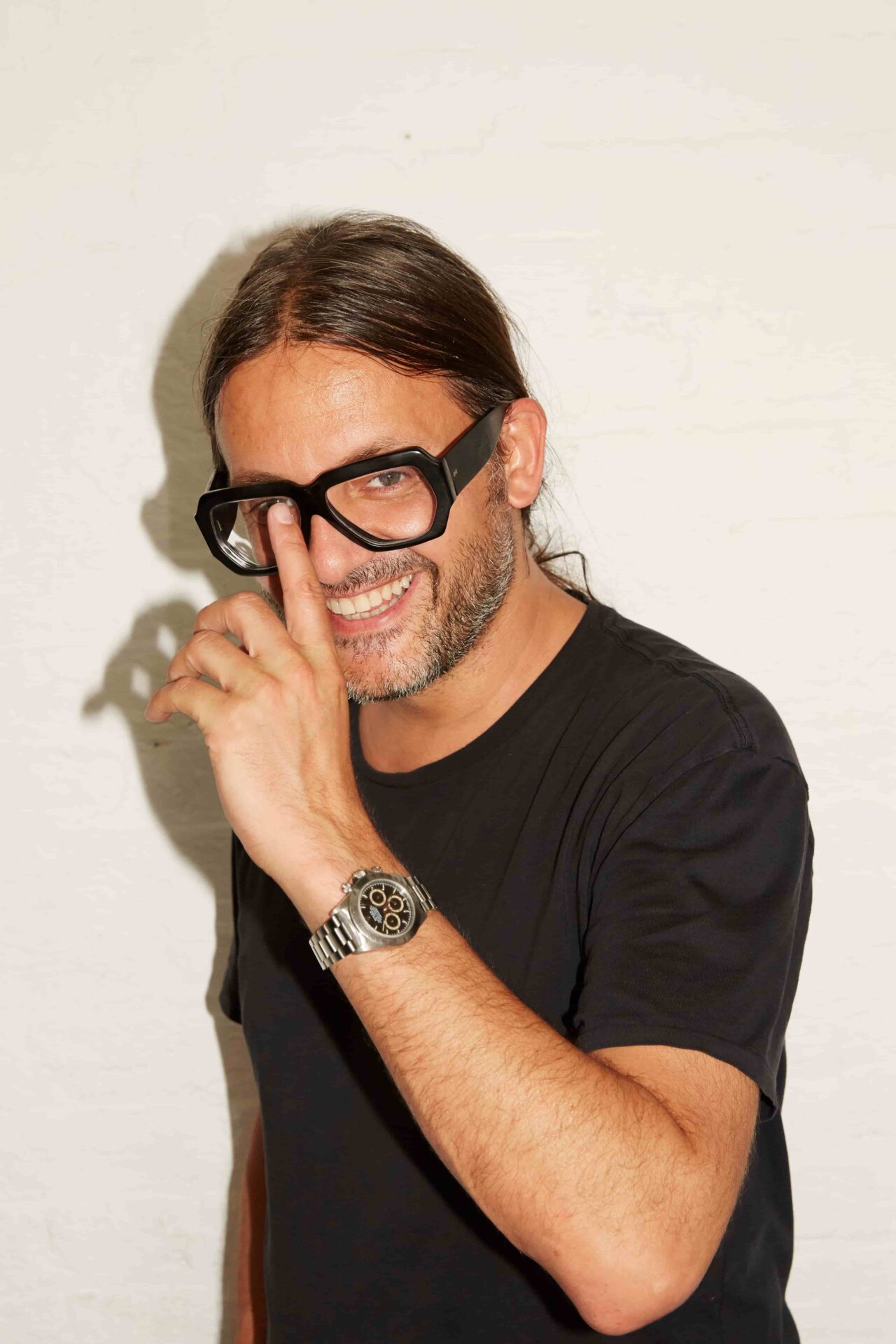
Photo: Courtesy of Cyrill Gutsch.
We talk about transformation as though everyone has equal agency. But technology, capital and influence are increasingly concentrated among a relatively small number of people. How do we preserve human agency when so much power sits at the top?
The people controlling technology right now are also very new to being rich and influential. They built these companies in their lifetime, and that means anybody else can as well. Today, everybody can build a company with almost nothing. I can build you an app, a website, whole systems, and I don’t even understand coding. We’re in a world that on one side feels predefined and controlled by a few. On the other, it was never this easy to become one of the architects of that reality.
It’s about liberating yourself from these predefined realities and allowing yourself to create reality instead of accepting what is already there as permanent. We’re being extremely manipulated on one side, but we’re also becoming more media-socialised. We’re seeing through things, and people adjust faster than we think. I don’t believe we’ll be controlled by technology, or by a few technology people, forever. It was never as easy as it is now to create and be part of moulding reality.
But AI presents a contradiction for someone fighting for the oceans. It promises extraordinary efficiencies while carrying its own environmental and resource costs. How do you reconcile using it?
It’s the same question you asked before of how I can justify working with companies and putting more product out? Ignoring tools means stepping out of society. How can you try to change people who are working on an operating system you don’t understand? If I don’t use it, I don’t understand it.
AI is at the beginning of a technology. We haven’t seen where this leads, and every new technology is imperfect. We don’t even know if we’re going to have AI in the future. It might become too risky. But at this point, I use AI as much as I can because it wins me time. We’re in a race to radically change the way business is being done on this planet, against our own footprint as a species of eight billion people. Time is the biggest luxury we have right now. So every tool I can use that wins me time is welcome. Something that might traditionally take me a week can take hours with AI. And I think that’s the big gift AI gives us as a society: it helps us overcome our fear of complexity.
So if fear, guilt and oversimplification aren’t enough to drive change, what value system replaces them?
We have to stop this mono-focus and trust our instincts and our hearts more. At Impact Week, we talked about love as infrastructure. This planet operates on fear, but today the biggest threat to us is ourselves. So we have to switch to love, and that means collaboration. It means seeing an advantage in the prosperity of others. True collaboration means you actually want others to succeed. Creativity and empathy play a big role in that. You have to allow yourself to feel, even if it scares you, and get to know yourself. If you don’t know yourself, what can you do for others? We all have ugly thoughts and beautiful thoughts. If we suppress everything we don’t want to look at, we’re just reacting. We become automated creatures because we don’t really know, accept or love ourselves.
I’m a collaborator. I’m not a protester. For me, the highest form of protest is innovation.
Fashion presents itself as an engine of reinvention, yet you’ve called it one of the most conservative industries on Earth. If the old model is running out of road, what replaces it?
Fashion is the most conservative business on Earth. They hate change. Just because they spend money on a runway doesn’t mean they’re investing in innovation. That’s frustrating because fashion is an incredibly powerful communication tool. We show ourselves through what we wear. Yet the industry focuses on advertising and image rather than substance. Why pay $3,000 or $4,000 for a bag? In the past, you could point to quality, artisanship and craftsmanship. Increasingly, that substance has been reduced.
My personal answer is that community replaces advertising. Objects become flags for a set of values. You’re no longer just buying a logo because a celebrity carried it. A brand becomes a doorway to a community, an emblem of belonging. Sometimes a well-designed object can communicate who you are better than words.
The oceans are deeply political, tied to trade, territory, food and defence. Have we underestimated just how political protecting them really is?
The oceans have always been central to defence, power and trade. But when you get to the high seas, they’re largely uncontrolled. Why would we allow the largest area on Earth to be a place where people can kill and dump whatever they want? The oceans have been overlooked for too long. Fishing is deeply anchored in societies and politically sensitive, but international water means it belongs to all of us. It doesn’t mean it belongs to nobody. The bigger issue is that we don’t understand this planet as a whole. We compartmentalise everything into the blue economy and the green economy, but it’s all connected. What we do on land affects life in the ocean. We’re an ocean planet. The people destroying the oceans are living on land.
For all our dependence on the ocean, why are we so captivated by space when so much of our own planet remains unexplored?
One aspect of space exploration is that you finally understand your home. You go out there, see Earth and suddenly your home becomes small. There’s something very humbling about that. We’re also curious. There’s a hunger in us to go into the unexplored and start from scratch, or perhaps make the same mistakes again. You could call it escapism, but I don’t think we have to choose. There’s enough money on this planet. We can do both. The ocean is our own deep space, and it’s still largely unexplored. The people who know the most about the deep sea are the mining companies and oil companies. That’s sad. I’d love to see more deep-sea exploration, especially for the next generation. We’re afraid of the ocean because it’s not our element. But for me, it’s a place of peace. I come back from a dive and I’m the most tranquil person on Earth.
Five years from now, what would meaningful progress actually look like to you?
In five years, we’ll be in a total catastrophe, and people will actually die from climate change in the millions. Everybody will understand that we have to act. The best possible outcome for 2031 is that we actually know what to do at scale and have enough motivation to do it. There’s no way to fix what we’ve destroyed in five years. We can fix it in 20 years, but that doesn’t mean we can wait 19 years to start.
Humans tend to react when they’re brutally under pressure. I just hope this crisis doesn’t lead to extremism and a narrowing of our perspective, but instead to more empathy and collaboration. I want it to bring the best out of us, not the worst. I believe in humans. But I also see that fear can create a very ugly side of humanity. And I hope that no…Hope is a bad thing.
Wait, why is hope a bad thing?
Hope is not a strategy. Hope is a sleeping pill. It’s a tranquilliser. That doesn’t mean I’m not hopeful. I’m just not betting on hope. I’m betting on creativity. I’m betting on ingenuity. I’m betting on action. Hope is something very silent. It’s just: “Oh, let’s hope.” No, no, no. Let’s go. Let’s do something. Love is the antidote, not hope.