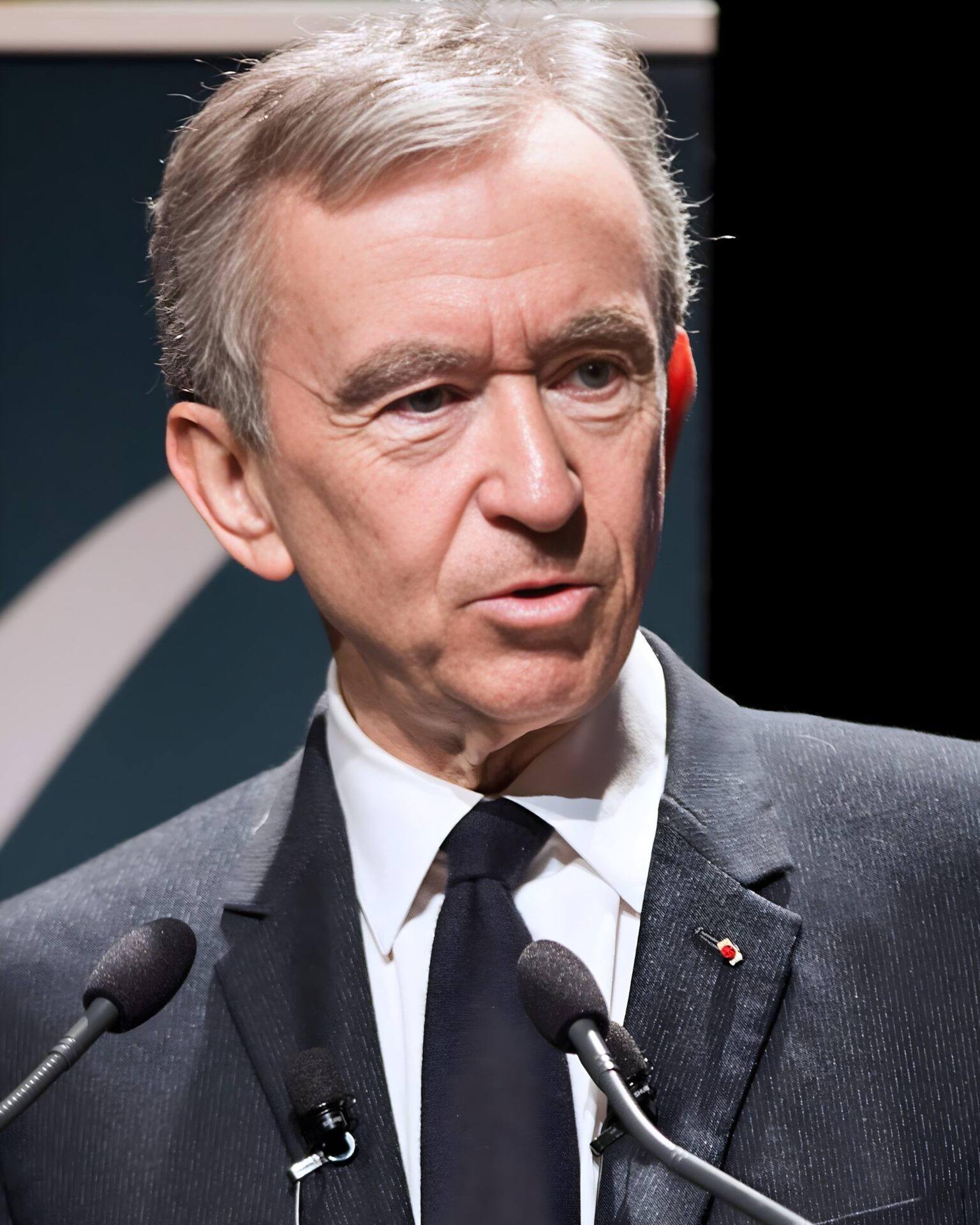
LVMH chairman Bernard Arnault told shareholders last week that 2026 would end in either recovery or catastrophe, as the group reported first-quarter revenues of $21 billion and citing the ongoing Middle East conflict as the defining variable the business cannot model.
“Either it will be a world catastrophe…or it will be resolved more quickly somehow, as we all hope. And in that case, business will gradually return to normal.” These were the words of Bernard Arnault, Chairman and Chief Executive of LVMH, addressing shareholders at the group’s Annual General Meeting in Paris on 23 April last week. For a man whose public composure has rarely wavered across decades of market turbulence, they carried unusual candour. Asked to characterise the outlook for the remainder of 2026, Arnault distilled it to two possibilities—recovery or catastrophe—and acknowledged with notable directness, that he could not determine which prevails. The year ahead he concluded, is “quite unpredictable.”
The conflict underpinning that admission has been compressing the luxury sector’s recovery since it escalated earlier this year. The Middle East represents roughly 6% of LVMH’s total revenues, a share that understates its strategic importance. Gulf markets had been among the most productive growth drivers available to the sector in 2025, expanding at close to 20% at a time when aspirational demand in China was still finding its footing and European domestic consumption offered little by way of momentum. The region was widely expected to extend that contribution through 2026. Instead, the conflict produced an abrupt and measurable deterioration. Luxury brand sales at the Mall of the Emirates fell between 30 and 50% in March alone, with consumer sentiment, store visits, and per-visit spend declining in concert. LVMH’s CFO Cécile Cabanis observed that the Middle East is “a quite profitable market”, which may be another way of saying that when revenues fall there, margin erosion is disproportionate.
What the Q1 Numbers Actually Show
LVMH’s first-quarter 2026 revenues came in at approximately $21 billion (€19.1 billion), a 6% decline in reported terms, the majority of which reflects a 7% currency headwind from a strengthening euro rather than underlying demand weakness. Organic growth of 1% fell short of the 1.5% FactSet consensus, with LVMH stating that the Middle East conflict reduced growth by around one percentage point. Stripped of that impact, underlying growth would have been closer to 2%. The distinction matters, pointing to a disruption that is geopolitical, acute and potentially temporary, rather than evidence of a broader deterioration in brand performance.
Arnault’s response to an unforecastable environment was to redirect attention toward the longer arc. He used the AGM to reaffirm his ambition to position LVMH as the world’s pre-eminent jewellery house within five years, with Tiffany & Co. as the cornerstone of that aspiration.
The regional picture that emerges from the quarter is one of genuine and widening divergence. Asia excluding Japan delivered 7% organic growth, the group’s strongest performance in that market since the end of 2023, as mainland China’s recovery continued to gather pace and demand across Southeast Asia held firm. The United States returned to growth at 3% organically, with American clients moving from slightly negative territory in Q4 2025 to low-to-mid single-digit positive in Q1 2026, a meaningful directional shift. Within the portfolio itself, watches and jewellery stood apart, advancing 7% organically to approximately $2.6 billion (€2.4 billion). Fine jewellery, which now constitutes roughly 60% of the division, grew at strong double digits, with the HardWear, Knot, and Sixteen Stone collections having evolved from product launches into durable revenue franchises. Sephora continued its consistent run, posting 4% organic growth across every region in which it operates and consolidating its position as LVMH’s most reliably performing asset.
What Else the AGM Revealed
Arnault’s response to an unforecastable environment was to redirect attention toward the longer arc. He used the AGM to reaffirm his ambition to position LVMH as the world’s pre-eminent jewellery house within five years, with Tiffany & Co. as the cornerstone of that aspiration. The Q1 performance of the watches and jewellery division lends the thesis tangible credibility. In a quarter defined by fashion contraction and geopolitical headwinds, fine jewellery sustained double-digit growth. The strategic rationale is well-established. Ultra-high-net-worth jewellery clients occupy a different psychological and financial register from aspirational luxury consumers; their acquisitions are governed by considerations of permanence and portfolio rather than seasonal desire. The pricing dynamics are correspondingly more stable. Richemont’s own 14% jewellery growth in a recent quarter, achieved while broader luxury struggled, provides external validation of the category’s resilience.
The meeting also furnished a moment of note on succession. All five Arnault children—Delphine, Antoine, Alexandre, Frédéric, and Jean—addressed shareholders collectively for the first time, a choreography that inevitably sharpened attention on the question of who leads LVMH next. Their father, at 77, appeared unmoved by the scrutiny. Shareholders had already ratified a resolution permitting him to serve as Chief Executive until the age of 85. “Let’s talk about it again in seven or eight years,” he offered. The Arnault family’s sustained accumulation of LVMH shares throughout the downturn, sufficient to carry them past the 50% ownership threshold speaks in the language he has long favoured, louder than any formal statement on confidence.
What This Means for the Sector
The structural question that LVMH’s Q1 brings into focus is one the sector has not been forced to confront in quite this form before. The 2026 recovery thesis rested on three geographic pillars holding simultaneously: continued US resilience, a gradual China recovery, and the Middle East sustaining its outsized momentum. Two of those three remain intact. The third has been placed in abeyance by a conflict that no forecasting model had incorporated. LVMH’s management was measured but clear on the point, the wealth concentrated in the Gulf has not evaporated, and Cabanis acknowledged that spending may eventually migrate to other markets. What remains absent is any evidence of meaningful displacement demand materialising in Paris, Milan, or the broader Asia-Pacific region. For now, that proposition sits in the category of reasonable expectation rather than observable trend.
Richemont, Prada, and Burberry have yet to report their first-quarter figures, and when they do, the picture will sharpen considerably as to whether the Middle East’s latency is distributed across the sector or concentrated in specific categories, and whether the jewellery and beauty resilience LVMH demonstrated is structural or idiosyncratic. The analytical consensus is cautiously constructive. But consensus, as Arnault implicitly acknowledged in Paris last week, is only as reliable as the conditions it assumes and right now, the most consequential condition in global luxury may be one that no balance sheet can resolve.