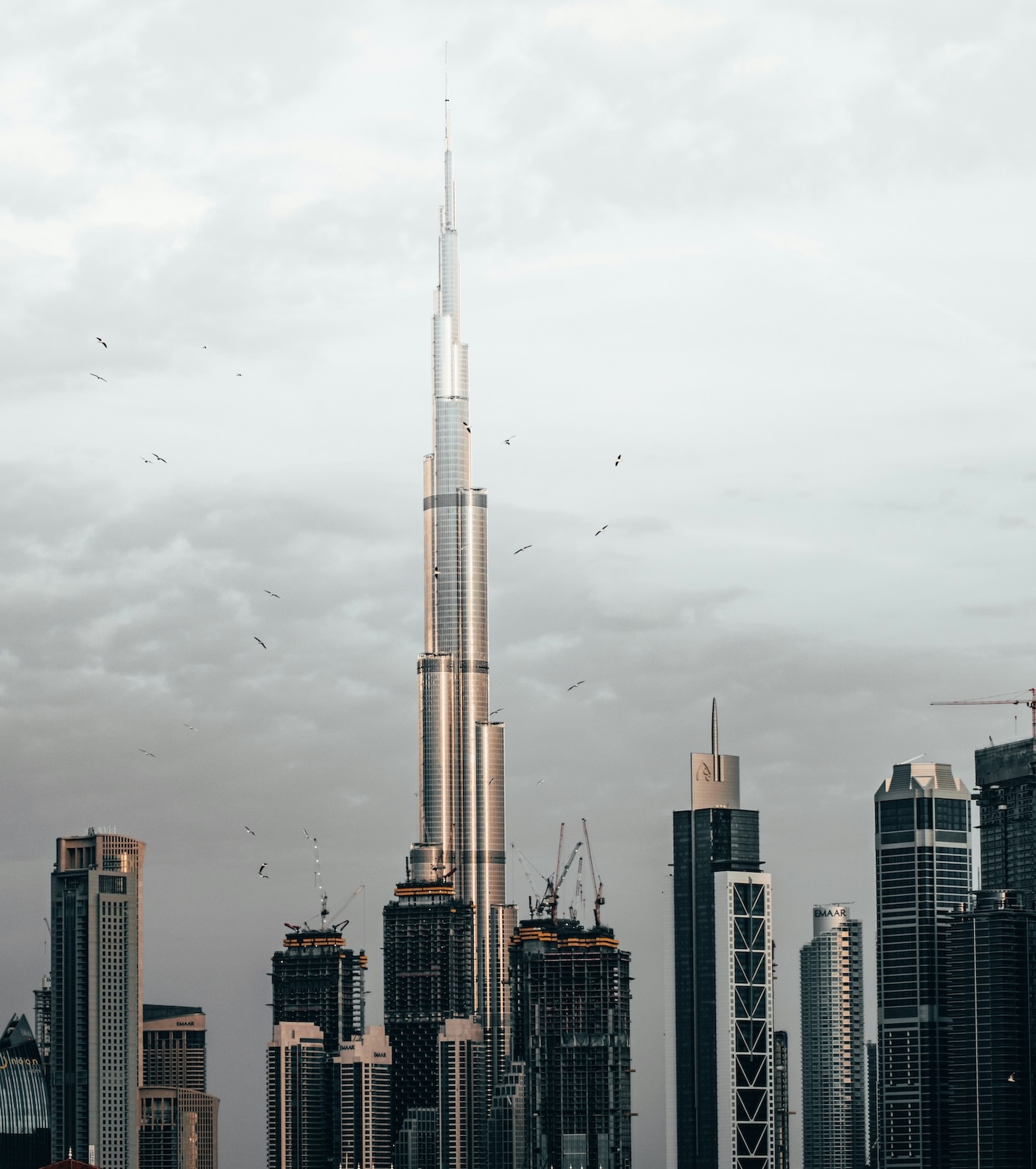
As the cost of the Middle East conflict continues to mount, its economic consequences are becoming increasingly hard to ignore, with the Gulf’s luxury and commercial sector now facing an uncertain road ahead.
The escalating conflict across the Middle East has brought devastation to the region and disruption far beyond it. Since late February, the United Arab Emirates (UAE) alone has recorded three fatalities and78 injuries as exchanges have struck civilian areas and infrastructure across multiple Gulf states. The humanitarian situation remains concerning, as the full extent of the damage to lives, livelihoods, and communities across the region still unfolds.
Against this backdrop, the economic consequences are also becoming harder to ignore. The Gulf’s luxury and commercial sector, until recently one of the few remaining bright spots for global high-end retail growth, is now navigating significant disruption. Dubai, which has long been regarded as the region’s commercial safe haven is facing what many are describing as its most serious stress test in years.
In the midst of the uncertainty and unprecedented halt to air travel, a video of UAE President Mohammed bin Zayed Al Nahyan walking through Dubai Mall on Monday evening went viral. Accompanied by the Crown Prince of Dubai, Deputy Prime Minister and Minister of Defence, the President moved through the mall greeting shoppers, posing for photographs with tourists and breaking his Ramadan fast at Cipriani restaurant, imagery that stood in sharp contrast to the headlines of airspace disruptions and security alerts elsewhere across the Gulf. The appearance was widely interpreted as a deliberate gesture of reassurance, a signal that daily life and commerce were continuing as normal.
Business in Times of Conflict
On the ground though, the picture is more complicated. Several major attractions have temporarily suspended operations, among them Ain Dubai, the world’s largest observation wheel, while theme parks including Real Madrid World, LEGOLAND Dubai and Motiongate Dubai remain shut. Dubai Festival City Mall has also been affected with its popular Ramadan drone show postponed until further notice, even as its retail, dining, and nightly water and light show continue to operate. Global Village extended its closure through to Friday 6 March as a precautionary safety measure in line with official guidance. The disruption has rippled steadily through the broader commercial landscape.
The response from luxury and retail brands has been cautious but increasingly visible. Apple temporarily closed its corporate offices alongside five UAE stores. Chalhoub Group, which operates roughly 900 stores across the region for names including Versace, Jimmy Choo and Sephora, confirmed its Bahrain locations were shut, with staff attendance made voluntary across other markets. Kering, the Paris-based group behind Gucci, temporarily halted store operations on Sunday across the UAE, Kuwait, Bahrain and Qatar, and suspended regional travel. Even e-commerce has not been immune, with Amazon reportedly suspending deliveries across parts of the region and closing its Abu Dhabi fulfilment centre. The UAE Ministry of Human Resources and Emiratisation, meanwhile, recommended remote working arrangements where possible and reduced on-site staffing to essential roles only.
The timing of the escalation is particularly challenging for the industry, as it coincides with the most significant period in the Gulf’s commercial calendar. Coming at the start of Ramadan, a season traditionally defined by high consumer activity and community gatherings, the conflict has disrupted a period that the luxury sector had approached with clear optimism. Only days prior, Cartier had hosted a high-jewellery exhibition at Dubai’s Keturah Park, and LVMH’s leadership had recently informed investors that the Middle East continued to show “significant growth.” The transition from these high-profile events to widespread store closures reflects the severity of the disruption currently affecting the region.
Beyond the Storefronts
Financial markets overall have responded rapidly to the regional instability. According to Morgan Stanley and Bank of America, the Middle East accounts for approximately 5% to 6% of global luxury sales, with the UAE (and specifically Dubai) generating roughly half of that regional revenue. RBC Capital Markets analysts note that luxury demand typically requires a more optimistic environment and unabated traveler flows, both of which are currently compromised by security concerns and airspace disruptions.
Investors have also moved quickly to price in these risks: shares in LVMH and Kering have seen week-to-date losses approaching 10%, while Richemont—which maintains the highest regional exposure among major luxury groups—fell by over 6% in a single session. This volatility has extended to commodities as well; Dubai gold rates, which hit record highs earlier in the week, retreated sharply from Dh641 to Dh614 per gram by Tuesday as broader markets pulled back.
The concern among analysts is not only about direct regional exposure but about what a prolonged disruption could mean more widely. Experts note that even with Middle East revenues averaging in the mid-to-high single digits for most luxury brands, the knock-on effects could spread considerably if the conflict extends, potentially impacting global consumer confidence. Consultancy Kearney, meanwhile, estimated that if the Gulf’s travel retail market (valued at between $5 and $6 billion) were to be shut down for a month, hundreds of millions of dollars in sales would be directly at risk across multiple industries including real estate, which has historically been a booming market for the region.
The UAE has navigated periods of regional turbulence before and has, on each occasion, demonstrated considerable resilience. While the immediate focus remains on security and humanitarian concerns rather than the movement of luxury goods, the underlying commercial ecosystem remains a vital engine for the region. This sector supports the livelihoods of hundreds of thousands of employees and their families, representing a diverse workforce that is foundational to the Gulf’s broader social and economic fabric. Whether this stability holds will depend on the duration and trajectory of a conflict whose resolution remains uncertain; however, the continued operation of these industries is not merely a matter of commerce, but a key component of the region’s long-term recovery and success.
Anna Ivanova is Beyond the Boardroom’s Middle East Correspondent, reporting on the intersection of luxury, culture and commerce across the Gulf.