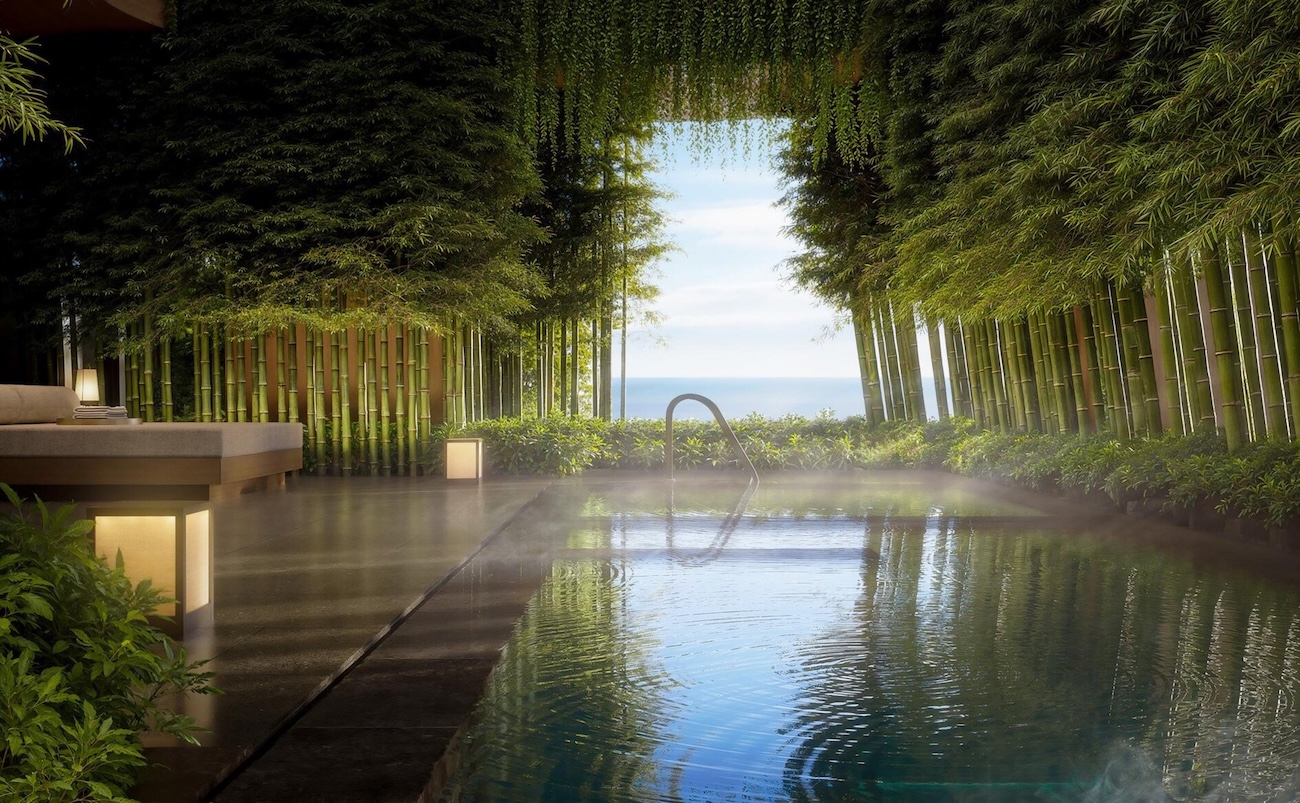
Luxury hospitality was built on the promise of distance. Now, as travellers seek restoration within the rhythm of everyday life rather than beyond it, the industry’s most revered brands are attempting something more quietly radical, translating sanctuary from remote landscapes into the heart of global cities.
For much of modern hospitality history, luxury was measured by distance. The further one travelled, the more rarefied the experience felt. Remoteness became synonymous with seclusion and a proxy for status. To be far away was, in many ways, to have arrived.
Some of the world’s most revered hospitality brands were built on this premise. Aman, in particular, perfected the art of withdrawal. Its properties were conceived as sanctuaries rather than hotels, where silence was intentional, wellness implicit and the outside world gently held at bay. Ask any Aman devotee and they will tell you it is less a stay than a state of mind.
Yet luxury, like culture, is never static. Today, one of the most compelling shifts in hospitality lies in translating the qualities once reserved for distant escapes into the rhythm of everyday life. The question many luxury brands are now asking is no longer where can we escape to, but how can sanctuary exist within the places we already inhabit. The modern luxury traveller moves through a different cadence. Work is increasingly mobile, boundaries more porous and time, perhaps the most precious currency of all, fragmented. In this context, the once-a-year pilgrimage to a far-flung resort can no longer satisfy the full spectrum of needs. Restoration is expected to exist between meetings, across weekends and within the flow of daily life, where wellness becomes less a destination and more a way of living.
From Destination to Daily Ritual
It’s within this shift that urban sanctuaries have taken on new relevance. Take Aman’s expansion into cities such as Tokyo and New York—with Singapore and other global capitals to follow—is often framed as a bold departure. Yet it feels less like reinvention than recalibration. As the language of mindfulness and sanctuary becomes widely adopted, particularly among luxury players across Asia, differentiation can no longer rely solely on geography. It must be expressed through depth, consistency and emotional intelligence.
This recalibration is visible across the industry. SixSenses, once defined by barefoot escapes in remote landscapes, now vies to operate in dense urban centres such as Dubai and Rome. COMO, long associated with restorative destinations, has embedded itself in cities such as London, Bangkok and Singapore. The likes of Rosewood, One&Only and Four Seasons have spent years refining the concept of the “urban resort”, offering cultural immersion without sacrificing stillness, now instilling themselves in newer, urban jungles.
At the heart of this evolution is a broader redefinition of luxury travel itself. The old model was episodic, rare and often centred on spectacle. The emerging model is quieter and more sustained, allowing luxury to be embraced as a way of living. This shift helps explain the steady expansion into branded residences, serviced apartments, private members’ clubs and integrated wellness ecosystems. These extensions allow a brand’s values to appear repeatedly in a guest’s life, building familiarity and emotional loyalty over time. The move is as commercially driven as it is philosophical. When guests can reside in a branded home, visit a neighbourhood wellness space, dine within a hotel that doubles as a cultural salon and retreat to a resort when time allows, the brand becomes part of their personal rhythm. Loyalty, in this context, becomes habitual.
There is also a pragmatic dimension. Urban properties offer stability in an industry long exposed to seasonality, airlift dependencies and geopolitical fluctuation. Branded residences provide recurring revenue, while wellness and dining concepts extend engagement beyond the overnight stay. Yet perhaps the more strategic play lies in frequency: accessibility creates repetition, and repetition builds emotional memory. In luxury hospitality, the brands that endure are often those encountered not only at life’s highlights but in its quieter moments. Presence matters, both physically and psychologically.
A generational lens is equally relevant. Children who grow up in branded residences, accompanying parents to urban wellness centres or spending weekends in familiar hotel environments begin to absorb these spaces as normal. Over time, familiarity becomes preference, and preference evolves into loyalty. It is long-term brand cultivation at its most subtle.
The Discipline Behind Urban Sanctuary
And yet, this evolution carries its own tensions. A sanctuary in a rainforest benefits from inherent silence and space. In a city, sanctuary must be deliberately reinforced through discipline—of service, of culture and of intent. The risk, of course, is dilution. As wellness language becomes more widespread, there is a danger that “sanctuary” becomes an aesthetic rather than an experience. Soft lighting, curated scent and a meditation menu alone will not suffice. Without depth, the promise risks feeling performative.
Urban sanctuaries demand more of operators. Privacy must be protected with greater precision. Calm must be choreographed. Service must be intuitive and emotionally literate. In the absence of spectacle, human connection becomes the defining differentiator, how guests are recognised, remembered and made to feel at ease. For some travellers, no urban interpretation will ever replace true remoteness. There remains an irreplaceable power in distance and in the act of leaving everything behind. The future may not require one model to eclipse the other, but for both to coexist across a broader spectrum of restoration.
If the last era of luxury hospitality was defined by remoteness, the next may be defined by presence. Sanctuaries will continue to exist in deserts, islands and jungles, but increasingly also in city blocks, cultural districts and vertical communities. The challenge for brands is to translate the emotional DNA of retreat into environments that are inherently dynamic. The opportunity lies in creating spaces that honour stillness without isolating guests from the lives they lead.
As the world grows louder and faster, the need for sanctuary has not diminished. It has simply moved closer to home. And the brands that understand this responsibility will shape the next chapter of hospitality, not by asking guests to escape their lives, but by helping them inhabit them more fully.
Serene Low is the Director of Luxury Hospitality at The Independent People, a consultancy advising luxury hotels on culture, strategy and guest experience. A specialist in quality standards, her career includes roles at Four Seasons Singapore and British Airways, where she served on the Royal Team for HM Queen Elizabeth II. Formerly a Senior Auditor at Leading Quality Assurance (LQA), Serene is now a recognised expert in wellness-driven luxury travel and sanctuary-based hospitality.