Whilst headlines trumpet global decline, could the luxury sector’s apparent downturn be masking a more complex story of geographic divergence and categorical recalibration? Perhaps the question isn’t whether luxury is failing, but where it’s thriving, and what it reveals about the future of aspiration.
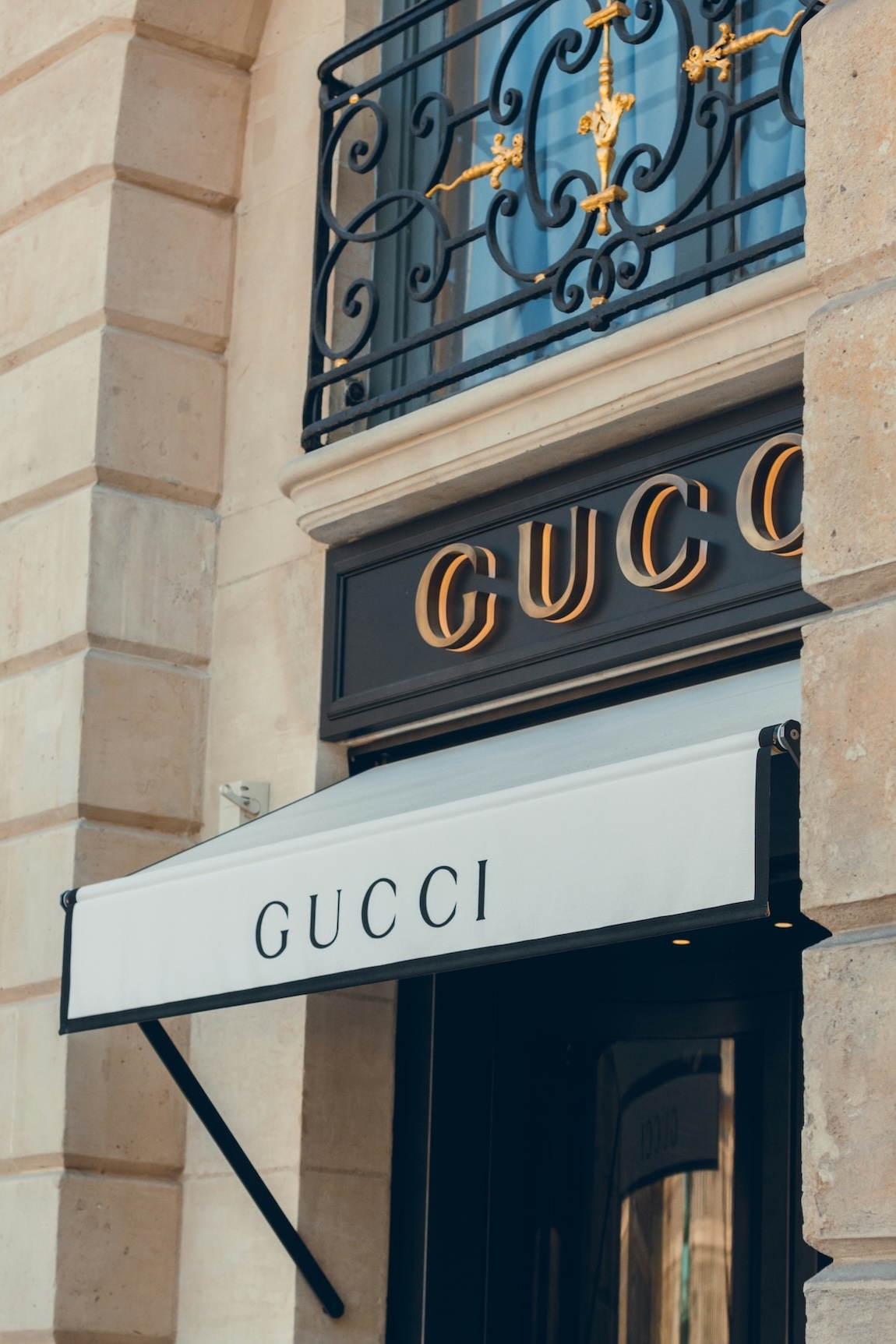
Kering’s 2025 results landed this week with the kind of numbers that make luxury analysts wince. Sales down 13% to $15.4 billion (€14.7 billion), with Gucci (still the French group’s crown jewel) plunging 22% in the final quarter of 2024, and Saint Laurent dropping 13%. Meanwhile Kering’s eyewear licensing business became the sole bright spot with 3% growth, with up to 6% in specific categories.
It’s hardly an isolated case. LVMH, the industry’s undisputed heavyweight, saw first-quarter 2026 sales slip 3% to $21.3 billion (€20.31 billion). Its fashion and leather goods business (the likes of Louis Vuitton, Dior, and Celine) fell 5%. Perhaps more surprising, the conglomerate’s wines and spirits division tumbled 9% as cognac sales cooled in the US and China. For all of 2025, LVMH logged revenues of $84.8 billion (€80.8 billion), down 5%. Burberry managed to eke out growth last quarter after two conservative years. Prada looked healthier with 9% sales growth through September, but dig into the numbers and the flagship Prada brand actually slipped 2% whilst upstart sibling Miu Miu rocketed 41%.
Contrarily, there’s Richemont and Hermès, living in what appears to be a parallel universe. Richemont’s latest quarter jumped 11% to $6.7 billion (€6.4 billion), powered by jewellery sales that climbed 14%. Hermès kept cruising at its usual 10% clip, leather goods up 13%.
The divergence raises fundamental questions. Is this about brand strength, certain houses maintaining desirability whilst others falter? Is it about product categories, with certain types of luxury goods falling out of favour? Or is something deeper at work, a geographic rebalancing that reshapes where luxury finds its customers and what those customers value?
Understanding the Category Divide
Jewellery’s outperformance suggests something about how customers are approaching luxury spending differently. Richemont’s jewellery division grew 14% globally, managing 2% growth even in China where the broader market contracted. The strength appears to reflect what jewellery represents in customers’ minds as much as brand appeal. High jewellery often sits outside fashion cycles in ways other luxury categories don’t, pieces being approached more like acquisitions with lasting value and items that might be passed down that carry less “risk” of feeling dated in a season or two.
That positioning may matter more in an environment where customers appear to be scrutinising luxury purchases more carefully. Since 2019, luxury prices have risen by an average of 54%. For fashion items—handbags, ready-to-wear, accessories—that price inflation seems to have introduced value questions that weren’t as pronounced before. Jewellery appears to have largely sidestepped that dynamic, perhaps because the purchase psychology around it has always operated differently.
Leather goods reveal what appears to be luxury’s uncomfortable bifurcation, with brands like Hermès posting double-digit growth whilst LVMH’s fashion and leather goods division contracts. The distinction seems to be less about quality—LVMH houses produce exceptional leather goods—and more about scarcity, or more precisely, whether scarcity is embedded in the business model or functions primarily as a marketing position. Hermès operates with genuine capacity constraints in its artisan model, creating waiting periods that reflect manufacturing realities rather than sales tactics. This appears to create demand dynamics that may be more insulated from normal economic pressures. For brands where leather goods are readily available, the calculation customers make seems to have shifted. When prices doubled over four years for items readily purchasable today, customers appear to be asking whether the price increase delivered proportional value. Often, the answer hasn’t been convincing. The pandemic-era assumption that desire would scale infinitely with price appears to have proven flawed for brands without genuine scarcity.
LVMH’s cognac drop also suggest something beyond luxury market dynamics alone. The 9% decline in wines and spirits appears to reflect cultural shifts in how alcohol functions socially as much as economic conditions. Cognac occupied a particular status position in both American and Chinese consumption, associated with celebration, success, corporate entertaining. In the US, younger consumers have gravitated toward tequila and away from spirits their parents’ generation favoured. The “sober curious” movement appears to be about rejecting previous consumption patterns as much as health consciousness. Gallup data shows alcohol consumption declining not just in frequency but seemingly in social acceptability. In China, status cognac declined 14% in value in 2024, suggesting this isn’t purely economic pressure but may reflect shifting attitudes toward the corporate culture where expensive spirits signalled success. When the social scaffolding supporting a luxury category weakens, pricing power appears to evaporate regardless of product quality or brand heritage.
When Business Models Become the Story
The widening performance gap between luxury groups increasingly reflects not only creative direction or product strategy, but the architecture of the business model itself. Houses such as Hermès and Richemont have long calibrated their positioning around clients whose purchasing power is largely insulated from cyclical shifts—buyers for whom luxury remains an expression of choice rather than sacrifice. By contrast, segments of LVMH and Kering’s portfolios remain more exposed to aspirational demand, where acquisitions carry greater financial weight and are therefore more sensitive to changes in confidence. In an environment defined by scrutiny rather than exuberance, the composition of a brand’s audience has become as decisive as its aesthetic.
Richemont’s watch division offers a telling microcosm. After a volatile period across 2023 and 2024, specialist watchmakers have begun to stabilise, yet the recovery is uneven. Jewellery watches and high-complication pieces continue to attract demand rooted in craftsmanship, rarity and perceived longevity, while entry-level luxury timepieces—once buoyed by aspirational momentum—have softened. The distinction suggests that luxury positioned as enduring cultural or financial value holds firmer ground than products whose appeal relies primarily on fashion cycles or accessibility narratives.
Diversification, once considered an almost fail-safe growth strategy, now reveals a more complex calculus. Conglomerates benefit from the ability to balance performance across categories, but that advantage weakens when multiple divisions encounter simultaneous pressure. Fashion, spirits and leather goods moving in the same downward direction expose the limits of scale as a protective buffer. Conversely, more concentrated groups operate under a different risk profile. When a single maison accounts for a significant share of revenue, brand health and corporate performance become effectively inseparable, amplifying both upside and vulnerability.
The current moment raises a subtler question about the lifecycle of successful strategies. Some brands confronting decline may not be suffering from miscalculation so much as from the natural consequences of earlier triumphs. Cultural ubiquity—achieved through expansion, visibility and resonance—can erode the very scarcity that once defined desirability. Reasserting exclusivity after a period of saturation demands time, restraint and often a recalibration of audience, yet financial markets and quarterly reporting cycles rarely allow for slow repositioning. In this sense, business model choices made during years of rapid growth are now shaping the contours of luxury’s present recalibration, revealing that scale, accessibility and diversification, once engines of expansion, can also become sources of structural tension when the market turns.
The Geographic Rebalancing
Geography has emerged as perhaps the most critical axis shaping performance, with regional divergence that appears structural rather than cyclical. While the Americas posted growth in the mid-teens for leading houses, regions like the Middle East showed even stronger momentum, approaching 20% gains. A similar story in Asia: Japan surged 17%, while China, which drove luxury’s expansion for two decades, contracted 3-5% in 2025 following a steeper 18-20% decline in 2024.
What differentiates the regions now outperforming is not simply macroeconomics but the underlying psychology of luxury consumption. Markets anchored by genuinely affluent buyers—where purchases function as discretionary extensions of wealth rather than aspirational stretch—are proving more resilient. In Asia’s mature pockets and across the Gulf, luxury is embedded within cultural, familial and investment-oriented frameworks, allowing demand to hold even as global sentiment softens. This positions the region less as a cyclical bright spot and more as a structural counterweight to volatility elsewhere.
China’s transformation underscores this rebalancing rather than negating Asia’s broader ascent. The shift towards predominantly domestic purchasing has removed the experiential halo once attached to overseas luxury consumption, forcing brands to compete on intrinsic value rather than travel-driven desirability. At the same time, slowing property markets have altered the psychological permission structure that once underpinned high-frequency spending. The result is not an absence of demand but a filtration process. Consumers appear to be favouring enduring categories such as fine jewellery, watches and heritage pieces, that align more closely with long-term value narratives.
Elsewhere in Asia and the Middle East, the luxury proposition is being reframed through cultural context rather than Western benchmarks. In Gulf cities such as Dubai and Riyadh, high-value consumption carries social legitimacy and symbolic meaning, reducing the friction that can accompany discretionary spending in more cautious markets. Jewellery and watch categories resonate not only aesthetically but as tangible assets, reinforcing luxury’s role as both expression and store of value. Across parts of Southeast Asia and Japan, currency dynamics and tourism flows have further accelerated purchasing activity, exposing how globally connected consumers arbitrage price disparities with increasing sophistication.
Japan’s recent momentum, driven largely by yen weakness, highlights another dimension of this shift: transparency. As price differences between markets become more visible, consumers adapt, and regions capable of attracting high-spending travellers effectively absorb demand that might otherwise disperse globally. This dynamic reinforces Asia’s role not merely as a source of buyers but as a destination market in its own right.
Against this backdrop, Europe’s apparent resilience appears more conditional. Flagship capitals continue to benefit from tourist inflows, yet underlying domestic demand remains fragile. The contrast reinforces why Asia and the Middle East are emerging as luxury’s silver linings: not because they are immune to economic cycles, but because their consumption patterns, cultural frameworks and wealth structures are redefining where stability—and future growth—are likely to originate.
Reckoning or Recaliberation?
Taken together, the signals point less to a universal crisis than to a moment of structural recalibration than a reckoning—one shaped as much by geography as by strategy. The industry appears to be moving through a sorting process, where business models aligned with today’s consumption realities are separating from those built for an earlier phase of expansion. Houses maintaining momentum tend to share a convergence of factors: categories anchored in perceived permanence, disciplined supply, clients drawn from genuinely resilient wealth segments, and geographic footprints calibrated toward regions where luxury’s cultural relevance continues to deepen.
For brands under pressure, the question is less about short-term execution and more about whether foundational assumptions still hold—particularly those built around a geographically uniform model of growth. The era defined by high-velocity aspirational demand, status-driven spirits consumption or logo-led fashion at scale may not disappear entirely, but its influence appears to be recalibrating as the centre of gravity shifts toward regions where wealth structures, cultural frameworks and consumption habits differ markedly. What once functioned as a universal growth engine now requires reframing within a landscape where scrutiny, longevity and cultural specificity—and increasingly, regional context—shape purchasing decisions more than sheer visibility.
The broader lesson may be that luxury is experiencing both a reinvention and a reset. Not a collapse of appetite, but a redefinition of where value resides and how it is delivered. The next phase seems likely to favour clarity of positioning over scale for its own sake, scarcity over ubiquity, and business models designed for depth of engagement rather than breadth of reach. As the industry adjusts to a more geographically distributed centre of gravity, the widening gap between winners and laggards suggests that luxury’s future will be shaped less by expansion alone and more by the precision with which brands align strategy, audience and place.