Three years after ChatGPT’s launch and one year into its Singapore hub, OpenAI has found its most fertile ground in Asia-Pacific, a region where adoption is outpacing oversight, speed is becoming strategy, and the consumer-to-business flywheel is rewriting the rules of enterprise transformation.
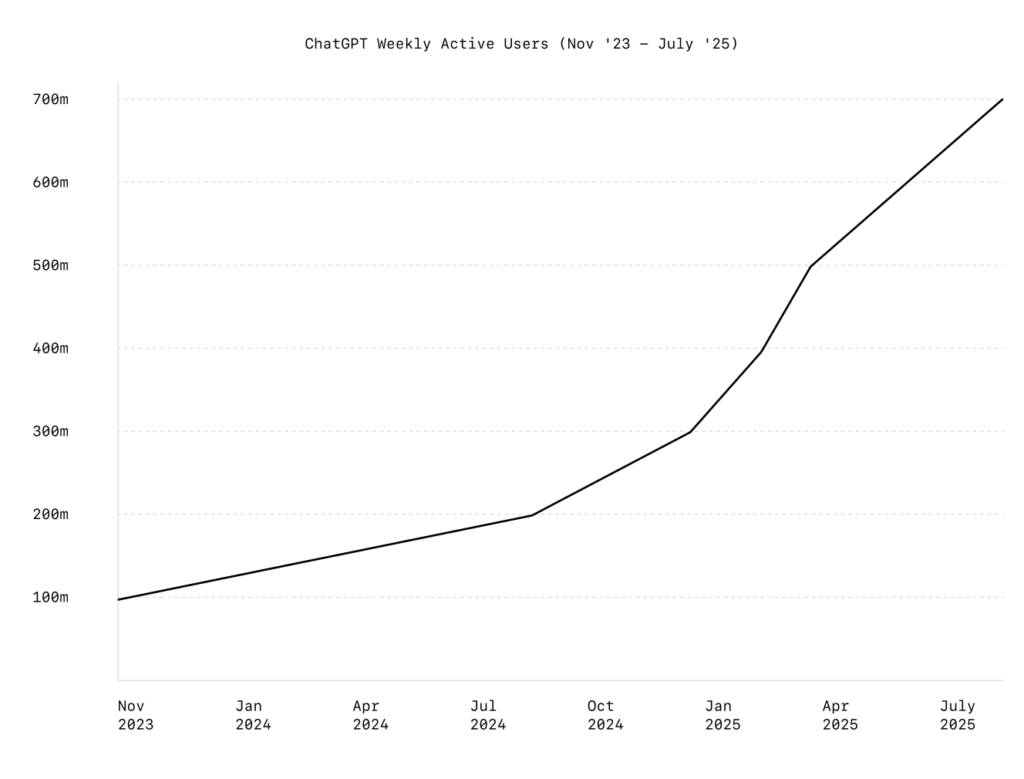
For decades, technological transformation has moved on a predictable schedule, affording societies the luxury of deliberation, time to debate ethics, draft policy, and brace for impact. Then, ChatGPT arrived with different physics. Within two months of launching, it reached 100 million users, a milestone that took the internet seven years to achieve for context.
Three years on, that velocity has found its natural home in Asia-Pacific, where one of OpenAI’s fastest-growing markets is revealing what happens when cultural temperament and technological capability converge at a pace that outstrips institutional capacity to govern. The region now commands more weekly ChatGPT users than any other, growing at four times the rate year-on-year. Singapore, where OpenAI established its regional hub a year ago, boasts one of the highest per-capita adoption rates globally. India, Indonesia, and the Philippines rank amongst the company’s top ten markets worldwide. More significantly, usage patterns emerging from these markets are shaping the product itself. Features like Study Mode and ChatGPT Go (a lower-cost subscription tier) were conceived in response to evolving Indian user behaviour, then deployed globally. The dynamic suggests something beyond consumption: Asia-Pacific isn’t merely adopting the technology, it’s actively influencing its evolution.
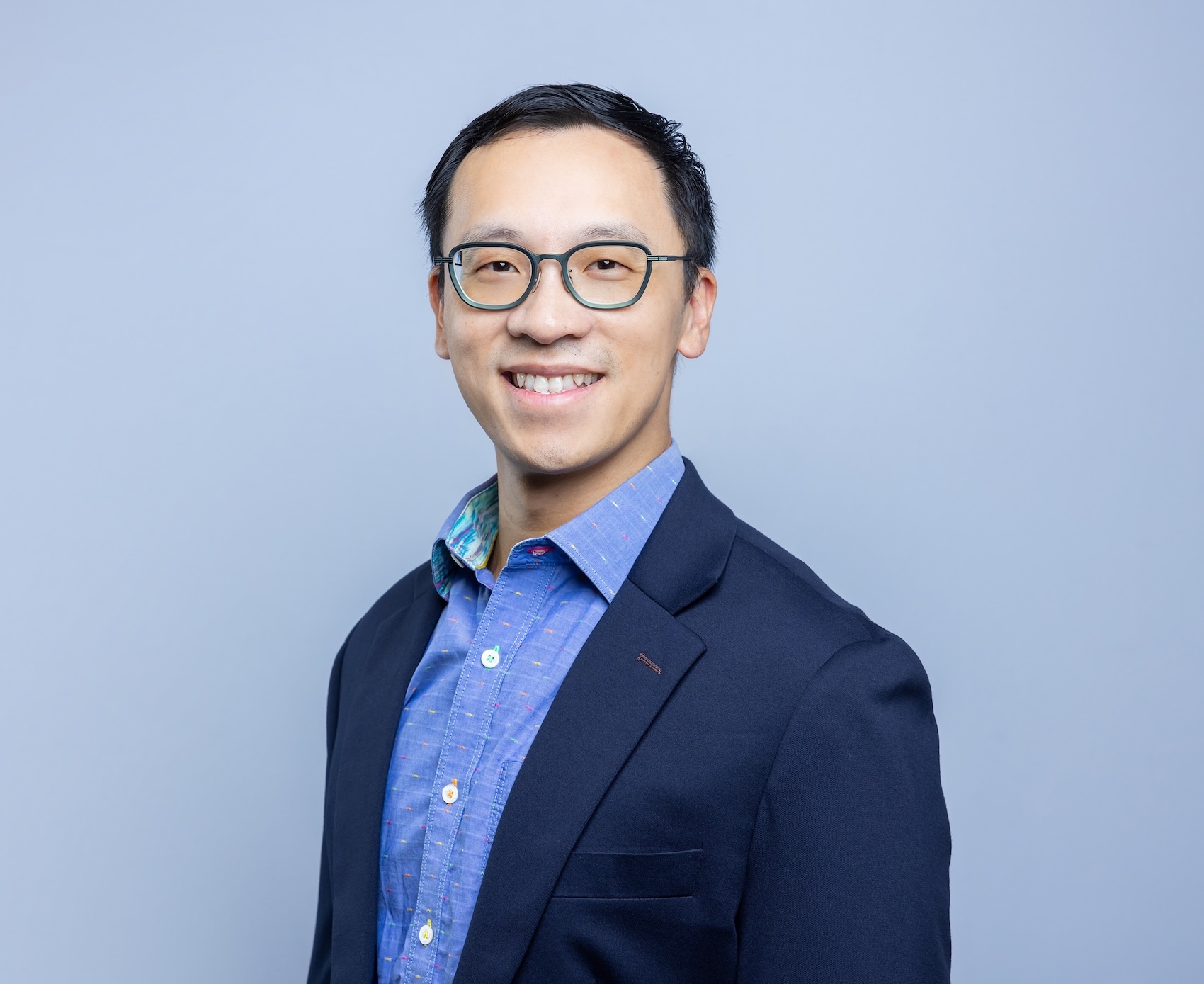
To unpack the forces behind this acceleration, and the tensions it raises around scale, speed, talent and governance, Beyond the Boardroom sat down exclusively with Oliver Jay, OpenAI’s Managing Director for International, to discuss the cultural instincts driving adoption, the consumer-to-business flywheel, and what responsible growth looks like in a region moving faster than its regulators can follow. Below are the edited excerpts.
Three years in, we finally have distance from the initial hype of ChatGPT. From where you sit, how has the fear-and-fantasy narrative around “AI taking jobs” evolved into the more grounded reality of which roles have actually changed, and which haven’t?
Like any major technological shift, it’s natural for people to worry about what AI means. Early on, views swung between extremes: AI would replace everyone or magically fix productivity. What’s changed is that we’re no longer speculating but observing real-world change. Jobs are evolving. Some roles will disappear, and others will look very different. AI is unlocking new capabilities across a huge range of professions. In the near term, almost every knowledge job is being redesigned. Routine work is increasingly automated, while human skills, judgment, creativity, and relationships matter more than ever. We’re also seeing new roles emerge: people who build and manage AI agents, curate data, evaluate model behaviour or redesign workflows. Titles like forward deployed engineers, inference specialists weren’t common just a few years ago. It feels similar to the early social media era, when roles like social media managers or influencer marketers weren’t even there.
AI is creating a similar shift in the job landscape. Our responsibility is two-fold: to build tools that genuinely increase productivity and opportunity, and to work alongside governments, universities, and companies so people can reskill, adapt and grow into these new forms of work, and not be left behind by them. We’re already doing this with institutions across our region including The University of New South Wales in Australia, Yonsei University in Korea, University of Tokyo and many others.
The average user today looks nothing like the early adopter. What story does that evolution tell you about how people in Asia negotiate convenience, trust, and personal agency with new technology?
When ChatGPT entered the spotlight three years ago, many people were unsure what to make of it. There were a lot of questions around ‘What is this AI chatbot’ and ‘How does it even work?’. AI has long felt invisible, something that only happened behind the scenes. ChatGPT made it tangible: you could see it, talk to it and experience its capabilities directly. One of the biggest surprises to us was how quickly people folded it into their lives in incredibly personal ways, from meal planning with voice mode, to sports coaching, to designing a new home. These are deeply humans, practical integrations of technology.
If I look at the journey we’ve been on, early adopters may have tolerated friction and unpredictability because they were still experimenting with the tool. Today’s users expect instant, reliable help, and to be in control. That also means we’re held to a higher standard. It’s why we focus on building a state-of-the-art model, while taking an iterative deployment approach with our products. It’s the best way to learn how to make our systems safer and more useful.
In those first months, productivity gains were mostly hypothetical. What’s the real picture now? where are businesses in Asia actually seeing measurable growth, and where have the returns been far slower than expected?
The speed of AI adoption has been faster than any other technology. The internet took seven years to hit 100 million active users. ChatGPT hit the same number in just two months! Today, over 800 million people use ChatGPT weekly. About 70% of that usage is personal and everyday, and around 30% of that usage is work-related. Both categories are continuing to grow over time, which tells us people are embedding AI into how they think and execute daily tasks. We are also seeing how ChatGPT playing dual roles as both a productivity tool and a driver of value for consumers in daily life. What’s especially powerful is how personal familiarity translates into business impact. When employees already use ChatGPT in their personal lives, adoption inside companies becomes faster and more intuitive. To date, one million businesses from diverse sectors like Coles, CRED, and Kakao in Asia are directly using OpenAI, with seven million ChatGPT for Work seats deployed. We’re seeing a strong consumer-to-business flywheel. People trust it, know it, and are using it in every context at work and at home.
Asia has responded to generative AI with a different kind of urgency and optimism than Western markets. What cultural behaviours or instincts do you think shaped have that early acceleration, and how have those instincts matured over time?
Asia Pacific’s optimism around AI has become a strategic advantage. The region now has more weekly ChatGPT users than anywhere else, with usage growing four times year-on-year. India, Indonesia, and the Philippines rank among OpenAI’s top ten global markets. In Singapore, the company’s regional hub, per-capita adoption is among the highest in the world. Features such as Study Mode and ChatGPT Go, the lower-cost subscription tier, were shaped directly by usage patterns in India before being launched globally, more clear evidence of Asia influencing product direction rather than simply consuming it.
Several forces sit behind this acceleration. A young, highly connected population is comfortable experimenting with new tools. A deeply mobile-first culture makes layering AI onto existing behaviours intuitive. And crucially, the region approaches new technology with practical optimism: “How can this help my business, my studies, my side hustle?” That mindset has been a powerful engine of growth.
In Singapore specifically, strong government advocacy for AI adoption has also played a role, creating an environment where people feel supported, informed, and open to learning, further accelerating uptake across the region.
When you trace the journey from experimentation to everyday utility, which moments stand out as turning points where AI quietly embedded itself into daily workflows without anyone announcing a “transformation”?
It happened when people stopped saying, “Let me try AI,” and started saying, “Let me ask ChatGPT.” When it becomes the first place they go to plan their day, draft an email, brainstorm ideas, or figure something out. That’s when it stopped being a novelty and became part of everyday life. Globally, our most-used features now include image upload, web search, reasoning, image generation, data analysis, and dictation (speech-to-text). The fact that people now use it for everything from voice, images, reasoning, research, and analysis shows how deeply it’s woven itself into daily thinking. That’s the true shift.
Given the significant investment and risk involved, what is the tangible evidence that major regional brands are actually moving past pilot programs and fundamentally committing to OpenAI’s technology?
It’s been interesting to see how many companies across the region are already embracing AI in substantial ways. One example is Air New Zealand, which has built more than 1,500 Custom GPTs to streamline internal workflows. Custom GPTs allow organisations to create tailored AI assistants using OpenAI’s models, defining the assistant’s tone, personality, and specialised knowledge while integrating proprietary data or processes. This gives teams the ability to design highly specific tools for their industry or operational needs without requiring advanced coding expertise, making AI deployment both scalable and practical across an entire organisation.
Many organisations rushed into AI alignment strategies in the first year. Three years later, which corporate approaches have proven durable, and which ones collapsed because they didn’t account for actual human behaviour on the ground?
The approaches that have really held up are the ones that are invested in people, not just the tech. They take training seriously, pay attention to change management, involve leadership, and give teams the space to find their footing. Channel News Asia (CNA) and Mediacorp are a great example of this. They refused to rush, spending a full year shaping their AI guidelines, building cross-functional oversight, and setting clear, human-in-the-loop practices. They even drew firm lines around what they wouldn’t allow—cloned AI voices, AI-generated footage—because their North Star is still public service journalism, and they want AI to support that, not distort it. We’ve been working closely with them through training, workshops, and hackathons that involve their whole workforce, not just a siloed “AI team.” That kind of inclusive approach genuinely builds confidence. The ones that struggled treated AI like a quick software install. They underestimated fear, resistance, and the very normal uncertainty people feel during big shifts. In reality, adopting AI is as much a human process as a technical one.
There’s been a shift from companies asking ‘What can AI do?’ to ‘What should AI do for us?’ How have you seen that mindset reshape corporate alignment, resource allocation, and leadership expectations across the region?
Leaders are becoming far more intentional in how they approach AI. Instead of experimenting for experimentation’s sake, they’re now aligning AI with their organisation’s purpose, values, and long-term strategy. You see this clearly in companies like Circles and Singapore Airlines. With Circles for example, the conversation didn’t start with “How do we add AI to what exists?” but “What would a telecom company look like if it were AI-first from day one?” That thinking pushed them to build what could become the world’s first fully AI-native telco platform (underpinned by OpenAI’s text, vision, image, and speech models). Their multi-agent architecture links marketing, product, customer support, and lifecycle management so information and decisions flow across the organisation instantly. Work that used to take days—reviewing NPS data, app feedback, or customer tickets—now happens in minutes. Singapore Airlines took a similarly strategic approach. They weren’t looking for a pilot or a small experiment; they wanted to understand how advanced AI could meaningfully enhance both how people work and how people travel, including testing the Realtime API for voice-driven interactions that could make customer service more natural and responsive.
If you were to chart Asia’s three-year AI journey as a narrative of ambition, correction, and consolidation, what chapter are we entering now, and what tensions or opportunities define this moment?
The early excitement and experimentation have given way to something much more grounded. People aren’t asking whether AI belongs in their organisations anymore, they’re asking how to use it well, how to use it responsibly, and how to use it at scale. That’s the chapter we’re entering now. For us that means staying focused on making it easier for people to build with AI and turn ideas into real-world solutions that genuinely help others. We want to be a partner people can trust, whether they’re large enterprises, startups, or individual developers trying to solve meaningful problems. And the promise extends far beyond business. In education, science, and healthcare, we’re only just beginning to scratch the surface. AI has the potential to reshape how people learn, discover, and access care in ways that are more equitable and more impactful. That’s why this moment feels less like a trend and more like the start of a long-term transformation.
Asia has a real opportunity here. The region’s mix of pragmatism and optimism is powerful. The tension now is learning how to move quickly without breaking trust, how to innovate while still making sure people feel safe, confident, and included in the change.